

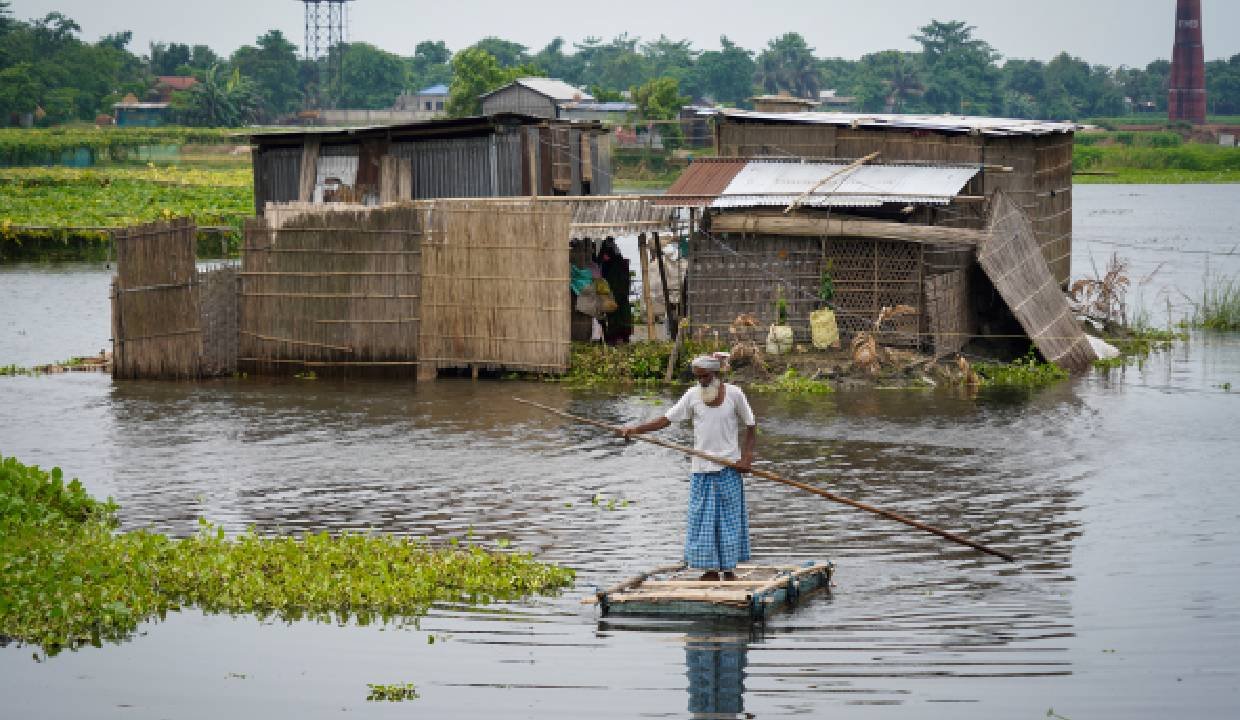
Initial impact assessments from Assam’s Dhemaji district indicate that more than 50,000 residents have been displaced following severe monsoon flooding and riverbank erosion. The district, one of the most vulnerable flood-prone regions in the state, has reportedly experienced extensive damage to housing, agriculture, and local infrastructure. Moreover, the scale of displacement highlights the intensity of the current flood crisis and the urgent need for sustained relief and rehabilitation measures.
Assam Flood Crisis: One Casualty and Eight Missing Reported Amid Torrential Overflows
Tripura Police Intensify Border Security Audits with Enhanced Identity Verification Measures
Large-Scale Displacement Reported Across Affected Areas
Preliminary figures suggest that over 50,000 people have been forced to leave their homes due to rising floodwaters and erosion in Dhemaji. Consequently, affected families have been relocated to safer areas, including relief camps and temporary shelters set up by local authorities.
According to officials involved in ground assessments, the displacement has been driven by continuous rainfall and overflow from nearby river systems. Moreover, embankment breaches and erosion have further worsened the humanitarian situation. Therefore, emergency response operations have been intensified across the district.
Authorities are reportedly working to ensure the provision of essential services such as food, clean drinking water, and medical assistance in relief camps. As a result, coordination between district administration and disaster response teams remains ongoing.
Meanwhile, field teams continue to assess additional areas at risk of further flooding and displacement.
Infrastructure and Agricultural Losses Intensify Crisis
The flood situation in Dhemaji has also led to widespread damage to infrastructure, including roads, rural connectivity routes, and essential public facilities. Moreover, agricultural land has been severely affected, raising concerns about livelihood losses in the region. Therefore, the economic impact of the disaster is expected to be significant.
Disaster management experts noted that repeated flooding in riverine districts often leads to long-term socio-economic challenges. Consequently, recovery efforts typically require both immediate relief and sustained rehabilitation planning. Such situations place additional pressure on administrative resources and local governance systems.
Furthermore, damaged infrastructure has complicated rescue and relief operations in several remote areas. As a result, authorities are prioritizing restoration of connectivity and emergency access routes.
Meanwhile, assessment teams continue to document the full extent of damage across the district.
Relief Operations and Emergency Response Strengthened
In response to the crisis, district and state authorities have intensified relief and rescue operations. Moreover, additional resources have been mobilized to support displaced populations and restore essential services. Therefore, emergency coordination efforts have been significantly scaled up.
Officials have emphasized the importance of timely delivery of relief materials, including food supplies, shelter assistance, and healthcare support. Consequently, multiple agencies are working in coordination to ensure effective distribution. Such efforts are critical in minimizing the humanitarian impact of large-scale displacement.
Furthermore, disaster response teams continue to monitor vulnerable locations for potential secondary flooding or erosion events. As a result, preventive evacuation measures may be implemented where necessary.
Meanwhile, rehabilitation planning is expected to begin alongside ongoing relief operations.
Long-Term Vulnerability and Climate Concerns
Experts have highlighted that Dhemaji district remains highly vulnerable to recurring floods due to its geographical location and river systems. Moreover, climate variability and changing rainfall patterns have further increased the frequency and intensity of flooding events. Therefore, long-term mitigation strategies are being widely discussed.
Environmental analysts observed that sustainable flood management requires integrated approaches, including improved embankments, early warning systems, and river basin planning. Consequently, governments continue to explore structural and non-structural solutions to reduce disaster risk. Such measures are essential for long-term resilience.
Furthermore, repeated displacement events underscore the need for durable rehabilitation and livelihood restoration programs. As a result, policy attention is increasingly focused on building climate-resilient infrastructure.
Conclusion
The displacement of over 50,000 people in Assam’s Dhemaji district underscores the severe humanitarian impact of the ongoing monsoon floods. Moreover, the situation highlights the urgent need for coordinated relief efforts, infrastructure restoration, and long-term disaster resilience planning.
As emergency operations continue, authorities remain focused on providing immediate assistance while assessing long-term recovery requirements. Therefore, the evolving situation in Dhemaji will continue to demand sustained attention from both state and central agencies.
The latest impact analysis reinforces the importance of disaster preparedness, climate resilience, and effective rehabilitation strategies in flood-prone regions of Northeast India.
FAQs
1. How many people have been displaced in Dhemaji?
Initial reports indicate that over 50,000 residents have been displaced.
2. What caused the flooding in Dhemaji?
Continuous rainfall, river overflow, and embankment breaches contributed to the flooding.
3. What assistance is being provided to affected people?
Relief camps are providing food, water, shelter, and medical support.
4. Why is Dhemaji highly vulnerable to floods?
Its geographical location near river systems makes it prone to seasonal flooding.
5. What are the long-term concerns?
Repeated flooding raises concerns about climate resilience, infrastructure, and livelihood stability.