

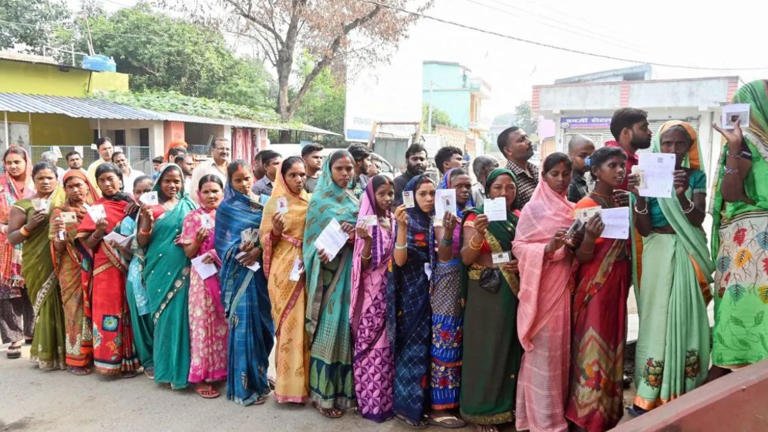
The Election Commission of India has announced the third phase of the Special Intensive Revision (SIR) of electoral rolls in 16 states and three union territories as part of its nationwide voter list verification and updating exercise.
Officials said the initiative aims to improve the accuracy and transparency of electoral rolls by identifying duplicate, outdated, and incorrect entries while ensuring inclusion of eligible voters.
The Election Commission stated that the revision exercise would involve field verification, public claims and objections, and updates related to new voters, migration, and corrections in voter details.
The move comes ahead of future elections in several states and forms part of the Commission’s broader efforts to strengthen the electoral process and maintain updated voter databases across the country.
Election Commission Launches Third Phase of SIR
The Election Commission of India said the third phase of the Special Intensive Revision would cover 16 states and three union territories.
Officials explained that electoral roll revision remains a routine but important process aimed at maintaining accurate voter records.
According to the Commission, the exercise will focus on adding eligible voters, removing duplicate or deceased entries, and correcting demographic details wherever necessary.
The Election Commission also stated that Booth Level Officers (BLOs) and election officials would conduct verification activities in their respective areas.
Authorities said citizens would receive opportunities to submit claims, objections, and correction requests during the revision process.
Officials further noted that the updated voter lists would help ensure free, fair, and transparent elections in the future.
Focus on Accurate and Updated Electoral Rolls
The Special Intensive Revision aims to strengthen the accuracy of electoral rolls across participating states and union territories.
Election officials stated that migration, deaths, duplication, and demographic changes often affect the accuracy of voter databases over time.
Therefore, periodic revision exercises remain necessary to maintain updated electoral records.
The Election Commission of India said accurate voter rolls form the foundation of democratic elections and help prevent irregularities during polling.
Officials also emphasised that eligible citizens should ensure their names and personal details remain correctly updated in electoral databases.
The Commission encouraged people to cooperate with field officers and complete verification procedures wherever required.
Experts believe large-scale electoral verification exercises help improve public confidence in the election process.
Booth Level Officers to Conduct Verification
As part of the third phase of the revision exercise, Booth Level Officers will play a major role in field verification and voter data collection.
Officials stated that BLOs would visit households and verify voter details within their assigned polling areas.
The officers will also assist citizens in correcting errors related to names, addresses, age, photographs, and other personal details.
According to election authorities, the revision process aims to ensure that only eligible voters remain included in electoral rolls while avoiding wrongful exclusions.
The Commission also instructed officials to maintain transparency and follow proper procedures during field verification.
Election authorities said citizens should remain alert and respond promptly if verification officials seek documentation or clarification regarding voter records.
Citizens Can File Claims and Objections
The Election Commission of India stated that the revision process would include a formal period for filing claims and objections.
During this period, eligible citizens who are not included in the voter list can apply for enrolment. Similarly, individuals can request corrections or raise objections regarding inaccurate entries.
Officials said the process aims to ensure fairness and allow public participation in maintaining accurate electoral rolls.
Citizens can reportedly submit forms online as well as through designated election offices and Booth Level Officers.
Authorities also urged voters to regularly check electoral records and update information whenever necessary.
The Commission believes greater public participation can help improve the quality and reliability of voter databases.
Political Attention on Electoral Roll Revision
The announcement of the third phase of SIR has already attracted political attention across several states.
Political parties often closely monitor electoral roll revision exercises because voter databases directly influence election preparations and campaigning strategies.
Opposition parties in some states have previously raised concerns regarding wrongful deletion of names and verification-related issues.
Meanwhile, election authorities maintain that the revision process follows established legal and administrative guidelines.
Political analysts believe electoral roll verification exercises often become politically sensitive, especially before major elections.
The Election Commission of India has repeatedly stated that its objective remains ensuring fair and transparent elections through accurate voter records.
Technology and Digital Systems Used
Officials said the Election Commission continues using digital platforms and technology-based systems to improve voter registration and verification processes.
Online portals and mobile applications now allow citizens to check voter status, update details, and apply for corrections more easily.
According to election authorities, digital systems have helped reduce paperwork and improve administrative efficiency.
However, officials also acknowledged that physical verification remains important for ensuring accuracy in electoral rolls.
Experts noted that combining digital tools with field-level verification can improve transparency and reduce duplication in voter databases.
The Commission also plans to increase public awareness regarding online voter services during the revision exercise.
Challenges in Large-Scale Verification
Election experts pointed out that large-scale electoral roll revision exercises often involve logistical and administrative challenges.
Migration, urban expansion, remote rural areas, and documentation issues can complicate verification work.
Officials said election authorities would coordinate with district administrations and local officials to ensure smoother implementation of the revision process.
The Commission also stressed the importance of avoiding wrongful exclusions while identifying duplicate or outdated entries.
Social activists and election observers have often urged authorities to remain careful during voter verification to ensure eligible citizens do not lose voting rights because of clerical or procedural errors.
Experts believe transparent grievance redressal systems remain essential during such exercises.
States and UTs Prepare for Revision Process
Authorities in the participating states and union territories have started administrative preparations for the third phase of the SIR exercise.
Election offices are reportedly coordinating training sessions for Booth Level Officers and verification teams.
Officials also plan to conduct awareness campaigns encouraging citizens to verify their voter details and participate in the revision process.
The Election Commission of India stated that updated electoral rolls remain essential for conducting smooth and credible elections.
The Commission expressed confidence that cooperation between citizens, field officials, and local administrations would help complete the exercise successfully.
As the third phase of the Special Intensive Revision begins, attention will remain focused on how effectively authorities manage the large-scale voter verification process across states and union territories.