

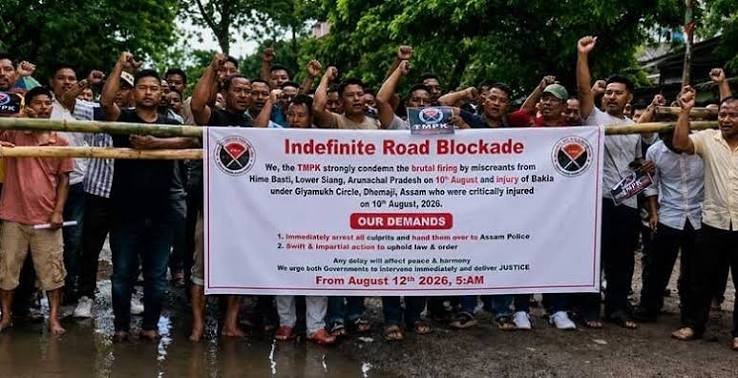
The Takam Mising Porin Kebang (TMPK) has reportedly launched an economic blockade targeting Arunachal Pradesh following a violent firing incident linked to a border-territory dispute. The development has heightened tensions between communities in the Assam-Arunachal Pradesh border region.
The blockade represents a significant escalation after the reported firing incident, with the organisation seeking action over the dispute. Moreover, restrictions on economic activity and movement can affect residents and businesses on both sides of the border, making a prompt administrative response important.
Authorities now face the challenge of addressing the underlying dispute while preventing further escalation.
FM Sitharaman Asks Banks to Boost Financial Literacy for MUDRA Beneficiaries
TMPK Announces Economic Blockade
The TMPK economic blockade reportedly began following the firing incident connected to disputed border territory.
The organisation has used the blockade to pressure authorities to respond to its concerns. Furthermore, the action places additional pressure on government agencies to investigate the incident and address the underlying territorial dispute.
The blockade could affect transportation, trade, and other economic activity if it continues.
Border Firing Triggers Escalation
The reported firing incident forms the immediate background to the blockade.
Border-related disputes can become particularly sensitive when allegations of violence enter an already contested situation. Additionally, unresolved disagreements over land and jurisdiction can create tension between neighbouring communities.
Authorities will need to establish the facts surrounding the incident through a proper investigation.
Economic Activity Could Face Disruption
A prolonged blockade can affect the movement of goods, vehicles, workers, and consumers.
Businesses that depend on regular cross-border transportation could face delays or increased costs. Moreover, residents who rely on roads connecting Assam and Arunachal Pradesh could experience difficulties accessing markets, workplaces, healthcare, and other essential services.
The wider economic impact will depend on the duration and scope of the blockade.
TMPK Seeks Government Action
The blockade appears intended to pressure authorities over the border dispute and the reported firing.
Such protests often reflect frustration over perceived delays in administrative or legal action. Furthermore, a clear government response could help address concerns while reducing the likelihood of further disruption.
Authorities may need to communicate directly with community representatives.
Assam-Arunachal Border Remains Sensitive
The latest development adds to existing concerns along the Assam-Arunachal Pradesh boundary.
Land disputes and allegations of encroachment have periodically created tensions in border areas. Additionally, disputes involving traditional land use and administrative jurisdiction can become difficult to resolve without cooperation between both state governments.
A coordinated approach remains important.
Investigation Could Help Establish Facts
An impartial investigation into the firing incident could provide clarity.
Authorities may need to examine eyewitness accounts, available evidence, land records, and the circumstances leading to the confrontation. Moreover, establishing responsibility through due process can help prevent competing narratives from further increasing tensions.
A credible investigation could support a peaceful resolution.
Community Dialogue Remains Important
Dialogue between affected communities can help reduce tensions during border disputes.
Community leaders, district officials, and state authorities can create channels for communication and address immediate concerns. Additionally, dialogue can help prevent isolated incidents from developing into wider confrontations.
Maintaining communication will be particularly important while the blockade continues.
Essential Services Need Protection
Authorities may also need to ensure that essential services remain accessible.
Healthcare, emergency transportation, food supplies, and other basic needs should not face prolonged disruption. Furthermore, clear arrangements for emergency movement can help protect residents if the blockade affects major transport routes.
Public safety should remain a priority throughout the dispute.
Long-Term Border Management Needed
Resolving the immediate blockade may not eliminate the underlying territorial concerns.
Both states may need stronger mechanisms for boundary coordination, joint inspections, and rapid response to local disputes. Moreover, clearly documenting disputed areas and maintaining regular communication could reduce the likelihood of future confrontations.
Long-term cooperation can help prevent recurring tensions.
What Happens Next?
The next phase will depend on the response from Assam and Arunachal Pradesh authorities and the outcome of any investigation into the firing incident.
Government representatives could engage with TMPK leaders to discuss the blockade and address their concerns. Furthermore, authorities may seek arrangements to maintain transportation and essential supplies while negotiations continue.
A peaceful settlement will require cooperation from all sides.
Conclusion
The TMPK economic blockade marks a significant escalation following a reported firing incident linked to a border-territory dispute involving Assam and Arunachal Pradesh. The action has increased pressure on authorities to investigate the incident and address the concerns raised by the Takam Mising Porin Kebang.
Moreover, prolonged economic restrictions could affect transportation, trade, and essential services in border communities. At the same time, dialogue, impartial investigation, and coordinated action between the two states could help prevent further escalation.
Overall, peaceful dispute resolution and stronger border coordination will remain essential to restoring normal economic activity and maintaining stability in the region.
FAQs
1. Who launched the economic blockade?
The Takam Mising Porin Kebang (TMPK) reportedly launched the blockade.
2. Why did TMPK announce the blockade?
The organisation reportedly launched the action following a violent firing incident connected to a border-territory dispute.
3. What could the blockade affect?
A prolonged blockade could disrupt transportation, trade, business activity, and access to essential services.
4. What should authorities do?
Authorities could investigate the firing incident, engage with community representatives, and coordinate between Assam and Arunachal Pradesh to prevent further escalation.
5. Could the dispute have longer-term consequences?
Yes. Without addressing underlying border and land concerns, similar disputes could recur. Stronger inter-state coordination and community dialogue could help reduce future tensions.