

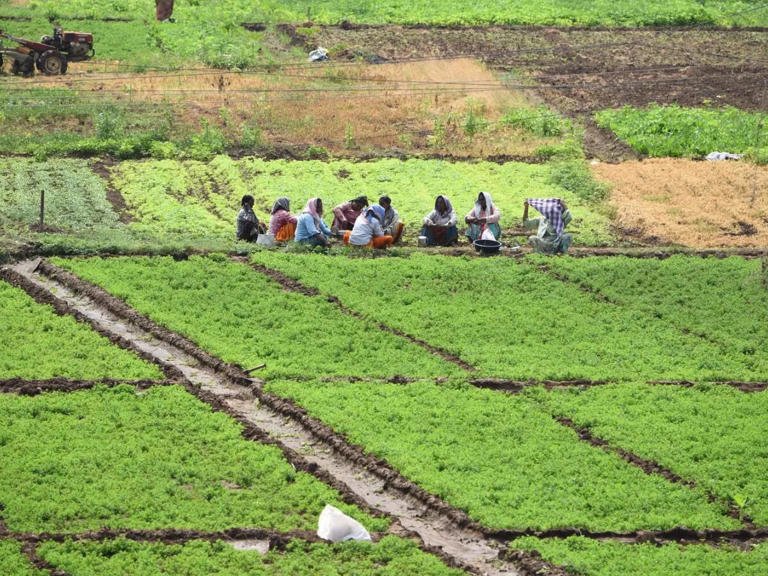
Concerns over a possible El Niño impact on the monsoon season are prompting farmers in Andhra Pradesh’s Srikakulam and Vizianagaram districts to increasingly adopt water-saving paddy cultivation methods. Faced with uncertainty regarding rainfall patterns and the possibility of reduced water availability, many farmers are turning to innovative agricultural practices designed to conserve water while maintaining crop productivity.
The shift reflects a growing awareness among farmers about the need to adapt to changing climatic conditions and strengthen resilience against weather-related risks. Paddy cultivation, traditionally dependent on substantial water resources, is particularly vulnerable to fluctuations in rainfall and irrigation availability. As a result, agricultural experts and government agencies have been encouraging farmers to adopt techniques that improve water-use efficiency and reduce dependence on continuous flooding.
The move toward water-saving methods is being viewed as an important adaptation strategy that could help safeguard agricultural production and rural livelihoods in the face of climate uncertainty.
Growing Concerns Over El Niño
El Niño is a climate phenomenon associated with warming sea surface temperatures in the Pacific Ocean that can influence weather patterns around the world. In India, El Niño conditions are often linked to weaker monsoon rainfall, although the actual impact can vary depending on several factors.
For farmers in Srikakulam and Vizianagaram, the prospect of below-normal rainfall has generated concerns about water availability during the crucial paddy cultivation season. Agriculture in these districts relies heavily on monsoon rains, irrigation systems, and local water resources.
Uncertainty regarding precipitation levels has encouraged many cultivators to rethink traditional farming methods and explore approaches that can reduce vulnerability to drought-like conditions. Experts note that proactive adaptation measures can help farmers manage risks more effectively and improve resilience against climatic fluctuations.
The increasing adoption of water-efficient techniques reflects a broader trend toward climate-smart agriculture.
Shift Toward Water-Saving Paddy Cultivation
Traditionally, paddy fields are maintained under continuous standing water for much of the growing season. While effective in supporting rice cultivation, this method consumes large quantities of water and can become difficult to sustain during periods of water scarcity.
In response, farmers are increasingly embracing water-saving techniques that require less irrigation while maintaining productivity. These methods include alternate wetting and drying practices, direct seeding, improved irrigation management, and the use of climate-resilient agricultural technologies.
Such approaches allow farmers to optimize water use without significantly compromising crop yields. Agricultural scientists have demonstrated that carefully managed irrigation schedules can reduce water consumption while supporting healthy plant growth.
The growing interest in these techniques highlights the willingness of farmers to adopt innovations that improve sustainability and reduce production risks.
Benefits Beyond Water Conservation
While water conservation is the primary motivation behind the shift, water-saving paddy methods offer several additional benefits. Reduced water use can lower irrigation costs, decrease energy consumption associated with pumping water, and improve overall farm efficiency.
In many cases, these techniques also contribute to better soil health and reduced methane emissions compared to continuously flooded paddy fields. As environmental sustainability becomes an increasingly important aspect of agriculture, such benefits are gaining greater attention among policymakers and researchers.
Farmers adopting modern irrigation practices often report improved control over water management and greater flexibility in responding to changing weather conditions. This adaptability can be particularly valuable in regions vulnerable to climate variability.
Experts believe that widespread adoption of water-efficient methods could contribute to long-term agricultural sustainability across the region.
Support from Agricultural Departments
Government agricultural departments and extension agencies have been actively promoting water-saving cultivation techniques through awareness campaigns, demonstrations, and training programs. Officials recognize the importance of helping farmers prepare for possible rainfall deficits and changing climatic conditions.
Agricultural experts are providing guidance on irrigation scheduling, crop management practices, and the effective implementation of water-efficient technologies. Demonstration plots and field-level training sessions are helping farmers understand the practical benefits of adopting new methods.
Authorities have emphasized that climate-resilient agriculture will play a crucial role in ensuring food security and protecting rural livelihoods in the coming years. As weather patterns become increasingly unpredictable, adaptive farming practices are expected to gain even greater importance.
The government continues to encourage knowledge-sharing and farmer participation in sustainable agriculture initiatives.
Protecting Livelihoods in Rural Communities
Agriculture remains the backbone of the rural economy in Srikakulam and Vizianagaram. Thousands of families depend directly or indirectly on paddy cultivation for their livelihoods. Any disruption caused by inadequate rainfall or water shortages can therefore have significant socio-economic consequences.
The adoption of water-saving methods is not merely an agricultural adjustment but also a strategy for protecting household incomes and economic stability. By reducing risks associated with water scarcity, farmers hope to ensure more reliable production outcomes even under challenging conditions.
Local communities are increasingly recognizing the importance of resilience and preparedness in agriculture. Climate-related uncertainties have underscored the need for proactive measures that can help safeguard livelihoods and maintain food production.
Farmers view water-efficient cultivation as a practical response to emerging environmental challenges.
Climate Change and Agricultural Adaptation
The shift toward water-saving paddy methods also reflects broader concerns about climate change and its impact on agriculture. Rising temperatures, changing rainfall patterns, and increased frequency of extreme weather events are influencing farming systems across India.
Experts argue that adaptation will be essential for maintaining agricultural productivity in the face of these challenges. Water management, crop diversification, improved technologies, and climate-resilient farming practices are among the strategies being promoted to enhance resilience.
Srikakulam and Vizianagaram provide examples of how local communities can respond proactively to climate-related risks. By embracing innovation and adopting sustainable practices, farmers are positioning themselves to better cope with future uncertainties.
Agricultural resilience is increasingly viewed as a key component of long-term rural development.
Looking Ahead
As concerns about El Niño continue to influence agricultural planning, the growing adoption of water-saving paddy cultivation methods in Srikakulam and Vizianagaram highlights the evolving nature of Indian agriculture. Farmers are demonstrating adaptability and a willingness to embrace new approaches that reduce risks and improve resource efficiency.
The transition toward climate-smart farming practices is expected to play an increasingly important role in ensuring sustainable agricultural growth. Continued support from government agencies, research institutions, and extension services will be essential for expanding the reach of these techniques and helping farmers maximize their benefits.
For the farming communities of northern Andhra Pradesh, water-saving cultivation methods offer a pathway toward greater resilience in an era of climatic uncertainty. By conserving resources, improving efficiency, and strengthening preparedness, farmers are taking important steps to secure their livelihoods and maintain agricultural productivity despite the challenges posed by changing weather patterns.
As the monsoon season unfolds, the experiences of Srikakulam and Vizianagaram may serve as a valuable example of how proactive adaptation can help agriculture thrive even in the face of environmental challenges.