

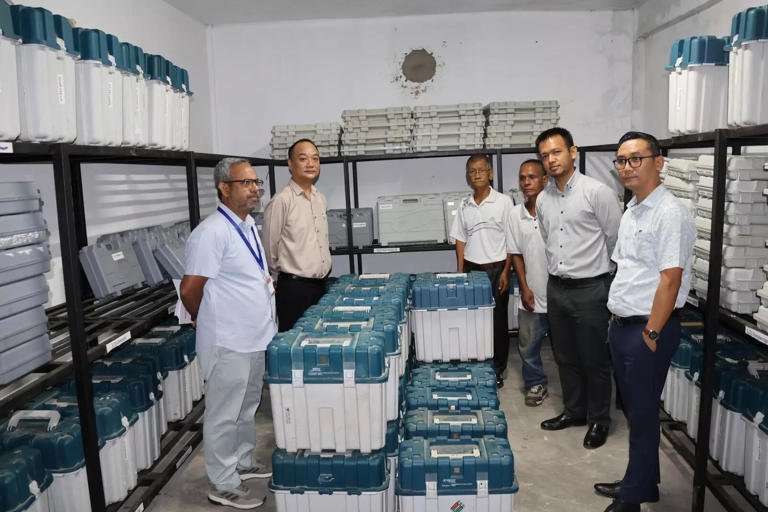
EVM VVPAT randomisation Assam Kerala Puducherry has been successfully completed as part of the election preparation process, marking a crucial step toward ensuring transparency and fairness in the upcoming polls. Election authorities carried out the first phase of randomisation in all three regions under strict supervision and in the presence of political party representatives.
Read More: IMD Issues Orange Alert for Tripura Amid Thunderstorm Warning
First phase of randomisation completed
Election officials conducted the first randomisation of Electronic Voting Machines and Voter Verifiable Paper Audit Trail units across Assam, Kerala, and Puducherry. This process involves the computerised allocation of machines to different constituencies in a random manner.
The objective of this step is to eliminate any possibility of bias or manipulation in the distribution of EVMs and VVPATs. By using a randomised system, authorities ensure that no specific machine is assigned to a particular constituency based on preference.
Moreover, officials carried out the process transparently, allowing representatives from political parties to observe each stage. This practice builds trust among stakeholders and reinforces the credibility of the electoral system.
Importance of EVM-VVPAT randomisation
The randomisation of EVMs and VVPATs plays a vital role in maintaining the integrity of elections. It ensures that machines are allocated fairly and without any predetermined pattern.
In addition, the use of VVPAT units allows voters to verify their votes. This feature enhances transparency and provides an additional layer of confidence in the voting process.
Furthermore, randomisation prevents any potential misuse of machines. It ensures that all constituencies receive EVMs through a neutral and systematic process.
Multi-stage process ensures transparency
The randomisation of EVM-VVPATs takes place in multiple stages. The first stage involves the allocation of machines to constituencies, which has now been completed.
In the next stages, machines will be assigned to specific polling stations and prepared for use. Each stage follows strict guidelines set by the Election Commission.
Officials document every step of the process to maintain accountability. These records can be reviewed if any concerns arise during or after the elections.
Participation of political representatives
Political party representatives played an active role during the randomisation process. Their presence ensures that the procedure remains transparent and free from disputes.
They were allowed to observe the computerised allocation and verify the details. This involvement helps build confidence among parties and reduces the likelihood of allegations.
Moreover, open participation encourages a collaborative approach to election management. It reinforces the idea that all stakeholders share responsibility for fair elections.
Election preparations gain momentum
The completion of the first randomisation marks significant progress in election preparations. Authorities are now moving ahead with other logistical arrangements.
These include training polling staff, setting up polling stations, and ensuring the availability of security personnel. Each step is crucial for conducting smooth and peaceful elections.
In addition, officials are focusing on voter awareness programmes. These initiatives aim to educate voters about the voting process and encourage participation.
Use of technology in election management
The use of technology plays a key role in the randomisation process. Computerised systems ensure accuracy and eliminate human bias in machine allocation.
Moreover, technology helps streamline election management. It allows authorities to handle large-scale operations efficiently and maintain detailed records.
The integration of EVMs and VVPATs represents a significant advancement in India’s electoral system. These tools have improved both efficiency and transparency.
Ensuring security and reliability
Election authorities have also taken steps to ensure the security of EVMs and VVPATs. Machines are stored in secure locations with strict access controls.
In addition, regular checks and mock polls are conducted to verify their functionality. These measures help ensure that machines operate correctly on polling day.
Furthermore, security personnel are deployed to safeguard equipment during transportation and storage. This comprehensive approach minimises risks and enhances reliability.
What lies ahead
With the first phase of randomisation completed, authorities will proceed to the next stages of election preparation. These include second-level randomisation and final deployment of machines.
Officials will continue to follow guidelines to maintain transparency and efficiency. Political parties will remain involved in the process to ensure accountability.
At the same time, preparations for polling day will intensify. Authorities aim to ensure that all arrangements are in place well in advance.
Conclusion
EVM VVPAT randomisation Assam Kerala Puducherry marks an important milestone in the election process. The successful completion of the first phase reflects the commitment of election authorities to transparency and fairness.
By involving political representatives and using technology, the process has strengthened confidence in the system. It demonstrates the importance of systematic planning in conducting elections.
As preparations continue, the focus will remain on ensuring a smooth and credible electoral process. The upcoming elections in these regions are expected to reflect the effectiveness of these measures.
Read More: AIUDF Releases Third Candidate List for Assam Elections 2026