

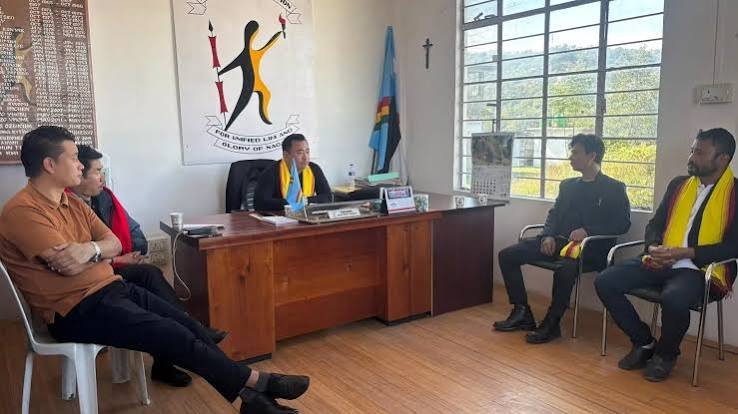
The Nagaland Police ILP checks have come under scrutiny after records obtained through Right to Information applications highlighted gaps between detecting violations and taking enforcement action. The disclosures were cited by the Naga Students’ Federation’s Inner Line Regulation Commission in a representation to the state government.
The commission reviewed 1,490 pages of records obtained through RTI applications and government files. It reported that police detected hundreds of people allegedly violating Inner Line Pass requirements during checking drives, while follow-up action appeared limited.
The findings have prompted the NSF to seek a major overhaul of the enforcement system. Its recommendations include stronger checkpoints, a central entry-and-exit register and a dedicated authority for administering the Inner Line system.
Nagaland Congress mounts strong call for CEC resignation over SIR
Nagaland Police ILP Checks Reveal Detection-Action Gap
The Nagaland Police ILP checks examined by the NSF included a major verification exercise conducted after the Assam Assembly elections and the Mokokchung by-election in April 2026.
According to the NSF representation, police checked more than 1,900 passes on April 10 and 11. Officials reportedly detected 436 defaulters on April 10 and another 208 on April 11. That brought the reported number of detections over the two days to 644.
However, the organisation said the records it reviewed showed only one removal among the cases examined. The NSF therefore argued that a substantial gap exists between identifying suspected violations and completing enforcement proceedings.
The figures come from records examined by the students’ federation and should be understood in that context. They represent the organisation’s interpretation of government documents rather than a separate finding by the police.
Earlier verification drives also raised concerns. In Zunheboto, a June 2025 drive reportedly detected 78 people without valid passes. The NSF said the available records showed no fines, deportations or pending cases from that exercise.
Chümoukedima presented another example. The federation said officials detected 146 defaulters but collected no fines, while those detected were released after giving undertakings.
RTI Records Highlight Wider Enforcement Problems
The Nagaland Police ILP checks form only one part of the wider concerns raised by the NSF. The federation said its review found problems with reporting, physical checking infrastructure and coordination among departments.
For example, the NSF cited 48 consecutive monthly returns from Phek covering June 2022 to May 2026. According to the federation, the records contained blank or struck-through entries for defaulters, action taken and illegal foreigners.
The organisation has therefore asked the government to require complete reporting. It also wants failures to provide the required information to be recorded as official administrative lapses.
Physical infrastructure has emerged as another concern. The NSF said records from Tuensang, Tseminyu, Meluri and Phek indicated the absence of designated check gates. It also pointed to shortages of personnel and budgetary arrangements for systematic checking.
Consequently, the federation has sought a statewide list of designated check gates and checking points. The proposed list would identify their jurisdiction, personnel and operating hours.
The NSF has also proposed ILP verification and issuing counters at Dimapur Airport and Dimapur Railway Station. Such facilities, it said, would strengthen verification at major points of entry.
Meanwhile, the organisation has called for greater coordination between departments responsible for implementing the Inner Line system. It has argued that fragmented responsibilities make consistent enforcement more difficult.
NSF Seeks Central Register for ILP Monitoring
The Nagaland Police ILP checks controversy has also led to a demand for a centralised system that records both entry and exit information.
The NSF has proposed a real-time central register containing details of every Inner Line Pass issued in Nagaland. The proposed database would include the pass holder, purpose, districts covered, guarantor or employer, date of entry, expiry date and exit.
According to the federation, the absence of reliable exit records represents a significant weakness in the existing system. Therefore, recording when people leave the state would complement the existing permit process.
The proposed system would also allow officials to identify expired passes and track compliance more efficiently. Furthermore, district-level information could be compared with the central database to identify inconsistencies.
The federation has also requested annual reporting to the Nagaland Legislative Assembly. The proposed report would include district-wise information on passes, expired and extended passes, detected defaulters, fines, prosecutions, removals, revenue and enforcement expenditure.
The demand comes as Nagaland already operates an online ILP application system. The state’s Information Technology and Communication department says applications across categories have been fully online since January 2025.
Therefore, the current debate is less about whether digital permit issuance exists and more about how effectively authorities verify and enforce compliance after entry.
Nagaland ILP Overhaul Proposal Seeks Single Authority
The Nagaland Police ILP checks findings have strengthened the NSF’s call for a dedicated Nagaland Inner Line Regulation Commission. The federation submitted its recommendations to Chief Minister Neiphiu Rio on October 1.
The proposed commission would become a single authority for administering and enforcing the Bengal Eastern Frontier Regulation, 1873. The NSF said this could address what it described as fragmented responsibilities among the Home Department, police, district administrations, municipal bodies and the Land Revenue Department.
The organisation has proposed that the commission include representatives from relevant government departments, tribal organisations and recognised student bodies. It also wants the commission to maintain the central pass register and submit annual reports to the Assembly.
Pending legislation, the NSF has asked the government to notify a multi-departmental enforcement directorate approved by the state Cabinet in May 2025. The federation wants the directorate to function as an interim enforcement body.
Additionally, the NSF has proposed clearer powers for designated police officers under Section 6 of the Bengal Eastern Frontier Regulation. It has also sought clarity regarding the competent magistracy for offences under the regulation.
The organisation has requested a written government response within 30 days. It wants authorities to state whether each recommendation has been accepted, partly accepted, placed under consideration or declined, along with an implementation timeline where applicable.
However, these remain recommendations from the NSF. They do not automatically alter the existing legal or administrative framework.
Conclusion
The Nagaland Police ILP checks highlighted in recent RTI-based disclosures have raised questions about enforcement after violations are detected. The NSF says its review of government records shows a gap between checking, detection and subsequent action.
The federation has consequently sought stronger checkpoints, complete reporting, centralised entry-and-exit records and clearer enforcement powers. It has also proposed an autonomous Inner Line Regulation Commission to coordinate the system.
Nagaland already operates a digital ILP application system, but the latest debate focuses on monitoring and enforcement after permits are issued.
The state government’s response to the NSF recommendations will determine whether these proposals lead to changes in the existing enforcement structure.
FAQs
What did the RTI disclosures reveal about Nagaland Police ILP checks?
The NSF said RTI records showed a gap between the number of suspected ILP violations detected and the enforcement action recorded in the documents it reviewed.
How many ILP defaulters were detected during the April 2026 checks?
The NSF cited 644 reported defaulters during police checks on April 10 and 11, with 436 detected on the first day and 208 on the second.
What does the NSF want the government to change?
The federation has proposed a central entry-and-exit register, stronger checkpoints, better reporting, clearer police powers and a dedicated Nagaland Inner Line Regulation Commission.
Does Nagaland already have an online ILP system?
Yes. The state government says its online ILP system became fully online for all applications from January 1, 2025.
Why is the NSF demanding an Inner Line Regulation Commission?
The organisation says responsibilities are currently spread across several departments and local authorities. It believes a single coordinating authority could improve monitoring, accountability and enforcement.