

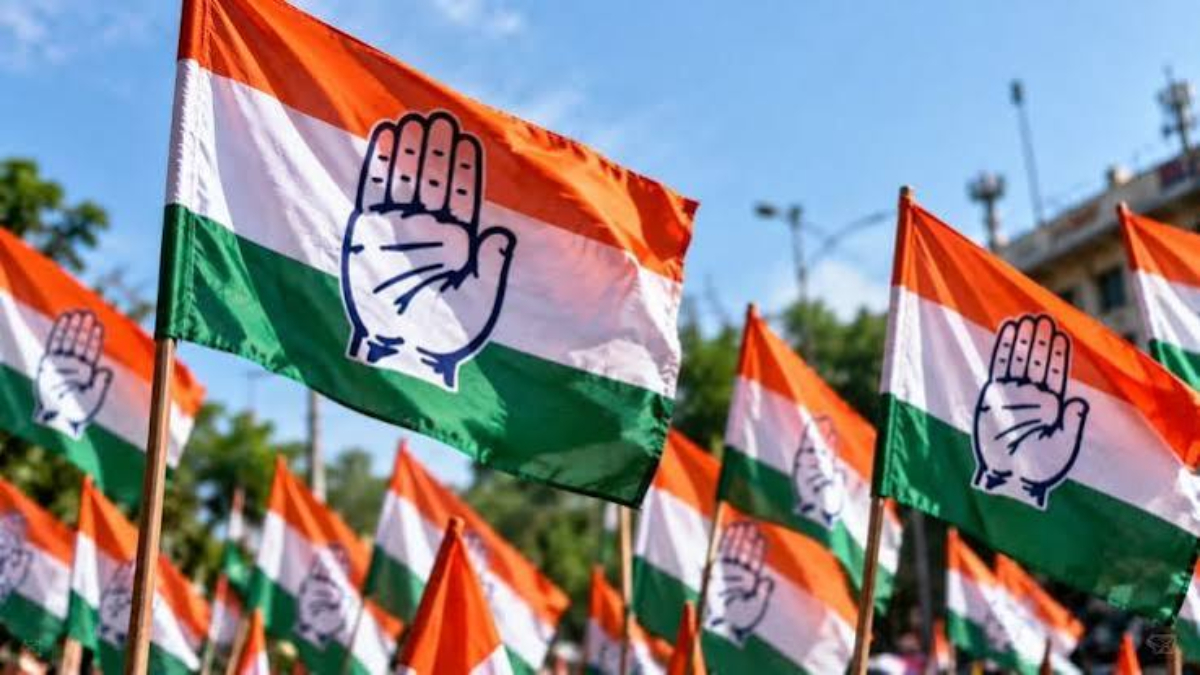
Nagaland Congress has demanded the resignation of Chief Election Commissioner Gyanesh Kumar over the Special Intensive Revision (SIR) of electoral rolls, intensifying opposition criticism of the Election Commission’s handling of the voter-list exercise.
Nagaland Congress questions Election Commission
The state Congress has raised concerns over the SIR process and its implications for voters, arguing that the exercise must be conducted with transparency and adequate safeguards. The demand for Gyanesh Kumar’s resignation marks a sharp escalation in the party’s criticism of the Election Commission.
The Congress has maintained that electoral-roll revision should not create uncertainty for genuine voters or place an excessive burden on citizens to establish their eligibility. It has also called for greater clarity on the procedures being followed during the revision.
The SIR has emerged as a major political issue in several parts of the country, with opposition parties questioning the timing, scope and implementation of the exercise. The Election Commission, meanwhile, has maintained that electoral-roll revisions are intended to keep voter lists accurate and ensure that eligible citizens can exercise their franchise.
Why Nagaland Congress is opposing SIR
The central concern raised by the Nagaland Congress is the potential impact of the revision process on legitimate voters. Party leaders have questioned whether the documentation and verification requirements could disproportionately affect people who face difficulties producing older records or other supporting documents.
Congress has repeatedly argued that electoral reforms must protect the right to vote while removing ineligible entries from voter lists. It has also demanded that voters receive adequate opportunities to raise objections and correct errors before any names are removed.
The party’s latest demand places the Chief Election Commissioner at the centre of its criticism. By seeking Gyanesh Kumar’s resignation, Congress has signalled that it considers the Election Commission’s handling of the issue serious enough to warrant accountability at the highest level.
SIR becomes wider political flashpoint
The dispute over SIR comes amid a broader political debate over electoral-roll verification in India. Opposition parties have raised concerns about possible exclusions, while the Election Commission has defended its authority and procedures for maintaining electoral rolls.
For political parties, the issue is particularly sensitive because voter-list changes can directly affect elections. Any deletion or omission can prevent an otherwise eligible voter from participating unless the error is identified and corrected within the prescribed process.
In Nagaland, where electoral participation is closely linked to local political dynamics, the Congress has sought to make voter protection a central part of its criticism. The party’s position is that the revision process should be open, accountable and accessible to every eligible citizen.
The controversy also highlights the importance of communication between election authorities, political parties and voters. Clear instructions on documentation, verification, claims and objections can help reduce confusion and prevent misinformation during an electoral-roll revision.
Nagaland Congress seeks accountability
The Nagaland Congress has framed its demand for resignation as an issue of institutional accountability rather than simply a political disagreement over electoral strategy. The party has questioned whether the Election Commission has done enough to address concerns surrounding the SIR process.
Congress leaders have also urged voters to remain alert and verify their electoral details through the official mechanisms available to them. The emphasis is on ensuring that eligible voters are not left out because of administrative errors or difficulties during verification.
The demand against Gyanesh Kumar is therefore likely to keep the SIR debate active in Nagaland. It also adds to the national political contest over how electoral rolls should be revised and what safeguards should accompany large-scale verification exercises.
Election process faces closer scrutiny
The Election Commission’s handling of SIR is expected to remain under close political and public scrutiny as the process moves forward. Any concerns about missing names, documentation or verification are likely to become part of the wider debate over electoral transparency.
For Congress, the resignation demand represents a stronger response to what it describes as serious concerns surrounding the electoral-roll exercise. The party is expected to continue pressing for safeguards and greater accountability.
At the same time, the Election Commission’s stated objective remains the preparation of accurate electoral rolls. The challenge will be to ensure that efforts to identify and remove ineligible entries do not inadvertently exclude eligible citizens.
The dispute in Nagaland ultimately reflects a larger question facing India’s electoral system: how to maintain clean and credible voter rolls while protecting every eligible citizen’s right to vote. As political parties continue to challenge and defend the SIR process, transparency, due process and effective grievance mechanisms will remain crucial.
PM Modi Likely to Inaugurate Tata Semiconductor Project in Assam in December or January
[…] Nagaland Congress mounts strong call for CEC resignation over SIR […]
[…] Nagaland Congress mounts strong call for CEC resignation over SIR […]
[…] Nagaland Congress mounts strong call for CEC resignation over SIR […]
[…] Nagaland Congress mounts strong call for CEC resignation over SIR […]
[…] Nagaland Congress mounts strong call for CEC resignation over SIR […]
[…] Nagaland Congress mounts strong call for CEC resignation over SIR […]
[…] Nagaland Congress mounts strong call for CEC resignation over SIR […]