

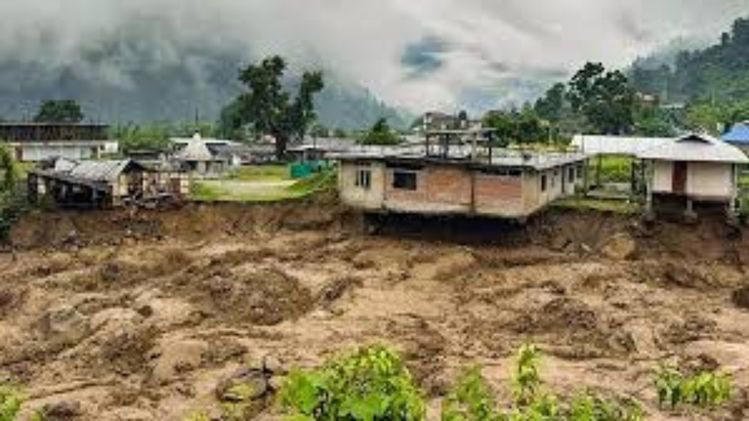
The flood situation in Arunachal Pradesh has further deteriorated, with the death toll rising to four and more than 90,000 people affected by incessant rainfall, overflowing rivers, flash floods, and landslides across several districts. As the state grapples with one of the most challenging monsoon spells of the season, Chief Minister Pema Khandu and Union ministers have reviewed the extent of the damage while assuring comprehensive support for relief, rescue, and rehabilitation efforts.
Continuous heavy rainfall over the past several days has inundated low-lying areas, damaged critical infrastructure, disrupted transportation, and forced thousands of residents to seek safer locations. Authorities have intensified rescue operations, while disaster response teams remain on high alert to address emerging emergencies in vulnerable regions.
Officials stated that coordinated efforts involving the state administration, disaster management agencies, security forces, and the Central government are underway to minimise the impact of the floods and restore normalcy as quickly as possible.
Death toll reaches four amid widespread devastation
According to official reports, the flood-related death toll in Arunachal Pradesh has increased to four as relentless rainfall continues to trigger floods and landslides across the state.
Authorities expressed condolences to the bereaved families and stated that district administrations are extending all necessary assistance to those affected by the tragedy.
Apart from the fatalities, numerous people have been displaced from their homes, while many others continue to face challenges due to damaged roads, disrupted communication networks, and inundated villages.
Officials indicated that the situation remains dynamic, with emergency teams closely monitoring rainfall patterns and river levels to respond promptly to any further developments.
More than 90,000 residents affected across multiple districts
Government officials confirmed that over 90,000 people have been affected by the ongoing floods across several districts of Arunachal Pradesh.
Floodwaters have submerged residential areas, agricultural fields, public infrastructure, and road networks, severely impacting daily life. Many families have been temporarily relocated to safer locations or relief camps established by district administrations.
The affected population includes residents living in flood-prone river valleys as well as communities impacted by landslides triggered by persistent rainfall in hilly regions.
Authorities are conducting continuous assessments to determine the full extent of the damage while updating the number of affected households as the situation evolves.
Chief Minister reviews relief and rehabilitation measures
Chief Minister Pema Khandu has been closely monitoring the flood situation and reviewing relief operations being carried out across the affected districts.
During meetings with senior officials, the Chief Minister directed all concerned departments to prioritise rescue operations, ensure uninterrupted relief distribution, and restore essential public services at the earliest.
He also instructed district administrations to remain vigilant, strengthen coordination among emergency agencies, and provide immediate assistance to displaced families.
Officials stated that the state government is making every effort to ensure that food supplies, drinking water, medicines, temporary shelter, and other essential necessities reach affected communities without delay.
The Chief Minister also appealed to residents living in vulnerable areas to strictly follow evacuation advisories issued by local authorities.
Union ministers assess damage and assure Central support
Union ministers have also reviewed the flood situation in Arunachal Pradesh and assured the state government of full support from the Centre in managing the disaster.
The review focused on the extent of damage to infrastructure, public utilities, agricultural land, and residential properties, as well as the ongoing rescue and relief operations.
Central authorities reiterated their commitment to extending all necessary assistance, including logistical support, coordination with disaster response agencies, and financial aid wherever required.
Officials stated that the Centre remains in constant communication with the Arunachal Pradesh government to monitor developments and ensure that additional resources can be deployed promptly whenever needed.
The collaborative approach between the Centre and the state is expected to strengthen the overall disaster response.
Rescue teams continue operations in affected areas
Rescue and relief operations are continuing across flood-affected districts with teams working round the clock despite challenging weather conditions.
Personnel from the State Disaster Response Force (SDRF), National Disaster Response Force (NDRF), armed forces, police, and district administrations have been deployed to evacuate stranded residents and deliver emergency assistance.
Boats, specialised rescue equipment, and emergency vehicles are being used wherever accessible, while teams are also clearing debris caused by landslides to reopen blocked roads.
Relief camps have been established to provide temporary accommodation, food, clean drinking water, medical care, and sanitation facilities for displaced families.
Authorities stated that vulnerable groups, including children, elderly citizens, pregnant women, and persons with disabilities, are receiving special attention during relief operations.
Infrastructure suffers extensive damage
The floods and landslides have caused significant damage to roads, bridges, culverts, power infrastructure, water supply systems, and communication networks in several parts of Arunachal Pradesh.
Many interior villages have experienced temporary disruptions in road connectivity due to landslides and washed-away road sections, making relief delivery more challenging.
Public Works Department teams, along with engineers and disaster response personnel, have been deployed to assess infrastructure damage and begin restoration work wherever conditions permit.
Officials stated that restoring transportation routes remains a priority to ensure that emergency supplies and relief materials can reach isolated communities.
The government is also assessing the financial implications of the damage for future rehabilitation planning.
Agriculture and livelihoods face major setback
The floods have also affected agriculture, which remains a key source of livelihood for many rural households in Arunachal Pradesh.
Large stretches of agricultural land have been inundated, raising concerns about crop losses and reduced farm productivity during the current season.
Livestock, fisheries, and other livelihood activities have also suffered disruptions in several affected districts.
Officials stated that comprehensive damage assessments will be conducted after floodwaters recede to determine the extent of agricultural losses and formulate suitable assistance measures for affected farmers.
Long-term rehabilitation efforts are expected to include support for restoring livelihoods alongside rebuilding damaged infrastructure.
Authorities urge public vigilance
The state administration has urged residents to remain alert as heavy rainfall continues in several parts of Arunachal Pradesh.
People living near rivers, landslide-prone slopes, and low-lying areas have been advised to monitor official weather updates, avoid unnecessary travel, and relocate to safer places whenever instructed by local authorities.
Officials also appealed to the public not to spread rumours or unverified information regarding the flood situation, stressing the importance of relying only on official advisories and emergency notifications.
Disaster management teams continue to monitor weather forecasts and river levels closely to respond swiftly to any further emergencies.
Government focuses on relief, recovery and rehabilitation
With the flood toll rising to four and more than 90,000 people affected, Arunachal Pradesh continues to face a challenging humanitarian situation as relentless monsoon rains impact multiple districts. The coordinated response by the state government, Central authorities, and disaster management agencies underscores the priority being given to protecting lives, providing immediate relief, and restoring essential services.
As Chief Minister Pema Khandu and Union ministers continue to assess the damage and monitor ongoing operations, authorities remain committed to accelerating rescue efforts, supporting displaced families, and rebuilding affected infrastructure. While the immediate focus remains on emergency response, long-term rehabilitation and disaster resilience will play a crucial role in helping Arunachal Pradesh recover from the widespread devastation caused by the floods.