

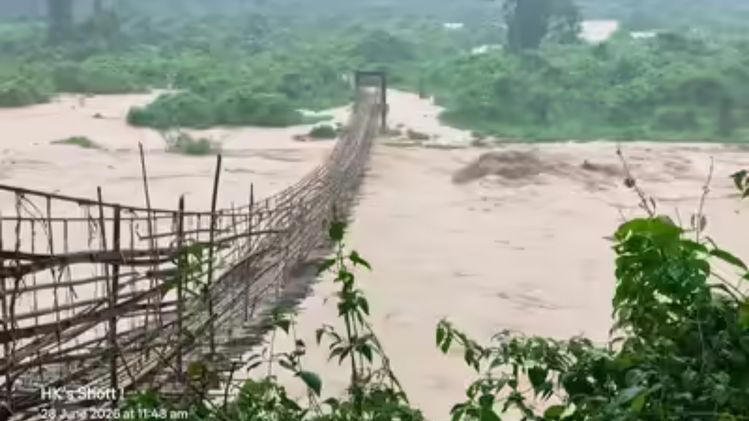
Fresh spells of heavy rainfall have triggered severe floods and landslides across four districts of Arunachal Pradesh, worsening the state’s monsoon crisis. The latest disaster has left a youth missing in East Siang district, while the overall number of people affected by floods and related incidents across the state has crossed 1.49 lakh.
Continuous rainfall has caused rivers to overflow, submerged villages, damaged roads and bridges, and disrupted normal life in several areas. The situation has prompted authorities to intensify rescue and relief operations as disaster response teams work to reach affected communities and restore essential services.
Officials continue to monitor the evolving weather conditions closely, with concerns that further rainfall could aggravate the already challenging situation in vulnerable districts.
Heavy Rainfall Triggers Fresh Floods and Landslides
Persistent monsoon showers have once again unleashed floods and landslides in multiple parts of Arunachal Pradesh. Rising river levels and unstable hill slopes have caused widespread destruction, affecting transportation, communication networks, and public infrastructure.
Several roads have been blocked due to landslides, making it difficult for emergency teams to access remote villages. Floodwaters have entered residential areas, forcing many families to leave their homes and seek shelter in safer locations.
Authorities have advised residents living in low-lying and landslide-prone areas to remain alert and follow official safety advisories as weather conditions remain unpredictable.
East Siang Youth Reported Missing
Among the latest incidents, a youth from East Siang district has been reported missing following flood-related developments.
Search and rescue teams have been deployed to locate the missing individual, with personnel from local administration, police, and disaster response agencies carrying out intensive operations despite difficult weather conditions.
Officials have stated that search efforts will continue until the missing person is traced, while authorities remain in contact with the affected family.
The incident highlights the dangers posed by rapidly rising water levels and strong currents during the monsoon season.
Over 1.49 Lakh People Affected
The cumulative impact of floods across Arunachal Pradesh has now affected more than 1.49 lakh people, making it one of the state’s most significant monsoon emergencies in recent years.
Thousands of families have experienced damage to homes, agricultural land, livestock, and public infrastructure. Floodwaters have disrupted daily life across numerous villages, while transportation difficulties have affected access to schools, healthcare facilities, and markets.
Authorities continue to assess the extent of damage as reports arrive from different districts, with the number of affected residents expected to change as fresh assessments are completed.
Four Districts Face Severe Impact
The latest wave of flooding and landslides has particularly affected four districts, where continuous rainfall has created hazardous conditions.
Road connectivity has been severely disrupted due to landslides blocking major routes, while overflowing rivers have inundated settlements and agricultural fields. Damage to bridges and culverts has further complicated transportation and delayed relief operations in some locations.
Local administrations have activated emergency response mechanisms and are working closely with disaster management agencies to coordinate rescue and relief efforts.
Officials are prioritising assistance for the worst-affected areas while monitoring vulnerable locations for additional risks.
Rescue and Relief Operations Intensified
State authorities, disaster response teams, police personnel, and local volunteers have intensified rescue and relief operations across the affected districts.
Emergency teams are distributing food, drinking water, medicines, blankets, and other essential supplies to displaced families. Temporary shelters have been established for people whose homes have been damaged or remain inaccessible due to flooding.
Medical teams have also been deployed to relief camps to provide healthcare services and prevent the spread of waterborne diseases, which often become a concern during prolonged flooding.
Authorities have appealed to residents to cooperate with rescue personnel and avoid entering flooded areas unnecessarily.
Infrastructure Suffers Extensive Damage
The heavy rainfall has caused significant damage to roads, bridges, electricity networks, water supply systems, and other public infrastructure.
Landslides have blocked highways connecting several towns, disrupting the movement of people and essential goods. In some locations, communication services have also been affected, making coordination more challenging.
Agricultural fields have suffered extensive flooding, raising concerns about crop losses and the impact on farmers’ livelihoods.
Officials are conducting detailed assessments to estimate the full extent of infrastructure damage and prepare rehabilitation plans.
Government Closely Monitoring the Situation
The Arunachal Pradesh government is closely monitoring the flood situation through district administrations and the State Disaster Management Authority.
Officials remain in regular contact with local authorities to coordinate rescue efforts, monitor weather forecasts, and ensure that relief materials reach affected communities without delay.
Emergency control rooms have been activated to receive information from flood-hit areas and facilitate rapid response wherever required.
Authorities have also urged residents to rely on official weather bulletins and avoid spreading or acting upon unverified information circulating on social media.
Importance of Disaster Preparedness
The recurring floods and landslides highlight the importance of strengthening disaster preparedness in a state characterised by mountainous terrain and heavy monsoon rainfall.
Experts emphasise the need for improved drainage systems, slope stabilisation measures, early warning mechanisms, and resilient infrastructure to reduce the impact of future disasters.
Community awareness programmes, regular disaster preparedness drills, and stronger coordination among government agencies are also considered essential for improving emergency response capabilities.
As climate variability contributes to more frequent extreme weather events, investment in disaster-resilient infrastructure has become increasingly important.
Recovery Efforts Continue
With fresh floods and landslides affecting four districts, one youth missing in East Siang, and more than 1.49 lakh people impacted, Arunachal Pradesh continues to face a challenging monsoon season.
Rescue teams, government agencies, and local communities remain engaged in relief and rehabilitation efforts aimed at ensuring the safety of affected residents and restoring essential services. While emergency operations continue, authorities remain vigilant as further rainfall could pose additional risks in vulnerable areas.
The combined efforts of disaster management agencies, volunteers, and local administrations will play a crucial role in helping communities recover from the latest wave of floods while strengthening preparedness for future natural disasters.