

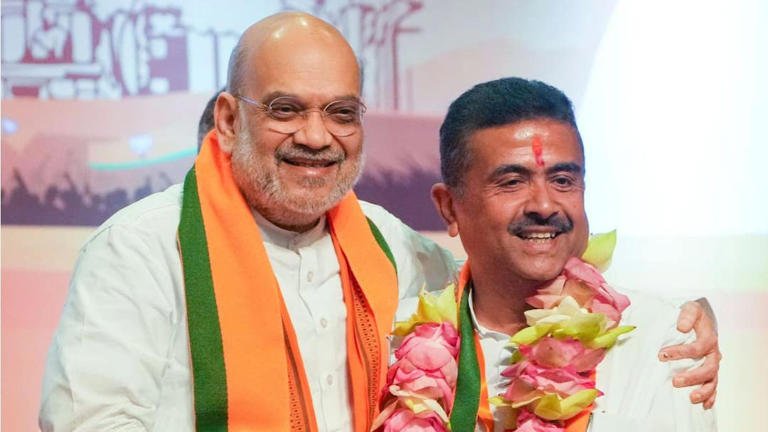
Suvendu Adhikari has emerged as one of the most influential political figures in contemporary Bengal politics. From leading mass movements to defeating some of the state’s biggest political leaders, Adhikari’s journey has remained closely watched across India.
Now, after becoming the first BJP chief minister of West Bengal, public attention has once again shifted toward his personal life — particularly his decision to remain unmarried and follow a life of celibacy.
Political supporters often describe him as a leader fully devoted to public life and political work. Over the years, Adhikari himself has indicated that he prioritised politics, social service, and organisational responsibilities over personal commitments.
His lifestyle and personal discipline have therefore become part of his larger political image.
Read More: Meghalaya Needs Slow Tourism Growth, Not ‘Samosa Tourists’: CM Conrad Sangma
Rise Of Bengal’s ‘Giant Slayer’
Suvendu Adhikari earned the reputation of a “giant slayer” after repeatedly defeating powerful political opponents in Bengal.
His political rise accelerated during the Nandigram movement, where he emerged as one of the strongest anti-land acquisition voices against the then Left Front government.
The movement transformed him into a major regional leader and significantly strengthened the political position of Mamata Banerjee and the Trinamool Congress at that time.
However, Adhikari later broke away from the Trinamool Congress and joined the Bharatiya Janata Party.
Political observers believe that shift dramatically altered Bengal’s political landscape.
His victories against Mamata Banerjee in Nandigram eventually cemented his image as one of the BJP’s most formidable leaders in Bengal.
Political Career Took Centre Stage
Throughout his political career, Suvendu Adhikari maintained a highly active public life. He spent years travelling across districts, attending organisational meetings, and strengthening grassroots political networks.
Supporters often describe him as a leader who dedicated nearly all his time to politics and public mobilisation.
Political analysts say Adhikari built his image around discipline, simplicity, and relentless political engagement.
Unlike many public figures, he rarely discussed his personal life in detail during public appearances or political campaigns.
Over time, his unmarried status became a topic of curiosity among supporters and political observers alike.
Why Suvendu Adhikari Chose Celibacy
According to people familiar with his political journey, Suvendu Adhikari chose celibacy to dedicate himself entirely to politics and public service.
Supporters close to him often claim that he believed personal responsibilities could affect his ability to remain fully committed to political work.
Political observers note that several Indian political leaders historically adopted similar lifestyles while focusing on organisational and ideological responsibilities.
Adhikari reportedly preferred maintaining a disciplined and structured daily routine centred around political activities and constituency work.
Although he has never extensively spoken about the issue publicly, his personal choice has contributed to his distinct political identity.
Many BJP supporters view his celibate lifestyle as a sign of commitment and personal sacrifice.
Family Background In Politics
Despite remaining unmarried, Suvendu Adhikari belongs to one of Bengal’s well-known political families.
His father, Sisir Adhikari, played a significant role in regional politics for decades. Other members of the Adhikari family also remained politically active in Bengal.
Political discussions and public service formed a major part of Suvendu Adhikari’s upbringing.
Observers say his family’s deep involvement in politics influenced his decision to enter public life at a young age.
He initially worked with the Congress before joining Mamata Banerjee’s political movement during the rise of the Trinamool Congress.
Over time, he established himself as one of Bengal’s strongest grassroots leaders.
Organisational Discipline Became His Identity
Political workers associated with Adhikari often describe him as highly disciplined and deeply focused on organisational matters.
He gained recognition for his ability to manage district-level political structures and maintain close contact with grassroots workers.
Analysts believe his disciplined image helped him connect with supporters across multiple regions of Bengal.
His daily political schedule reportedly involved extensive travel, regular meetings, and constant engagement with party cadres.
Observers say such a lifestyle left little room for personal or family commitments.
As a result, his decision to remain unmarried gradually became part of his public persona.
Supporters View Lifestyle As Sacrifice
Many BJP supporters interpret Adhikari’s celibate lifestyle as a form of sacrifice for political and public life.
During election campaigns, party workers often highlighted his commitment toward organisational work and constituency development.
Supporters also argue that his personal discipline strengthened his image as a leader fully dedicated to governance and political service.
Political experts note that personal lifestyle choices sometimes become symbolic in Indian politics, especially when linked to simplicity and public service.
Adhikari’s supporters therefore frequently present his celibacy as an example of personal commitment toward political responsibilities.
Critics Focus On Political Strategy
While supporters admire his lifestyle choices, critics argue that personal decisions should remain separate from political evaluation.
Opposition leaders generally focus more on his political strategies, ideological shifts, and governance record rather than his personal life.
Political analysts believe Adhikari’s rise owes more to his organisational capabilities and mass appeal than symbolic aspects of his lifestyle.
Nevertheless, his celibate image continues attracting public curiosity because it remains relatively uncommon among contemporary political leaders.
The topic has therefore become part of wider discussions surrounding his political personality.
Becoming Bengal’s First BJP Chief Minister
Suvendu Adhikari’s oath-taking as Bengal’s first BJP chief minister marked a historic turning point in the state’s political history.
The BJP ended 15 years of Trinamool Congress rule and established its first government in the state under his leadership.
Political observers say Adhikari’s journey from Mamata Banerjee’s close aide to the BJP’s chief minister reflects one of the most dramatic political transformations in Bengal.
His rise also symbolises the BJP’s growing strength in eastern India.
The swearing-in ceremony at Kolkata’s Brigade Parade Grounds witnessed the presence of senior national BJP leaders and NDA chief ministers.
Personal Simplicity Adds To Political Image
Over the years, Suvendu Adhikari’s supporters have consistently highlighted his simple lifestyle, disciplined routine, and direct interaction with grassroots workers.
Political analysts say such qualities helped him create a strong connection with ordinary voters.
His choice to remain unmarried and follow celibacy has therefore become closely linked to his larger political image.
For many supporters, it reflects dedication and commitment toward public service.
For critics, however, governance and policy outcomes will remain more important than personal lifestyle choices.
A Unique Figure In Bengal Politics
Suvendu Adhikari’s political journey continues to stand out in Bengal politics because of both his dramatic rise and his carefully cultivated public image.
From leading the Nandigram movement to becoming Bengal’s first BJP chief minister, he has remained at the centre of some of the state’s biggest political moments.
At the same time, his decision to remain unmarried and embrace celibacy has added a distinctive personal dimension to his political identity.
As Bengal enters a new political phase under BJP rule, Suvendu Adhikari’s leadership and personal story are likely to remain subjects of continued public attention.
Read More: KYKL (SOREPA) Cadre Arrested In Manipur’s Imphal West, Mobile Phone Seized