

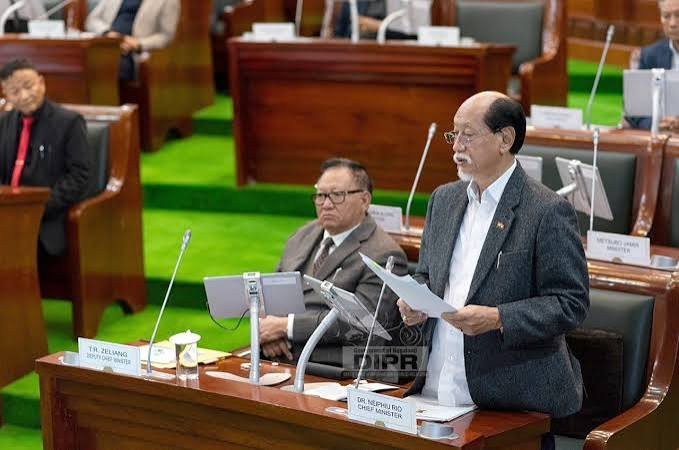
Nagaland Chief Minister Neiphiu Rio has urged the Central Government to accelerate the operationalisation of the Frontier Nagaland Territorial Authority (FNTA) for the state’s eastern districts. The demand highlights the government’s continuing focus on addressing administrative and developmental concerns in eastern Nagaland.
The FNTA proposal aims to provide a stronger institutional framework for development and governance in the region. Moreover, Rio’s appeal for faster implementation reflects the importance of translating political commitments into functioning administrative arrangements.
The issue remains closely connected with demands for improved infrastructure, greater local participation, and faster development across eastern districts.
Sovereignty Reiteration: Centre Reaffirms Arunachal Pradesh as an Integral Part of India
Neiphiu Rio Pushes for FNTA Implementation
The Neiphiu Rio FNTA demand calls for the Central Government to speed up the operationalisation process.
Rio has reportedly emphasised the need to move beyond the agreement and establish the authority in practical terms. Furthermore, operationalisation would involve determining the administrative structure, responsibilities, resources, and mechanisms required for the FNTA to function effectively.
The state government is seeking faster progress on these arrangements.
Eastern Nagaland Remains Development Priority
Eastern Nagaland consists of districts that have historically raised concerns over development gaps and limited infrastructure.
Issues involving roads, healthcare, education, employment, connectivity, and economic opportunities remain important to communities in the region. Additionally, local organisations have repeatedly sought stronger institutional attention to eastern Nagaland.
The proposed authority represents an attempt to address these concerns through a dedicated framework.
What Is the Frontier Nagaland Territorial Authority?
The Frontier Nagaland Territorial Authority is intended to provide an institutional mechanism for addressing development and governance concerns in eastern Nagaland.
The proposal emerged from negotiations surrounding demands for greater administrative attention to the region. Moreover, the authority’s effectiveness will depend on the powers, resources, and responsibilities eventually assigned to it.
Operational details will therefore remain crucial to its success.
Operationalisation Becomes Key Challenge
Agreeing to an institutional arrangement represents only the first stage of implementation.
Authorities must establish administrative procedures, identify responsibilities, allocate resources, and create functioning structures. Furthermore, coordination between the Central and state governments will remain necessary throughout the process.
Rio’s call for acceleration focuses on moving these arrangements forward.
Development Remains Central Objective
Improving development outcomes represents a major argument behind the FNTA initiative.
A dedicated institutional mechanism could help prioritise infrastructure and public services according to local requirements. Additionally, targeted planning could improve coordination across multiple departments working in eastern districts.
Effective implementation could therefore have practical benefits for residents.
Connectivity Could Receive Greater Attention
Eastern Nagaland faces significant geographical and connectivity challenges.
Improved roads, telecommunications, transport links, and other infrastructure can support economic activity and public service delivery. Moreover, better connectivity can help local producers access markets and expand employment opportunities.
The FNTA could provide a framework for coordinating such development priorities.
Local Participation Will Matter
For the authority to achieve its objectives, local communities will need meaningful participation.
Local representatives can help identify development priorities and monitor implementation. Furthermore, community involvement can make administrative programmes more responsive to conditions on the ground.
The final structure of the FNTA will therefore determine how effectively local voices influence decision-making.
Centre-State Coordination Remains Essential
The Central Government and Nagaland government will need to coordinate closely to operationalise the authority.
Questions involving funding, administrative powers, staffing, development programmes, and institutional responsibilities may require joint decisions. Additionally, coordination with existing state institutions will help prevent duplication of responsibilities.
A clear framework could make the transition smoother.
Political Commitments Face Implementation Test
The demand for faster operationalisation also highlights a broader challenge: converting political commitments into measurable outcomes.
Eastern Nagaland communities will likely look for tangible improvements rather than administrative announcements alone. Moreover, visible progress in infrastructure and public services could strengthen confidence in the proposed arrangement.
Implementation will therefore remain the key measure of success.
What Happens Next?
The immediate focus will remain on discussions between the Central and state governments regarding the FNTA’s operational framework.
Authorities may need to finalise administrative responsibilities, funding arrangements, institutional structures, and development priorities. Furthermore, consultations with eastern Nagaland stakeholders could help ensure that the authority reflects local expectations.
The pace of these decisions will determine how quickly the FNTA becomes functional.
Conclusion
The Neiphiu Rio FNTA demand has placed renewed focus on the proposed Frontier Nagaland Territorial Authority and its operationalisation in eastern districts. The Nagaland Chief Minister’s call for faster action reflects the state’s push for stronger administrative attention and development in the region.
Moreover, effective implementation could help address longstanding concerns involving infrastructure, public services, connectivity, and local participation. At the same time, the authority’s success will depend on clear responsibilities, adequate resources, and effective Centre-state coordination.
Overall, fast-tracking the FNTA could become an important step toward strengthening governance and development in eastern Nagaland.
FAQs
1. What is the Frontier Nagaland Territorial Authority?
The FNTA is a proposed institutional framework aimed at addressing governance and development concerns in eastern Nagaland.
2. What has Neiphiu Rio requested?
The Nagaland Chief Minister has urged the Central Government to fast-track the operationalisation of the FNTA.
3. Why is the FNTA important?
The authority could provide greater institutional focus to development priorities in eastern Nagaland.
4. What issues could the FNTA address?
Potential priorities include infrastructure, connectivity, healthcare, education, employment, and economic development.
5. What is needed to operationalise the FNTA?
The governments would need to establish its administrative structure, responsibilities, funding arrangements, staffing, and coordination mechanisms.