

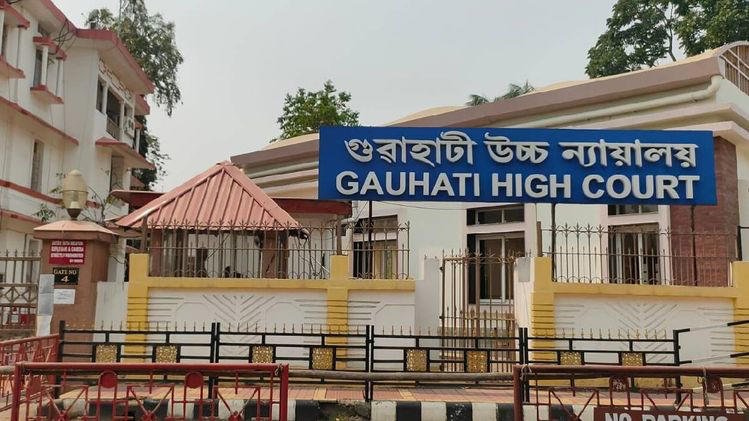
The Gauhati High Court has taken suo motu cognisance of serious conditions in Assam’s jails. The court flagged concerns over prison health, overcrowding, mental healthcare and administration.
A division bench led by Chief Justice Ashutosh Kumar and Justice Arun Dev Choudhury heard the matter. The court registered the case as a suo motu writ petition.
The court acted after a media report highlighted problems at Guwahati Central Jail. It also considered inspection reports on prison conditions across Assam.
The bench described the overall situation as a “grim state of affairs”. It said the problems needed attention on an emergency basis.
The court has now sought a detailed response from the state departments responsible for prison administration and health.
Court Flags Overcrowding in Guwahati Central Jail
The court examined an inspection report prepared after a visit to Guwahati Central Jail on August 2, 2026.
The jail has a registered capacity of 1,400 inmates. However, the inspection found 1,672 prisoners inside the facility.
The figure included 77 women prisoners. The numbers showed a significant gap between the sanctioned capacity and the actual prison population.
The court also considered reports of overcrowding in other Assam jails. Some facilities reportedly housed 42 to 45 prisoners in cramped rooms with only one toilet.
The inspection reports therefore raised concerns about basic living conditions inside the state’s prisons.
Overcrowding can place additional pressure on sanitation, healthcare and prison staff. It can also make it harder for authorities to provide adequate space and medical attention to inmates.
HIV Cases Add to Health Concerns
The court also examined the issue of HIV among inmates at Guwahati Central Jail.
A report cited by the court had earlier highlighted 38 HIV-positive inmates at the facility. The figure included five women.
The cases emerged through health screening carried out at the jail. The Assam State AIDS Control Society has been involved in testing and medical support.
The court also referred to the findings of the Chief Judicial Magistrate, Kamrup (Metro), during the August 2 inspection.
That report recorded 31 HIV-positive inmates at the time of inspection. It included two women prisoners. The report also identified one inmate with tuberculosis.
The different figures relate to different reporting and inspection points. The court nevertheless treated prison healthcare as an urgent concern.
The HIV-positive inmates receive antiretroviral treatment. Authorities have also maintained medical arrangements for prisoners who need continued care.
Mental Healthcare Under Court Scrutiny
Mental healthcare emerged as another major concern before the bench.
The inspection report recorded 19 prisoners undergoing psychiatric treatment at Guwahati Central Jail.
The court also heard concerns about the availability of regular psychiatric services. Reports indicated that some inmates showed signs of psychological disorders.
The bench noted that mental healthcare appeared inadequate in several prisons. It stressed the need for authorities to address the issue.
Mental health services form an important part of prison healthcare. Long periods of incarceration can create additional psychological pressures for inmates.
The court’s intervention has therefore brought renewed attention to the availability of doctors, psychiatrists and other healthcare professionals inside Assam’s prisons.
27 Unnatural Deaths and Suicides Reported
The court also raised concerns over deaths inside Assam’s prisons.
According to the bench, 27 cases of unnatural deaths and suicides were reported in Assam jails over the past five years.
The court specifically referred to three suicides involving convicts at Nalbari District Jail. It also noted similar incidents reported from Udalguri jail.
The figures prompted the court to examine the broader conditions in prisons.
The bench’s observations have placed inmate safety alongside healthcare and overcrowding as key areas requiring government attention.
The court is expected to examine the state’s response when the case comes up again.
Delays in Remission Applications Flagged
The High Court also raised concerns about delays in processing remission applications.
Life convicts reportedly complained that their applications remained pending before the remission board for two to three years.
The court examined minutes of the State Legal Review Board meeting held on March 19, 2026.
According to those minutes, authorities returned 32 remission proposals submitted in 2025. Out of 58 life-imprisonment cases considered, only one received approval.
The issue of remission has also appeared in other recent proceedings before the Gauhati High Court.
In a separate September hearing, the court directed the states under its jurisdiction to explain how they communicate rejected remission applications and inform convicts about their right to challenge such decisions.
The latest suo motu proceedings therefore place both prison conditions and administrative delays under judicial scrutiny.
State Asked to Submit Detailed Affidavit
The High Court has asked the departments concerned to explain the measures taken to address the problems.
Additional Advocates General P. N. Goswami and B. Gogoi represented the departments dealing with prison administration and health.
The court asked them to coordinate with the relevant authorities. They must submit a detailed affidavit before the next hearing.
The affidavit must outline the action already taken and the steps planned to address the concerns.
The court has listed the matter for October 8, 2026.
The response will give the court an opportunity to assess the measures being taken across Assam’s prison system.
Assam Prisons Face Multiple Challenges
The court’s observations point to several connected challenges within Assam’s prison system.
Overcrowding remains one of the most visible problems. Guwahati Central Jail housed 1,672 inmates during the August inspection against a capacity of 1,400.
Healthcare presents another challenge. HIV, tuberculosis and psychiatric conditions require regular monitoring and treatment.
Mental healthcare also needs attention. The court’s observations suggest that some inmates do not receive regular psychiatric support.
Administrative delays create another concern. Long-pending remission applications can affect prisoners who seek consideration under existing rules.
The court has brought these issues together in one proceeding. This could allow the state to present a coordinated response.
Court Seeks Accountability From State
The Gauhati High Court’s intervention places responsibility on the state departments managing Assam’s prisons.
The court has not issued a final ruling on the broader prison system. Instead, it has sought detailed information and action from the authorities.
The next hearing will focus on the state’s response and the remedial measures already taken.
The proceedings could lead to further directions if the court finds that existing measures do not adequately address the concerns.
For now, the case highlights the need for authorities to examine prison capacity, healthcare, mental health services, inmate safety and remission procedures.
The October 8 hearing is expected to provide the next major update on the state’s response to the concerns raised by the High Court.