

The Cockroach Janta Party (CJP) has announced plans to take up the issue of Election Commission reforms following reports of disagreements within the poll panel.
CJP founder Abhijeet Dipke announced the move on September 23. He wrote on X, “Election Commission Thik Karo! Important PC tomorrow in Delhi. Gyanesh, it’s done bro.”
The statement referred to Chief Election Commissioner Gyanesh Kumar. The organisation cancelled programmes scheduled for Thursday and announced a press conference in Delhi on the theme “Hijacking of India’s Democracy.”
The development came after reports that two Election Commissioners had raised objections over several decisions linked to electoral-roll revision.
CJP Says Voting Rights Are Its Main Concern
The CJP has previously campaigned on issues such as school infrastructure, tribal education, unemployment and examination-related problems.
However, the organisation said it would now focus on the functioning of the Election Commission.
CJP chief spokesperson Saurav Das said campaigns on other issues would have limited impact if citizens could not exercise their right to vote.
He alleged that the Election Commission was “stealing our votes” and described the poll body as compromised. These statements are allegations by the CJP and have not been established as facts.
Das said elections were the main mechanism through which citizens could seek political change. He argued that protecting voting rights was therefore central to the organisation’s other campaigns.
‘Gyanesh, It’s Done Bro’ Message Draws Attention
Dipke’s social media message quickly became the central phrase associated with the CJP’s latest campaign.
The phrase was directed at CEC Gyanesh Kumar and came with an announcement of a press conference in Delhi.
The organisation said its leadership would explain its position on electoral reforms and the functioning of the Election Commission.
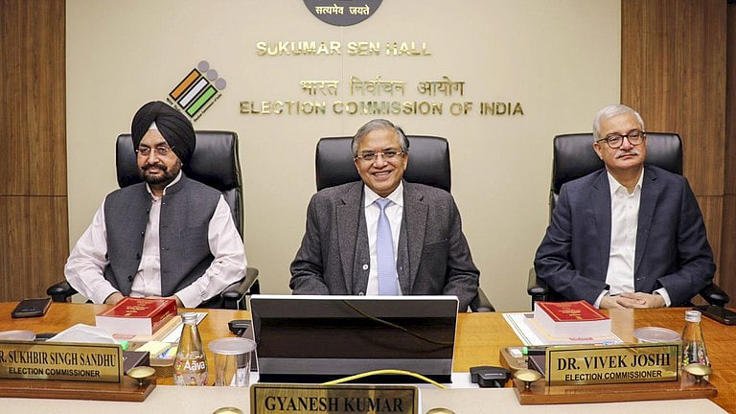
The CJP’s decision followed a report by The Indian Express that highlighted repeated objections reportedly raised by Election Commissioners Sukhbir Singh Sandhu and Vivek Joshi.
The issue has since attracted attention from opposition parties and other groups seeking greater scrutiny of the poll panel.
Two Commissioners Reportedly Raised Objections
According to the Indian Express report, Sandhu and Joshi formally objected at least 14 times over 10 months to decisions and orders of the Election Commission.
The reported objections covered several electoral-roll matters.
These included the addition, deletion and restoration of voter names. They also reportedly covered changes to the voter registration process during the Special Intensive Revision (SIR) of electoral rolls.
The report also mentioned concerns related to Form 6, which voters use to apply for inclusion in electoral rolls.
The reported objections have raised questions about internal decision-making within the three-member Election Commission.
SIR Remains at the Centre of the Dispute
The Special Intensive Revision of electoral rolls has become a major political issue.
The exercise involves reviewing electoral rolls and verifying voter information. It can result in additions, deletions, corrections or restoration of names based on the applicable verification process.
Opposition parties have raised concerns about the possible exclusion of eligible voters. They have demanded greater transparency in the process.
The Election Commission has maintained that electoral-roll revision is part of its constitutional responsibilities.
The latest dispute over internal objections has added another dimension to the SIR debate.
Election Commission Says Decisions Were Unanimous
The Election Commission has rejected suggestions that the reported objections demonstrate an institutional breakdown.
EC sources said the reported differences formed part of the normal deliberative process. They also maintained that decisions taken by the Commission, including those concerning SIR, were unanimous and received the approval of all three commissioners.
This position differs from the political interpretation placed on the reported objection notes.
The existence of an internal objection does not by itself establish that a final Commission decision was rejected or overturned.
The Commission’s response has therefore become an important part of the ongoing debate.
Opposition Parties Also Question Election Commission
The CJP’s announcement comes amid wider opposition criticism of the Election Commission.
Several opposition leaders have questioned the conduct of electoral-roll revisions and demanded action against the CEC.
Some opposition parties have also called for the SIR process to be withdrawn.
The debate intensified after reports of the objections by Sandhu and Joshi became public.
However, political allegations about the Commission’s conduct remain contested. The Election Commission has continued to defend its procedures and decisions.
Focus on Protection of Voting Rights
The CJP says its decision to shift attention towards election reforms comes from concerns about voting rights.
Das argued that the right to vote is central to changing governments and public policy through elections.
He said the organisation could continue working on schools, employment and infrastructure. However, he argued that such campaigns would have less impact if people could not exercise their voting rights.
The organisation has therefore placed electoral reforms at the centre of its immediate political messaging.
Delhi Press Conference Planned
The CJP cancelled its scheduled programmes and planned a press conference in Delhi at noon on September 24.
The organisation said its leadership would discuss what it described as the “Hijacking of India’s Democracy.”
The meeting is expected to focus on the functioning of the Election Commission and the reported differences among its members.
The announcement also signals a shift in the CJP’s public campaign strategy.
Instead of concentrating only on local governance and social issues, the organisation is now seeking attention for a national institutional issue.
Debate Over the Three-Member Poll Panel
The controversy has also renewed attention on the structure of the Election Commission.
The Commission currently has three members: the Chief Election Commissioner and two Election Commissioners.
The CEC heads the institution, while the other Election Commissioners also participate in its decision-making process.
The reported objections have prompted questions about how differences between members are handled.
The Election Commission has said that its final decisions were unanimous. The reported objection notes, meanwhile, have led to demands for greater transparency about internal deliberations.
Electoral Roll Process Under Scrutiny
Electoral rolls are central to the election process because they determine who can participate as a voter.
Changes to voter lists therefore have direct consequences for citizens.
The SIR process has brought particular attention to verification procedures, voter additions and deletions.
The latest controversy has expanded that discussion to include the internal functioning of the Election Commission.
Questions about electoral databases and voter registration systems are also part of the reported objections by the two commissioners.
CJP’s Campaign Enters a New Phase
The CJP’s decision marks a new phase in its campaign.
The organisation has said that protecting voting rights must take priority because elections provide citizens with a formal mechanism to influence government.
Its announcement came directly after reports of objections within the Election Commission.
At the same time, the Election Commission has said that all major decisions, including those concerning SIR, were approved unanimously.
The competing positions mean that the controversy remains centred on questions of institutional functioning, electoral-roll management and transparency.
As the CJP takes its Election Commission reform campaign to Delhi, its press conference is expected to provide more details about the reforms and actions it intends to seek. The wider debate will also continue to involve the Election Commission’s response, opposition demands and any further information about the reported objections by the two commissioners.