

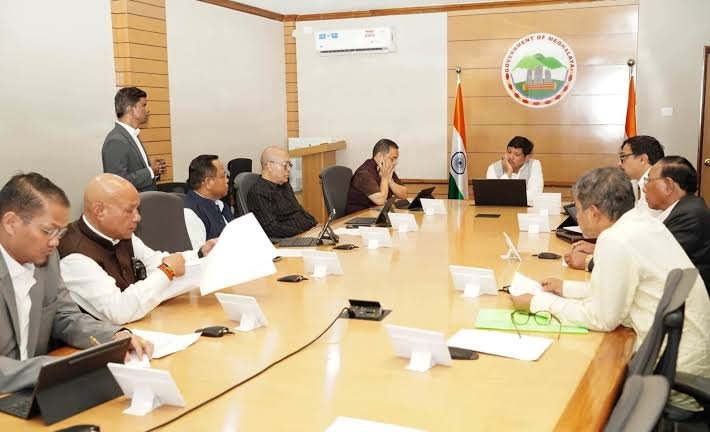
The Meghalaya Cabinet has approved sweeping higher education reforms, including the establishment of two new state universities. The decision marks a significant step toward expanding Meghalaya’s higher education infrastructure and creating additional opportunities for students within the state.
The proposed universities could strengthen access to higher education while supporting specialised academic programmes and research. Moreover, the Cabinet’s decision reflects the government’s broader effort to modernise the state’s education system and improve institutional capacity.
The move could also reduce pressure on existing institutions as Meghalaya’s demand for higher education continues to grow.
FM Sitharaman Asks Banks to Boost Financial Literacy for MUDRA Beneficiaries
Meghalaya Cabinet Approves New Universities
The Meghalaya higher education reform package includes approval for two new state universities.
The Cabinet’s decision provides the administrative foundation for expanding the state’s university network. Furthermore, the new institutions could allow Meghalaya to broaden academic offerings and provide students with more choices for undergraduate and postgraduate education.
The government will now need to advance the required legislative and administrative processes.
Expansion Could Improve Access
Students in Meghalaya often travel outside the state for specialised courses and higher education opportunities.
Additional state universities could provide more opportunities closer to home. Additionally, stronger local institutions could help students reduce relocation and associated educational expenses.
Greater access could particularly benefit students from communities located away from Shillong and other major educational centres.
New Institutions Could Support Research
Universities play an important role beyond classroom education.
The proposed institutions could develop research programmes focused on Meghalaya’s distinctive social, environmental, economic, and cultural conditions. Moreover, locally focused research could help policymakers address challenges through evidence-based solutions.
Research partnerships with existing institutions could further strengthen the state’s academic ecosystem.
Government Seeks Higher Education Modernisation
The Cabinet’s decision forms part of a broader push to modernise higher education.
Modern universities require strong academic programmes, qualified faculty, research facilities, digital infrastructure, libraries, and student-support systems. Furthermore, effective governance will determine whether new institutions can maintain high academic standards.
Establishing universities therefore represents only the first stage of the reform process.
Employment Opportunities Could Increase
New universities could also create employment opportunities within Meghalaya.
Academic positions, administrative roles, research programmes, technical services, and campus operations could generate jobs. Additionally, university campuses can stimulate surrounding economic activity through housing, transportation, retail, and other services.
The broader economic impact could extend beyond the education sector.
Focus on Local Needs
Meghalaya’s higher education system can benefit from programmes that reflect the state’s specific requirements.
Courses related to environmental studies, tourism, agriculture, technology, healthcare, indigenous knowledge, and regional development could support local priorities. Moreover, partnerships between universities and industries could improve students’ practical skills.
Such an approach could connect education more closely with employment opportunities.
Existing Institutions Could Benefit
The expansion of the university network does not necessarily replace Meghalaya’s existing higher education institutions.
Instead, new universities could complement colleges and established universities by creating additional academic pathways. Furthermore, collaboration among institutions could support faculty development, research, student exchanges, and shared resources.
Effective coordination will remain important as the system expands.
Infrastructure Will Determine Success
The quality of infrastructure will play a major role in determining how effectively the new universities operate.
Authorities will need to plan campuses, classrooms, laboratories, libraries, hostels, digital facilities, and other essential services. Additionally, timely infrastructure development can prevent new institutions from operating with limited capacity.
Long-term investment will therefore remain necessary.
Faculty Recruitment Will Be Crucial
Qualified faculty will form the foundation of the new universities.
The government will need transparent recruitment processes to attract experienced teachers and researchers. Moreover, competitive academic environments can help institutions build strong reputations and retain talented professionals.
Faculty development programmes could further improve academic quality.
Students Could Gain More Choices
The establishment of two additional state universities could give Meghalaya students greater flexibility in selecting courses and institutions.
Students could have access to a wider range of academic programmes without necessarily leaving the state. Furthermore, new institutions could introduce emerging fields that match changing employment requirements.
The impact will depend on the courses and facilities eventually offered.
What Happens Next?
The government will need to translate the Cabinet’s approval into operational institutions.
Authorities may have to complete legislative procedures, identify locations, allocate funding, develop infrastructure, establish governance structures, and recruit faculty. Moreover, clear timelines will help students and educators understand when the universities could begin functioning.
Implementation will ultimately determine the success of the reform.
Conclusion
The Meghalaya higher education reform marks a major development with the state Cabinet approving the establishment of two new state universities. The decision could expand access, diversify academic opportunities, strengthen research, and support the state’s long-term education goals.
Moreover, new institutions could create employment and encourage research focused on Meghalaya’s distinctive needs. At the same time, infrastructure, faculty recruitment, funding, and academic governance will determine whether the universities achieve their intended objectives.
Overall, the two new state universities could significantly strengthen Meghalaya’s higher education landscape if the government follows the Cabinet decision with effective and timely implementation.
FAQs
1. What did the Meghalaya Cabinet approve?
The Cabinet approved a higher education reform package that includes establishing two new state universities.
2. Why are the new universities important?
They could expand access to higher education and provide students with additional academic and research opportunities within Meghalaya.
3. Could the universities create jobs?
Yes. Universities can create academic, administrative, research, technical, and support-sector employment.
4. What will determine their success?
Infrastructure, faculty recruitment, funding, academic standards, governance, and the quality of courses will all play important roles.
5. How could students benefit?
Students could gain more choices of courses and institutions and may have greater opportunities to pursue higher education within the state.