

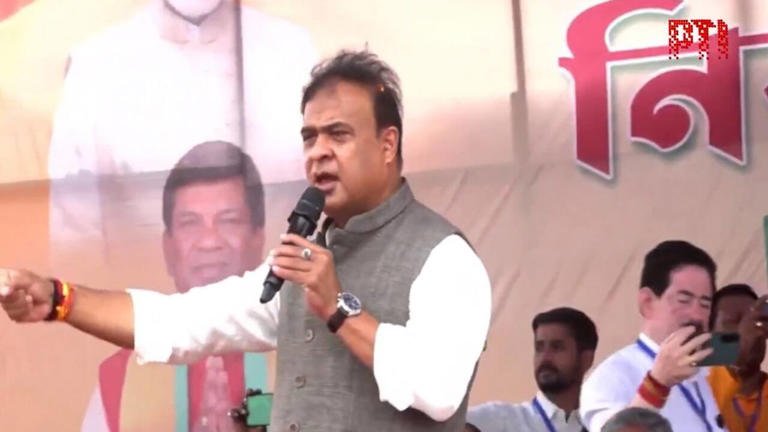
Assam Chief Minister Himanta Biswa Sarma strongly responded to comments made by senior Congress leader Abhishek Manu Singhvi, rejecting what he described as attempts to lecture him on democracy.
The exchange has added a new dimension to the ongoing political discourse, with both leaders presenting contrasting viewpoints on governance and democratic principles. Sarma made it clear that he does not accept lessons on democracy from his political opponents.
The statement, which included the phrase “Let me be clear, this is just…,” reflects the sharp tone of the debate. Moreover, it highlights the intensity of political exchanges in the current environment.
Read More: Assam Exit Poll: Did Himanta’s Stand on Infiltration Help BJP?
Background of the Political Exchange
The controversy began after Abhishek Manu Singhvi made remarks criticizing certain actions and policies. His comments focused on democratic practices and governance issues.
In response, Himanta Biswa Sarma rejected the criticism and defended his government’s approach. He emphasized that his administration operates within the framework of democratic norms.
Such exchanges are common in political discourse. However, they often attract public attention due to their impact on perceptions and narratives.
Moreover, the debate reflects broader ideological differences between political parties. These differences shape how leaders interpret and present issues related to democracy.
Sarma’s Strong Rebuttal
Himanta Biswa Sarma delivered a firm rebuttal to Singhvi’s remarks. He stated that he does not require guidance on democratic principles from opposition leaders.
According to Sarma, his government remains committed to transparency and accountability. He argued that his administration has consistently followed due process in decision-making.
Furthermore, he highlighted his track record in governance. He pointed to initiatives and policies that, in his view, demonstrate adherence to democratic values.
Sarma’s response also aimed to counter what he described as political narratives driven by opposition parties. He suggested that such criticism often lacks context.
Congress Leader’s Perspective
Abhishek Manu Singhvi, a senior leader of the Congress party, has often spoken on issues related to law and governance. His remarks in this instance focused on the importance of upholding democratic standards.
Singhvi’s perspective reflects the opposition’s role in questioning government actions. By raising concerns, opposition leaders aim to ensure accountability.
However, such statements can also lead to sharp responses from ruling party leaders. This dynamic is a key feature of democratic systems.
Moreover, Singhvi’s comments have contributed to a broader debate on governance practices. This debate continues to evolve as political developments unfold.
Political Reactions and Public Discourse
The exchange between Sarma and Singhvi has sparked reactions across political circles. Supporters of both leaders have expressed their views on the issue.
Some have praised Sarma’s assertive response, viewing it as a defense of his government’s record. Others have supported Singhvi’s stance, emphasizing the need for scrutiny and debate.
Public discourse has also expanded through media coverage and discussions. As a result, the issue has gained wider attention.
In addition, analysts have noted that such exchanges can influence public perception. They shape how voters view leadership and governance.
Role of Democratic Debate
The incident highlights the role of debate in a democratic system. Open discussions and differing viewpoints are essential for healthy governance.
Political leaders often engage in debates to present their perspectives. These exchanges allow citizens to understand different positions on key issues.
At the same time, maintaining respectful communication remains important. Constructive dialogue can lead to better outcomes and stronger institutions.
Moreover, debates on democracy itself underscore its significance. They remind stakeholders of the need to uphold principles such as fairness, transparency, and accountability.
Broader Implications for Assam Politics
The exchange has implications for the political landscape in Assam. It reflects the ongoing competition between ruling and opposition parties.
Such debates can influence voter sentiment and shape political narratives. Leaders use these moments to reinforce their positions and connect with supporters.
Furthermore, the discussion on democracy highlights key issues that resonate with the public. Governance practices, accountability, and transparency remain central concerns.
As a result, political discourse in Assam continues to evolve. Exchanges like this contribute to the dynamic nature of the state’s politics.
Importance of Leadership Communication
The way leaders communicate during such exchanges is crucial. Clear and confident messaging can strengthen their position.
Himanta Biswa Sarma’s response demonstrates a direct communication style. He addressed the criticism head-on and presented his perspective.
Similarly, Abhishek Manu Singhvi’s remarks reflect the opposition’s approach to raising concerns. This interaction showcases different communication strategies.
Moreover, effective communication helps leaders engage with the public. It allows them to explain policies and respond to criticism.
Conclusion
The exchange between Himanta Biswa Sarma and Abhishek Manu Singhvi highlights the intensity of political debate in India. Sarma’s strong rebuttal underscores his stance on governance and democracy.
At the same time, Singhvi’s remarks reflect the role of the opposition in questioning government actions. Together, these perspectives contribute to a broader discussion on democratic principles.
As political discourse continues, such exchanges will remain a key feature of public life. They offer insights into leadership, governance, and the functioning of democracy.
Read More: Assam Tightens Security Ahead of Vote Counting, CS Ravi Kota Warns of Zero Tolerance