

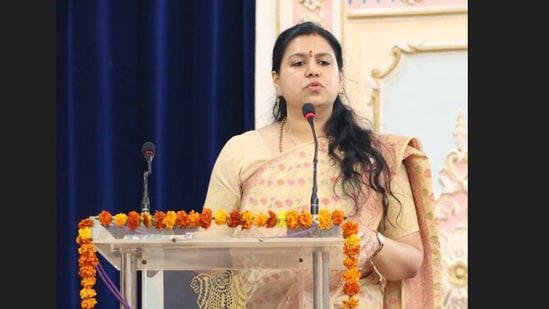
An IAS officer has reflected on his journey from IIT Delhi to IIM Bangalore and eventually into the civil services, sharing a thoughtful perspective on the limitations of formal education.
Despite studying at two of India’s most prestigious institutions and later entering the civil services, the officer said his education did not teach him several important lessons about life, relationships and personal growth.
His reflections have drawn attention because they challenge the common belief that academic success alone can prepare a person for every challenge in life. The officer’s journey shows how education can provide knowledge, skills and professional opportunities while still leaving many practical and emotional lessons to be learned through experience.
From IIT Delhi to IIM Bangalore
The officer’s academic journey began at IIT Delhi, one of India’s leading engineering institutions.
Studying at IIT Delhi provided him with a strong academic foundation and exposed him to a competitive environment. The experience also opened doors to further professional opportunities.
He later joined IIM Bangalore, another premier institution, where he expanded his understanding of management and leadership.
For many students, gaining admission to institutions such as IIT Delhi and IIM Bangalore represents the highest level of academic achievement.
However, the officer’s reflection suggests that even the best educational institutions cannot teach every lesson needed to navigate life.
Academic success can help individuals build careers, but personal experiences often shape their understanding of relationships, failure, happiness and emotional well-being.
Choosing the Civil Services
After completing his education, the officer chose a career in the civil services.
The decision marked another important stage in his journey. The civil services require individuals to deal with complex social, administrative and human challenges.
Unlike classrooms and academic institutions, public service often places officers in situations where they must make decisions involving people from different backgrounds.
The experience can teach lessons that textbooks cannot always provide.
An IAS officer may have to manage pressure, handle disagreements, respond to crises and understand the concerns of ordinary citizens.
These experiences often require empathy, patience and practical judgment.
The officer’s journey from IIT Delhi and IIM Bangalore to the civil services therefore reflects a transition from academic learning to real-world experience.
Education Does Not Teach Every Life Lesson
The central message of the officer’s reflection is that formal education, despite its importance, cannot teach every essential lesson.
Schools and universities often focus on subjects, examinations, grades and professional skills.
However, life also requires people to understand emotions, relationships and personal challenges.
The officer pointed towards the gap between academic achievement and life education.
A person can earn degrees from prestigious institutions and still need to learn how to deal with failure, uncertainty and difficult relationships.
These lessons often come through experience.
Education can provide knowledge, but experience helps people understand how to apply that knowledge in unpredictable situations.
Success Is More Than Academic Achievement
The officer’s reflections also raise an important question about how society defines success.
Students often grow up believing that good marks, admission to prestigious institutions and high-paying jobs represent the ultimate goals.
Academic achievement remains valuable, but it does not automatically guarantee happiness or fulfilment.
A successful career may provide financial security and professional recognition. However, people also need emotional strength and meaningful relationships.
The officer’s journey highlights the importance of looking beyond certificates and job titles.
Personal growth can involve learning how to manage stress, accept failure and maintain healthy relationships.
These skills can become just as important as technical knowledge.
Real Life Teaches Through Experience
Some of the most important lessons in life come from experiences that people cannot plan.
Failure can teach resilience. Difficult relationships can teach empathy and patience. Unexpected challenges can help people understand their own strengths.
Formal education often provides structured learning. Life, however, rarely follows a fixed syllabus.
The IAS officer’s reflections suggest that people should remain open to learning even after completing their formal education.
Graduation does not mark the end of education.
Instead, learning continues through work, relationships, mistakes and everyday experiences.
This mindset can help people adapt to changing circumstances.
Civil Services Offers a Different Kind of Learning
The civil services can expose officers to realities that are very different from academic environments.
An officer may interact with people facing poverty, natural disasters, administrative difficulties and social challenges.
Such experiences require more than technical knowledge.
They demand emotional intelligence and an ability to understand different perspectives.
Working directly with communities can also teach officers about the gap between policies on paper and realities on the ground.
The officer’s civil services journey may therefore have offered lessons that differed greatly from those learned at IIT Delhi and IIM Bangalore.
Public service can become a continuous process of learning, adapting and understanding people.
Need for More Holistic Education
The officer’s reflection also raises questions about whether educational institutions should place greater emphasis on life skills.
Students can benefit from learning about communication, emotional intelligence, financial awareness and mental resilience.
These skills can help people handle challenges beyond the classroom.
A more holistic approach to education could prepare students not only for careers but also for life.
Academic excellence and personal development do not have to compete with each other.
Educational institutions can encourage students to develop both knowledge and emotional maturity.
The officer’s experience suggests that success should involve continuous learning rather than simply collecting degrees.
A Journey That Goes Beyond Degrees
The journey from IIT Delhi to IIM Bangalore and then to the civil services represents remarkable academic and professional achievement.
However, the officer’s reflection makes the story more meaningful because it acknowledges the limitations of formal education.
Degrees can create opportunities, but they cannot replace the lessons that come from living life.
People continue to learn after leaving classrooms and entering the professional world.
The IAS officer’s journey serves as a reminder that education is an important part of personal development, but it is not the complete picture.
Knowledge can help people build careers. Experience, relationships and challenges can help them understand life.
His reflection encourages students and professionals to value academic success while also remaining open to the lessons that cannot be found in textbooks.
In the end, the journey from prestigious institutions to public service shows that learning never truly ends.