

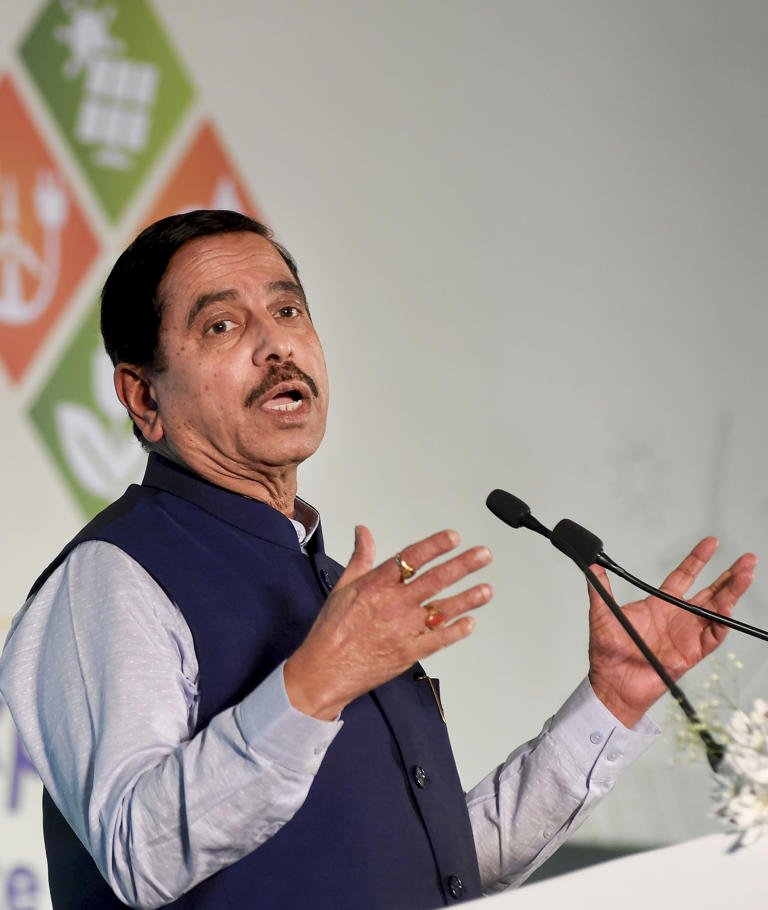
India will require investments of more than Rs 30 lakh crore to achieve its ambitious target of building 500 GW of non-fossil fuel electricity generation capacity, Union Minister for New and Renewable Energy Pralhad Joshi has said.
The investment requirement highlights the scale of India’s clean energy transition as the country works towards expanding renewable and other non-fossil sources of power. The 500 GW target forms a key part of India’s broader strategy to reduce the carbon intensity of its economy and strengthen its clean energy infrastructure.
Joshi said achieving the target would require significant financial support and large-scale participation from both domestic and international investors. The transition will involve not only expanding solar and wind power capacity but also strengthening transmission networks, energy storage systems and other supporting infrastructure.
India Targets 500 GW of Non-Fossil Fuel Capacity
India has set a target of achieving 500 GW of installed electricity capacity from non-fossil fuel sources by 2030.
The target represents a major expansion of India’s clean energy sector and includes renewable energy sources such as solar, wind, hydropower and other non-fossil sources.
The government has been taking steps to accelerate the deployment of renewable energy projects and attract greater private sector participation.
According to Joshi, achieving the 500 GW target will require a substantial increase in investment across the entire clean energy ecosystem.
The expansion of generation capacity alone will not be sufficient, making investments in associated infrastructure equally important.
Over Rs 30 Lakh Crore Investment Required
Joshi said more than Rs 30 lakh crore in investment would be needed to achieve the 500 GW non-fossil fuel capacity target.
The funding requirement reflects the massive scale of infrastructure development needed over the coming years.
Investment will be required for the construction of renewable energy projects, including large solar and wind installations, as well as for the development of transmission networks capable of carrying clean electricity to demand centres.
Energy storage will also play a crucial role as India expands its renewable capacity. Solar and wind power generation can vary depending on weather and time of day, increasing the need for storage technologies that can help ensure a stable and reliable electricity supply.
Solar and Wind to Drive Clean Energy Expansion
Solar and wind energy are expected to remain central to India’s renewable energy growth.
India has significant potential for solar power generation, while several states also have strong wind energy resources.
The government has been encouraging investment in these sectors through policy initiatives, auctions and other measures designed to expand installed capacity.
The growth of renewable energy could also create opportunities for manufacturing, innovation and employment.
As India increases its clean energy capacity, there is also a growing focus on developing domestic manufacturing capabilities for equipment such as solar modules, wind turbines and energy storage systems.
Transmission and Storage Key to Meeting Target
The expansion of non-fossil fuel capacity will require major improvements in India’s electricity transmission and storage infrastructure.
Renewable energy projects are often located in areas far from major centres of electricity demand. Efficient transmission networks will therefore be necessary to transport power from generation sites to consumers.
Energy storage technologies will also become increasingly important as the share of renewable energy in the electricity system rises.
Investment in battery storage, pumped hydro storage and other technologies could help manage fluctuations in renewable generation and improve grid stability.
Joshi’s remarks underline that India’s clean energy transition will require investment across multiple sectors rather than focusing solely on building additional solar and wind projects.
Private and International Investment to Play Major Role
Achieving the investment target will require participation from the private sector and international investors.
India’s renewable energy market has attracted significant investment over the years, and the government is expected to continue working to create conditions that encourage further funding.
Stable policies, improved access to financing and efficient approval processes could play an important role in attracting investment at the scale required.
International cooperation may also support India’s clean energy transition through technology partnerships, financing and investment.
The government has emphasised the importance of expanding renewable energy while ensuring that the transition supports economic growth and energy security.
India’s Clean Energy Transition Gains Momentum
India’s push towards 500 GW of non-fossil fuel capacity reflects its broader commitment to expanding clean energy and reducing dependence on fossil fuels.
The target will require one of the largest energy infrastructure investments undertaken in the country.
With more than Rs 30 lakh crore estimated to be needed, the coming years will require coordinated efforts from the government, private companies, financial institutions and international partners.
The success of the transition will depend on the pace of project development, availability of finance, expansion of transmission infrastructure and progress in energy storage technologies.
As India moves towards its 2030 target, the clean energy sector is expected to remain a major area of investment and policy focus.
Joshi’s assessment of the investment requirement highlights both the scale of the challenge and the economic opportunities associated with India’s transition towards a larger, cleaner and more diversified energy system.