

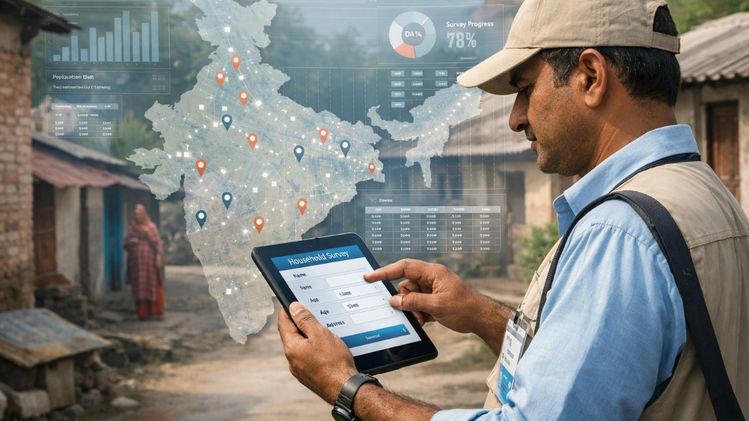
India has begun preparations for the Census 2027, which will be conducted in two phases across the country. Authorities aim to carry out the massive data collection exercise with improved planning and digital tools. However, ongoing protests in Manipur have raised concerns about how the situation may affect the process in certain regions.
Officials have emphasized that the census remains a critical exercise for governance, planning, and policy formulation. At the same time, they have acknowledged the need to address challenges in sensitive areas to ensure smooth execution.
Read More: Mizoram Government Unveils Aizawl Urban Revitalization Project
Census 2027 to Be Conducted in Two Phases
The government has decided to conduct Census 2027 in two phases to improve efficiency and accuracy. In the first phase, enumerators will collect data related to housing, infrastructure, and amenities. This phase will provide a comprehensive overview of living conditions across the country.
Subsequently, the second phase will focus on population data, including demographic, social, and economic information. This step will help create a detailed profile of the country’s population.
By dividing the process into phases, authorities aim to reduce errors and enhance data quality.
Importance of Census for Policy and Planning
The census plays a crucial role in shaping public policy and development strategies. It provides reliable data that governments use for resource allocation, infrastructure planning, and welfare programs.
Moreover, census data helps identify regional disparities and address social and economic challenges. Therefore, conducting the exercise accurately remains essential for effective governance.
In addition, policymakers rely on census findings to design schemes that meet the needs of diverse communities.
Digital Tools and Modern Approach
Authorities plan to use digital tools to streamline the Census 2027 process. Enumerators will likely use handheld devices and mobile applications for data collection. This approach can improve accuracy and reduce delays in data processing.
Furthermore, digital systems will allow real-time monitoring and faster compilation of information. As a result, the government can release findings more efficiently.
The adoption of technology marks a significant shift from traditional methods used in previous censuses.
Concerns Over Manipur Protests
Ongoing protests in Manipur have emerged as a key concern for the census process. The situation has created uncertainty regarding the ability of officials to conduct data collection smoothly in affected areas.
Authorities recognize that security and accessibility remain critical factors. Therefore, they may need to adopt special measures to ensure that enumeration takes place without disruption.
The government has indicated that it will monitor the situation closely and make necessary adjustments.
Challenges in Conflict-Affected Regions
Conducting a census in regions experiencing unrest presents several challenges. Enumerators may face difficulties in accessing certain areas, while residents may hesitate to participate.
In such situations, ensuring the safety of officials becomes a top priority. Additionally, maintaining data accuracy can be challenging if conditions remain unstable.
Despite these obstacles, authorities aim to ensure that no region remains excluded from the census process.
Government’s Preparedness and Strategy
The government has begun preparations well in advance to address potential challenges. Training programs for enumerators and awareness campaigns for citizens will play a key role in ensuring smooth execution.
Officials are also working on contingency plans for areas affected by unrest. These measures include coordination with security agencies and flexible scheduling.
By adopting a proactive approach, authorities hope to minimize disruptions.
Role of Public Participation
Public participation remains essential for the success of the census. Citizens must provide accurate information to ensure reliable data collection.
Awareness campaigns will encourage people to cooperate with enumerators and understand the importance of the exercise. Moreover, community leaders can play a role in building trust and facilitating participation.
High participation levels will contribute to the overall success of Census 2027.
Expected Impact of Census 2027
Census 2027 will provide valuable insights into India’s demographic trends. The data will help policymakers address challenges related to population growth, urbanization, and resource distribution.
In addition, the findings will support economic planning and social development initiatives. Accurate data can improve decision-making and ensure that policies remain effective.
The census will also serve as a benchmark for future planning and research.
What Lies Ahead
As preparations continue, authorities will focus on finalizing logistics and ensuring readiness across all states. The government will also monitor the situation in Manipur and other sensitive areas.
The coming months will involve training, awareness campaigns, and infrastructure setup. These steps will lay the foundation for a successful census.
With proper planning and cooperation, the government aims to conduct Census 2027 smoothly.
Conclusion
India’s plan to conduct Census 2027 in two phases reflects a strategic approach to improving data collection and accuracy. The use of digital tools and advanced planning highlights the importance of the exercise.
However, challenges such as the protests in Manipur require careful handling. By addressing these issues proactively, authorities can ensure that the census remains inclusive and reliable.
Ultimately, Census 2027 will play a crucial role in shaping India’s future policies and development strategies.
Read More: NDA Shifts in Assam: BJP Brings Back BPF as UPPL Exits Ahead of Polls