

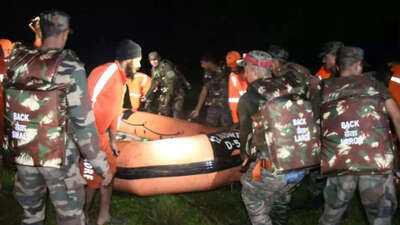
The Indian Army has intensified its rescue and relief operations across flood-affected regions of Assam as the state continues to grapple with widespread flooding triggered by relentless monsoon rains and rising river levels. Working in close coordination with the Assam government, National Disaster Response Force (NDRF), State Disaster Response Force (SDRF), local administration, and other emergency agencies, Army personnel have been deployed to rescue stranded residents, deliver essential supplies, and support relief efforts in some of the worst-hit districts.
The ongoing operations highlight the Armed Forces’ crucial role in humanitarian assistance and disaster relief during natural calamities. Equipped with specialised rescue equipment, boats, and trained personnel, Army teams have been working around the clock to evacuate vulnerable populations, restore access to isolated areas, and ensure the safety of affected communities.
Officials stated that the rescue efforts will continue until floodwaters recede and normalcy is restored across the impacted regions.
Army Mobilised for Large-Scale Rescue Operations
Following requests from the civil administration, the Indian Army swiftly mobilised rescue teams to assist districts severely affected by flooding. Personnel were deployed to locations where overflowing rivers, breached embankments, and submerged roads had cut off villages from surrounding areas.
Using inflatable boats and specialised rescue equipment, Army teams evacuated stranded residents, including children, elderly individuals, pregnant women, and persons with disabilities, from inundated homes to safer locations.
The rescue operations were conducted under challenging conditions as floodwaters continued to rise in several areas while strong currents and submerged roads complicated movement.
Despite these difficulties, Army personnel worked continuously to reach marooned communities and provide immediate assistance wherever required.
Coordination With Civil Administration
The rescue missions are being carried out in close coordination with district administrations, disaster management authorities, NDRF, SDRF, Assam Police, and other emergency response agencies.
Officials have established joint control rooms to monitor the evolving flood situation, identify vulnerable locations, and deploy rescue resources based on real-time information received from affected districts.
The coordinated response has enabled rescue teams to prioritise critical areas and ensure faster evacuation of residents trapped by floodwaters.
Authorities stated that continuous communication among agencies remains essential for effective disaster management and timely response during the ongoing emergency.
Evacuation of Stranded Residents
One of the primary objectives of the Army’s deployment has been the safe evacuation of people stranded in flood-affected villages.
Rescue personnel have transported families to designated relief camps where they are being provided with food, drinking water, medical care, and temporary shelter.
Special attention has been given to vulnerable sections of society, including infants, senior citizens, expectant mothers, and individuals requiring urgent medical assistance.
In several locations, Army personnel carried out door-to-door evacuations using boats after floodwaters entered residential areas, ensuring that residents unable to leave independently were brought to safety.
Officials said every effort is being made to prevent loss of life while ensuring that all affected communities receive timely assistance.
Delivery of Essential Relief Supplies
Apart from rescue operations, the Indian Army has been actively involved in distributing relief materials to communities cut off by floodwaters.
Teams have transported food packets, drinking water, medicines, blankets, and other essential supplies to relief camps and isolated villages where road connectivity has been disrupted.
In areas inaccessible by conventional vehicles, boats have been used to deliver emergency assistance to affected families.
The Army has also supported local authorities in the transportation of medical personnel and emergency equipment to flood-hit locations requiring immediate healthcare services.
These efforts have helped ensure that essential supplies continue to reach residents despite the challenging conditions.
Supporting Medical and Humanitarian Assistance
Medical support has formed an important component of the Army’s relief operations.
Army medical teams have been deployed to provide first aid, emergency treatment, and health consultations to flood-affected residents. The teams are also assisting local health authorities in preventing the spread of waterborne diseases, which often become a concern during prolonged flooding.
Officials are encouraging residents staying in relief camps to follow hygiene and sanitation guidelines while availing themselves of available healthcare services.
The Army’s humanitarian assistance has complemented the efforts of state health departments and disaster response agencies working to safeguard public health during the crisis.
Challenging Conditions Hamper Rescue Efforts
The rescue operations have been conducted under extremely demanding circumstances.
Persistent rainfall, overflowing rivers, submerged roads, damaged bridges, and strong water currents have made access to several villages difficult. In many locations, Army personnel have had to navigate through hazardous conditions to reach stranded residents.
Despite these challenges, rescue teams have continued operations without interruption, demonstrating professionalism and dedication in ensuring the safety of affected communities.
Officials noted that weather conditions are being monitored continuously to adapt rescue strategies as required.
Assam Continues to Face Severe Flood Impact
The ongoing floods have affected several districts across Assam, disrupting normal life and causing extensive damage to homes, agricultural land, roads, bridges, and public infrastructure.
Thousands of residents have been displaced, while relief camps have been established to accommodate families forced to leave their homes.
State authorities continue to monitor river levels closely and issue advisories to residents living in vulnerable areas.
Disaster management agencies remain on high alert as additional rainfall in upstream regions could influence water levels in several rivers flowing through the state.
Government and Armed Forces Working Together
The Assam government has expressed appreciation for the Indian Army’s timely assistance during the flood emergency.
Officials stated that the combined efforts of civil administration, disaster response agencies, Armed Forces, and volunteers have significantly strengthened the state’s capacity to respond to the disaster.
Regular review meetings are being held to assess the flood situation, identify emerging challenges, and coordinate the deployment of rescue personnel and relief materials.
Authorities have reaffirmed their commitment to ensuring that all affected residents receive necessary assistance until normal conditions are restored.
Commitment to Relief and Rehabilitation
Beyond immediate rescue operations, the focus is gradually expanding towards rehabilitation and restoration once floodwaters begin to recede.
Government departments are preparing assessments of damage to infrastructure, agriculture, public utilities, and residential properties to facilitate rehabilitation measures.
The Army is expected to continue providing logistical and operational support wherever required, particularly in areas where transportation and communication networks remain disrupted.
Officials have assured that relief operations will remain active for as long as necessary to address the humanitarian needs of flood-affected communities.
Standing With Communities in Times of Crisis
The Indian Army’s ongoing rescue operations once again demonstrate its vital role in responding to natural disasters and supporting civilian authorities during emergencies. Through coordinated rescue missions, humanitarian assistance, and logistical support, Army personnel have helped safeguard lives and bring relief to thousands of residents affected by Assam’s devastating floods.
As rescue and relief efforts continue across the state, the collaboration between the Armed Forces, government agencies, disaster response teams, and local communities remains critical in overcoming the challenges posed by the flood crisis. With sustained vigilance, coordinated planning, and timely humanitarian assistance, authorities remain committed to protecting lives, restoring normalcy, and helping affected families rebuild in the aftermath of one of the region’s recurring natural disasters.