

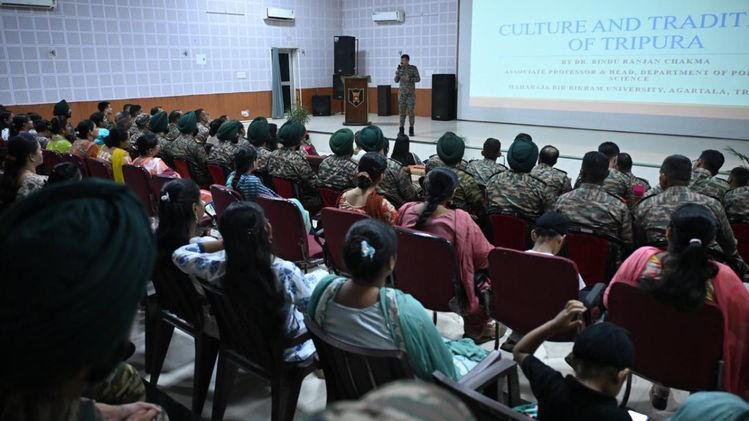
The Indian Army organized a special lecture on Tripura’s rich cultural heritage at the Agartala Military Station, highlighting the importance of preserving and understanding the state’s unique traditions, history, and cultural identity. The event brought together Army personnel, invited guests, scholars, and participants interested in learning more about the cultural legacy of Tripura.
The initiative reflected the Army’s commitment to fostering cultural awareness and strengthening ties with local communities. Through such programmes, the Army seeks to promote greater understanding of the regions where its personnel serve while encouraging respect for local traditions and customs.
The lecture provided participants with valuable insights into Tripura’s historical evolution, tribal heritage, artistic traditions, and cultural diversity. Speakers emphasized that cultural awareness plays an important role in building stronger relationships between communities and institutions.
The programme also served as a platform for celebrating the state’s heritage and encouraging greater appreciation of its rich cultural contributions.
Highlighting Tripura’s Rich Historical Legacy
A major focus of the lecture was Tripura’s long and distinguished history. Experts discussed the state’s historical journey, tracing its evolution through different periods and highlighting significant milestones that have shaped its identity.
Participants learned about the region’s ancient traditions, royal heritage, and contributions to the broader cultural landscape of Northeast India. The speakers explained how historical developments influenced the state’s social, cultural, and political growth over the centuries.
Tripura’s royal history received particular attention during the session. The state’s former rulers played a significant role in promoting education, art, architecture, and cultural development. Their contributions continue to influence the region’s heritage and identity today.
The lecture also explored the historical connections between Tripura and neighboring regions, emphasizing the cultural exchanges that enriched the state’s traditions over time.
Celebrating Tribal Culture and Traditions
Tripura is home to several indigenous communities, each with distinct customs, languages, and cultural practices. The lecture highlighted the importance of preserving and celebrating this rich tribal heritage.
Speakers discussed the traditions of various tribal groups and their contributions to the state’s cultural diversity. These communities have preserved unique customs, festivals, music, dance forms, and traditional knowledge systems for generations.
Participants gained insights into how tribal traditions continue to play a vital role in shaping Tripura’s cultural landscape. The speakers emphasized that cultural diversity remains one of the state’s greatest strengths.
The lecture also highlighted the need to document and preserve indigenous knowledge and traditions for future generations. Such efforts can help maintain cultural continuity while promoting greater understanding among different communities.
Importance of Language, Art, and Literature
The programme explored the role of language, literature, and artistic expression in preserving cultural identity. Speakers noted that Tripura’s linguistic diversity reflects the state’s multicultural character.
Traditional art forms, folk literature, and oral storytelling traditions have played an important role in transmitting cultural values and historical knowledge across generations. These cultural expressions continue to enrich the state’s social fabric.
The lecture examined how artists, writers, and cultural practitioners contribute to preserving and promoting heritage. Their work helps ensure that traditional knowledge and artistic practices remain relevant in contemporary society.
Participants also learned about the challenges facing traditional art forms in an era of rapid modernization. Experts emphasized the importance of supporting cultural institutions and encouraging younger generations to engage with their heritage.
Showcasing Traditional Music and Dance
Music and dance form an integral part of Tripura’s cultural identity. During the lecture, speakers highlighted the significance of traditional performances in community life and cultural celebrations.
Various indigenous dance forms reflect the customs, beliefs, and daily experiences of local communities. These performances often accompany festivals, social gatherings, and important cultural events.
Traditional music, which frequently incorporates indigenous instruments and local melodies, serves as an important medium for storytelling and cultural expression. The lecture explained how these art forms help preserve collective memory and strengthen community bonds.
Experts stressed the importance of encouraging young people to learn and practice traditional music and dance. Such efforts can help safeguard cultural heritage while ensuring its continued relevance in modern society.
Cultural Heritage and Community Identity
The lecture emphasized the strong connection between cultural heritage and community identity. Speakers noted that traditions, customs, and historical narratives help communities understand their roots and preserve a sense of belonging.
Cultural heritage serves as a bridge between generations. It connects the past with the present while providing valuable lessons for the future. Therefore, preserving cultural traditions remains essential for maintaining social cohesion and cultural continuity.
Participants discussed the role of educational institutions, cultural organizations, and community leaders in promoting heritage awareness. Collaborative efforts can help ensure that cultural knowledge remains accessible to future generations.
The programme also highlighted the importance of cultural pride and self-awareness in strengthening communities and fostering social harmony.
Army’s Role in Promoting Cultural Understanding
The Indian Army has consistently supported initiatives that promote cultural understanding and community engagement. The lecture at Agartala Military Station formed part of these broader efforts.
Army officials emphasized that understanding local culture helps strengthen relationships between military personnel and the communities they serve. Cultural awareness promotes mutual respect, trust, and cooperation.
Such programmes also provide Army personnel with opportunities to learn about the history, traditions, and values of different regions. This knowledge contributes to greater sensitivity and appreciation of local customs.
The Army’s engagement in cultural activities reflects its commitment to nation-building beyond its traditional security responsibilities. By supporting cultural initiatives, it helps strengthen social connections and promote national integration.
Preserving Heritage in a Changing World
The lecture addressed the challenges associated with preserving cultural heritage in a rapidly changing world. Globalization, urbanization, and technological advancements have created new opportunities but have also introduced pressures on traditional practices.
Speakers emphasized that modernization and cultural preservation should complement each other rather than exist in opposition. Communities can embrace development while continuing to safeguard their cultural identity.
Efforts to document traditions, support cultural practitioners, and promote heritage education can help address these challenges. Digital platforms and modern communication tools also offer new possibilities for preserving and sharing cultural knowledge.
Participants agreed that preserving heritage requires the active involvement of governments, educational institutions, cultural organizations, and local communities.
Strengthening Appreciation for Tripura’s Heritage
The lecture concluded with a renewed emphasis on the importance of understanding and celebrating Tripura’s cultural heritage. Participants appreciated the opportunity to gain deeper insights into the state’s history, traditions, and cultural diversity.
The event reinforced the idea that cultural heritage serves as an important source of identity, pride, and social cohesion. It also highlighted the need for continued efforts to preserve and promote the state’s rich traditions.
By organizing such programmes, the Indian Army continues to contribute to cultural awareness and community engagement. The lecture at Agartala Military Station successfully brought together people from different backgrounds to celebrate the unique heritage of Tripura.
As the state continues to evolve and develop, initiatives that promote cultural understanding will remain essential. Through education, dialogue, and preservation efforts, Tripura’s rich cultural legacy can continue to inspire future generations while strengthening the bonds that unite communities across the region.