

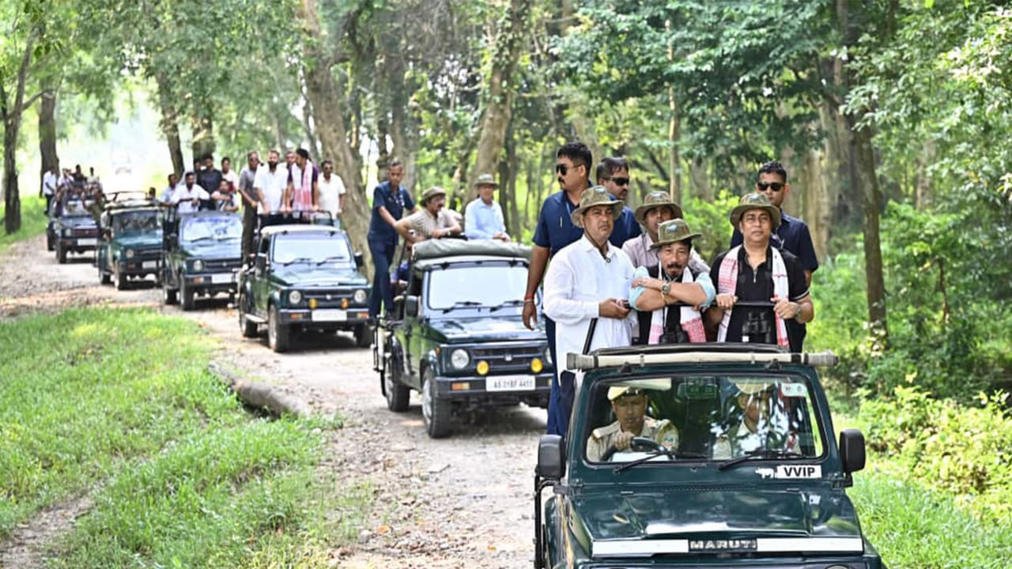
Kaziranga National Park and Tiger Reserve reopened to tourists on Saturday, October 3, marking the beginning of the 2026-27 wildlife tourism season in Assam. Forest Minister Jayanta Mallabaruah formally inaugurated the reopening at the Kohora Range and expressed hope that tourist arrivals would surpass last season’s figures.
The reopening has brought back jeep safaris to the UNESCO World Heritage Site, welcoming wildlife enthusiasts and visitors from across India and abroad. The new tourism season is also expected to generate economic opportunities for local communities, tourism operators and businesses in the region.
Jeep Safaris Resume at Kaziranga
Jeep safaris commenced on October 3, allowing visitors to explore the park’s grasslands, wetlands and wildlife habitats. The Central Range at Kohora and Western Range at Bagori are among the initial areas reopening, while other ranges are expected to become operational in phases.
The safari entry timings are divided into two daily slots. Morning entry is permitted from 7:30 am to 10 am, while afternoon entry is scheduled between 1:30 pm and 3 pm.
Elephant safaris are not beginning immediately. According to the minister, they are expected to resume within the next 10 to 20 days, subject to the completion of necessary preparations.
Minister Expects Tourist Arrivals to Increase
At the reopening ceremony, Mallabaruah welcomed tourists and expressed optimism about the upcoming season. He said encouraging booking trends had raised expectations of visitor numbers exceeding those recorded during the previous tourism season.
The minister also highlighted the need for continued coordination between the Forest Department and Tourism Department to improve infrastructure, upgrade existing facilities and introduce new attractions.
He was joined by Assam Panchayat and Rural Development Minister Atul Bora, MP Kamakhya Prasad Tasa and Forest Department officials at the ceremony.
Kaziranga Records Over 4.68 Lakh Visitors in 2025-26
Kaziranga witnessed a significant rise in tourist arrivals during the 2025-26 season, recording 4,68,147 visitors compared with 4,06,564 in the previous season.
The total included 4,37,673 Indian tourists and 30,474 foreign visitors. The increase reflects the park’s continued importance as a major wildlife tourism destination in the Northeast.
The minister expressed hope that the new season would build on this visitor turnout, supported by improved facilities and tourism-related initiatives.
Tourism Expansion and Local Economic Opportunities
The Assam government is also exploring the development of tourism circuits connecting Kaziranga with nearby destinations. The initiative aims to encourage visitors to spend two to four days exploring the region rather than limiting their trips to short wildlife excursions.
According to the minister, expanding tourism activities could create more opportunities for local residents to participate in tourism-related businesses, improve their livelihoods and become economically self-reliant.
Hotels, homestays, safari operators, transport providers and other local businesses are among those expected to benefit from the reopening.
Conservation Remains Central to Kaziranga’s Tourism
Kaziranga is internationally recognised for its biodiversity and its population of the endangered one-horned rhinoceros. The park is also home to Bengal tigers, elephants, wild water buffaloes and several other wildlife species.
Mallabaruah highlighted conservation efforts as an important factor in the park’s reputation, while stressing the need to maintain ecological balance as tourism expands.
The reopening follows the seasonal closure during the monsoon, when weather and field conditions affect visitor access and tourism operations.
Assam’s Wildlife Tourism Season Begins
Kaziranga’s reopening follows the reopening of Manas National Park on October 2. Pobitora Wildlife Sanctuary in Morigaon district is scheduled to welcome tourists from October 13.
With these destinations reopening in phases, Assam’s 2026-27 wildlife tourism season is underway. The state government is looking to combine improved visitor facilities, conservation efforts and community participation as it prepares for another year of tourism activity.