

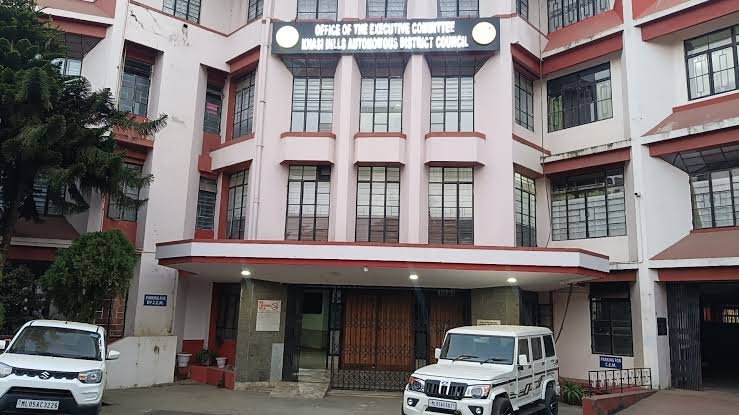
The KHADC Funding Stand has drawn attention after the Khasi Hills Autonomous District Council (KHADC) declined state financial bailouts, stating its preference to remain financially self-reliant. The decision highlights the council’s approach toward fiscal independence and institutional autonomy.
The KHADC Funding Stand has become a notable governance development after the Khasi Hills Autonomous District Council chose not to accept state fiscal bailouts. Moreover, the council emphasized its commitment to financial self-reliance while continuing its administrative responsibilities. The decision has sparked discussions on fiscal autonomy, institutional governance, and financial management within autonomous councils.
Garo & Jaintia Reforms: GHADC and JHADC Adopt New Administrative Guidelines
KHADC Funding Stand Emphasizes Fiscal Independence
The KHADC Funding Stand reflects the council’s decision to prioritize financial independence over accepting state bailout assistance. Furthermore, the council maintained that self-reliance remains central to its financial approach.
Fiscal autonomy often allows institutions to manage resources according to their priorities. Consequently, the decision has attracted attention from governance observers.
Moreover, financial independence can strengthen institutional decision-making. Therefore, the council’s position has become a significant topic of discussion.
Council Declines State Fiscal Bailouts
A key aspect of the KHADC Funding Stand is the council’s rejection of financial bailout support from the state government. Furthermore, the decision underscores its stated preference for managing financial challenges independently.
Public institutions frequently adopt different strategies to address fiscal issues. Similarly, some organizations prioritize internal resource management over external financial assistance.
Consequently, the council’s decision highlights its chosen financial strategy. Thus, the issue has gained policy relevance.
Self-Reliance Remains the Primary Objective
The KHADC Funding Stand places financial self-reliance at the center of the council’s governance model. Moreover, the council indicated that maintaining institutional independence remains an important objective.
Strong financial planning supports organizational sustainability. Additionally, prudent resource management can contribute to long-term stability.
Consequently, self-reliance continues to shape the council’s fiscal approach. Therefore, financial management remains a key priority.
Financial Strategy Supports Institutional Autonomy
The KHADC Funding Stand also highlights the relationship between financial management and institutional autonomy. Furthermore, maintaining independent financial decision-making can strengthen governance structures.
Autonomous institutions often seek to balance financial sustainability with administrative responsibilities. Similarly, fiscal discipline supports long-term organizational planning.
Moreover, transparent financial management promotes accountability. Thus, the council’s decision reflects its stated governance philosophy.
Governance and Fiscal Planning Continue
The KHADC Funding Stand demonstrates the importance of strategic financial planning within autonomous institutions. Furthermore, continued fiscal management will play an important role in supporting the council’s future administrative functions.
Sound budgeting practices contribute to institutional resilience. Consequently, effective financial planning remains essential for long-term governance.
Additionally, periodic financial reviews can support informed decision-making. Therefore, fiscal discipline will continue to influence council operations.
Looking Ahead
The KHADC Funding Stand is expected to remain a significant topic as the council continues implementing its self-reliance strategy. Moreover, future financial planning and administrative decisions will determine how the council sustains its independent approach.
As governance priorities evolve, the council is likely to continue emphasizing prudent resource management. Similarly, ongoing financial oversight may strengthen institutional stability.
Consequently, the decision reinforces the importance of fiscal autonomy within autonomous governance structures. Thus, financial self-reliance is expected to remain a defining feature of the council’s approach.
Conclusion
The KHADC Funding Stand highlights the Khasi Hills Autonomous District Council’s decision to reject state fiscal bailouts in favor of financial self-reliance. The move reflects the council’s stated commitment to institutional independence and responsible financial management.
Moreover, the emphasis on fiscal autonomy underscores the role of strategic planning in maintaining effective governance. Consequently, the decision has become an important development in discussions surrounding autonomous institutions in Meghalaya.
Looking ahead, continued financial discipline and sound governance practices will shape the long-term impact of the KHADC Funding Stand. Therefore, the council’s commitment to self-reliance will remain closely watched.
FAQs
1. What is the KHADC Funding Stand?
The KHADC Funding Stand refers to the Khasi Hills Autonomous District Council’s decision to reject state fiscal bailouts and remain financially self-reliant.
2. Why did the council reject the bailout?
According to its stated position, the council chose to prioritize financial self-reliance and institutional autonomy.
3. Which institution made the decision?
The Khasi Hills Autonomous District Council (KHADC) announced the decision.
4. What is the significance of financial self-reliance?
Financial self-reliance supports independent decision-making, long-term planning, and institutional autonomy.
5. What could the decision influence?
The decision may shape future discussions on fiscal management and governance within autonomous councils.