

The Ladakh administration has approved new rules to resolve the long-pending issue of Nautor land, paving the way for eligible occupants to receive proprietary or ownership rights over government-owned barren and wasteland.
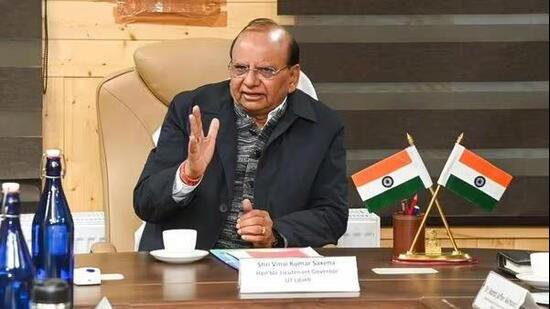
Lieutenant Governor Vinai Kumar Saxena approved the Ladakh Autonomous Hill Development Councils (Nautor Regularisation) Rules, 2026, on September 4. The rules create a uniform framework for regularising eligible Nautor land holdings across all seven districts of the Union Territory.
Under the new framework, genuine eligible occupants may receive proprietary rights over up to 10 acres of Nautor land. Occupants holding land beyond the 10-acre limit may receive rights on a leasehold basis, subject to the provisions of the rules.
The decision is expected to provide legal certainty to thousands of landholders and allow eligible land to become a financial asset. It could also help occupants access institutional finance for the development of their land.
What Is Nautor Land?
Nautor land refers to government-owned barren land or wasteland that authorities had earlier allotted to individuals for cultivation or other productive purposes.
For generations, people in Ladakh have brought difficult and barren land under cultivation. However, the absence of a clear and uniform legal framework created uncertainty over the rights of many occupants.
More than 60,000 acres of land in Ladakh is currently recorded as Nautor holdings in revenue records, making the issue significant for landholders and local communities across the Union Territory.
The new Ladakh Nautor land rules seek to address this uncertainty by establishing clear procedures for regularisation and ownership.
Eligible Occupants Can Receive Ownership Rights Up to 10 Acres
A key provision of the new rules allows genuine eligible Nautor landholders to receive proprietary rights over holdings of up to 10 acres.
The occupant will need to meet the eligibility requirements laid down under the rules. The amount payable for proprietary rights will be linked to the market rate notified by the Ladakh administration for the concerned revenue village.
The policy aims to convert eligible holdings into legally recognised assets.
This could provide greater security to occupants who have used and cultivated such land for years.
It could also improve their ability to invest in the development and productive use of the land.
Land Beyond 10 Acres May Get Leasehold Rights
The rules also address cases where Nautor holdings exceed 10 acres.
Instead of granting proprietary rights beyond the prescribed limit, the authorities may allot such land on a leasehold basis.
For leasehold allotments, the premium will be 80 per cent of the notified market rate, according to the Ladakh administration.
This provision allows the government to balance the interests of genuine landholders with the need to protect public and Council land.
The framework also seeks to prevent excessive ownership claims while recognising legitimate long-term occupation.
October 27, 2020 Set as Cut-Off Date
The new rules provide a one-time regularisation mechanism for Nautor land occupied before October 27, 2020.
The date marks the repeal of the Jammu and Kashmir Tenancy Act, 1980.
Any occupation or possession of Nautor land that began after the cut-off date will not qualify for regularisation under the new framework.
The cut-off date aims to distinguish genuine historical occupants from later encroachments.
The administration has also made it clear that abandoned land and land found to have been encroached upon will not qualify for allotment and may face eviction.
Hill Development Councils Get Authority Over Nautor Land
The Ladakh Autonomous Hill Development Councils, or LAHDCs, will now hold the authority to allot Nautor land across all seven districts.
The transfer of authority represents an important element of the new policy.
It gives local institutions a greater role in decisions relating to the allotment, use and occupation of land within their districts.
The administration said the framework draws on provisions of the Ladakh Autonomous Hill Development Councils Act, 1997.
By vesting the authority in the Hill Development Councils, the government aims to bring land-related decision-making closer to local communities and strengthen accountability.
Field Verification Required for Certain Holdings
The rules provide different procedures for different categories of Nautor land.
For Gair Mustaqil holdings, Revenue Authorities must conduct field verification before regularisation.
Officials will verify the identity of the occupant, the area under occupation, the nature and extent of cultivation and the date when the occupation began.
Authorities will also verify whether the occupation existed before the October 27, 2020 cut-off date.
For Mustaqil landholdings, the concerned LAHDC will decide whether field verification is necessary based on local conditions and ground realities.
These procedures aim to ensure that only genuine and eligible claims receive approval.
Landholders May Use Regularised Land as Financial Assets
One of the major benefits of the new framework is the possibility of using regularised Nautor land as a financial asset.
Previously, occupants with limited or non-proprietary rights faced restrictions in using the land to obtain institutional finance.
Under the new rules, eligible regularised land may be mortgaged in favour of Scheduled Banks, financial institutions and government-backed lending agencies for land development purposes.
This could create new economic opportunities for eligible landholders.
Access to loans may help families invest in agriculture, infrastructure and other productive activities.
The administration believes the change could strengthen livelihoods in a region where agriculture often faces difficult geographical and climatic conditions.
Planning Rules Will Continue to Apply
The new ownership and regularisation framework does not remove existing planning restrictions.
Land located in municipal areas, planning areas or areas covered by master plans, zonal plans or development authorities must continue to comply with applicable planning regulations.
Similarly, Nautor land that underwent a change in land use before the cut-off date may be considered for regularisation, subject to formal approval by the competent authority.
This provision aims to ensure that land regularisation does not lead to unplanned development.
Rules Include Audits and Protection Against Misuse
The Ladakh administration has included safeguards to prevent misuse of the new policy.
All allotments and regularisations will remain subject to periodic review and audit.
Authorities can cancel or resume land in cases involving violations, misrepresentation, concealment of facts, unauthorised transfer or breaches of other conditions.
The safeguards also aim to protect government and Council land from encroachment and unauthorised claims.
The administration has stressed that the rules seek to balance the legitimate interests of genuine Nautor landholders with the protection of public land.
Public Consultation to Be Held Before Final Notification
The Ladakh administration will place the Nautor Regularisation Rules, 2026, in the public domain for consultation for two weeks before issuing the final notification.
The consultation process could allow stakeholders and residents to examine the provisions and provide feedback.
It also reflects the administration’s effort to create a transparent process before the rules receive final implementation.
Ladakh Nautor Land Rules Aim to Resolve Long-Pending Issue
The approval of the Ladakh Autonomous Hill Development Councils (Nautor Regularisation) Rules, 2026, marks a significant development for thousands of Nautor landholders across the Union Territory.
The rules provide a legal pathway for eligible occupants to obtain proprietary rights over up to 10 acres of land.
They also establish leasehold provisions for larger holdings and transfer allotment authority to the Hill Development Councils.
By setting clear eligibility conditions and verification procedures, the government aims to regularise genuine historical holdings while preventing fresh encroachments.
The new framework could also unlock economic opportunities by allowing eligible regularised land to serve as a financial asset.
With more than 60,000 acres recorded as Nautor holdings, the policy has the potential to affect a substantial section of Ladakh’s landholding community. As the rules move towards public consultation and final notification, their implementation will remain closely watched across the Union Territory.