


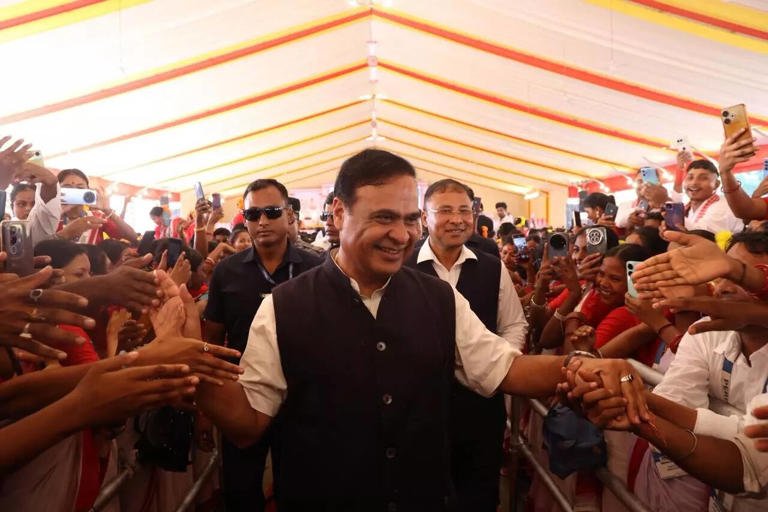
The Tea Tribe Community of Assam, descendants of the laborers brought by the British to work in the tea gardens, represents a significant cultural and economic pillar of the state. Despite their invaluable contribution to Assam’s globally renowned tea industry, this community has historically faced socio-economic marginalization. Recognizing this long-standing need for upliftment and inclusion, the Assam Government has launched a sweeping package of welfare programs designed to improve the living standards, ensure cultural recognition, and secure the future of the tea garden workers and their families. These landmark initiatives, focusing on securing land rights, boosting education, and enhancing healthcare, signal a new era of focus on Assam Tea Tribe Welfare.
Read More: CM Manik Saha seeks J P Nadda’s support for Tripura medical college
Securing Rights: Land Ownership and Financial Inclusion
One of the most significant and long-awaited initiatives is the move to grant legal land ownership rights to the tea garden workers. For generations, these workers have resided in garden lines without formal ownership of the land they call home. The Assam Chief Minister has announced plans to introduce a bill in the State Legislative Assembly to formalize these rights, making the tea garden workers the rightful owners of the land they inhabit. This legal recognition is a monumental step towards providing them with social security and dignity.
In terms of immediate financial relief and recognition, the government has launched the “Mukhya Mantrir Eti Koli, Duti Paat” (Chief Minister’s One Bud, Two Leaves) scheme. This program, announced in line with the 200th-year celebration of Assam Tea, provides a one-time financial assistance of ₹5,000 to every eligible tea garden worker, both permanent and temporary, across the state. This substantial allocation, benefiting approximately 7 lakh workers, serves as a gesture of gratitude for their tireless efforts and aims to promote financial stability and inclusion.
Education and Employment: Building a Stronger Future
A key area of focus under the new Assam Tea Tribe Welfare programs is education, which is seen as the primary driver for long-term community upliftment. The government is addressing the historical lack of high schools in tea garden areas by committing to establish 100 new high schools by early 2026, building upon the 120 schools already set up. This aggressive push for infrastructure is critical to ensuring that children of tea garden workers have access to quality secondary education near their homes.
Furthermore, to improve access to higher education and government jobs, the government has implemented a 3% reservation in Grade III and Grade IV government posts for students from the tea tribe and Adivasi communities. An additional reservation of 30 seats in medical colleges has been earmarked for eligible students. These reservation policies are crucial steps towards affirmative action, guaranteeing that the youth from this community can compete for stable, high-value employment and professional careers, moving beyond the confines of the gardens.
Health and Housing: Enhancing Living Standards
Improving the overall quality of life and health is another cornerstone of the welfare package. Recognizing the health challenges faced by the tea tribe community, the government has flagged off 80 ‘Sanjeevani’ vehicles (ambulances) dedicated to providing medical outreach in 80 different tea gardens. These mobile medical units will conduct health tests and deliver essential medical care, addressing the critical lack of immediate healthcare access.
The government is also working to improve the physical living conditions through the Cha Shramik Aashray Yojana (CSAY). This scheme focuses on constructing resting facilities complete with hygienic toilets for workers within the tea estates, addressing a basic and long-felt need for better welfare infrastructure in the gardens. Each shelter is constructed with a dedicated budget, with the number of units tailored to the size of the estate, showcasing a targeted approach to improving daily working life.
Celebrating Culture: Recognizing Identity
Beyond material benefits, the government has also emphasized cultural recognition, acknowledging the Tea Tribe community’s rich and vibrant heritage. To promote their traditional arts, particularly the Jhumoir folk dance, the government is planning to organize a week-long cultural showcase in New Delhi in 2026. This initiative, which will feature Jhumoir alongside other indigenous art forms like Bihu and Bagurumba, aims to present Assam’s diverse cultural treasures on a national platform. This recognition is vital for boosting community pride and integrating the distinct cultural identity of the Tea Tribes into the broader narrative of Assamese culture. The distribution of financial recognition to thousands of Jhumoir performers who participated in a record-making event further underscores the commitment to cultural empowerment.
The multi-pronged approach of the Assam Government’s latest initiatives—ranging from securing land rights and providing direct financial aid to investing heavily in education, healthcare, and cultural promotion—marks a decisive push towards the holistic development and socio-economic empowerment of the Assam Tea Tribe Welfare.
Read More: Special Committee to Develop Zubeen Garg’s Samadhi Khetra