

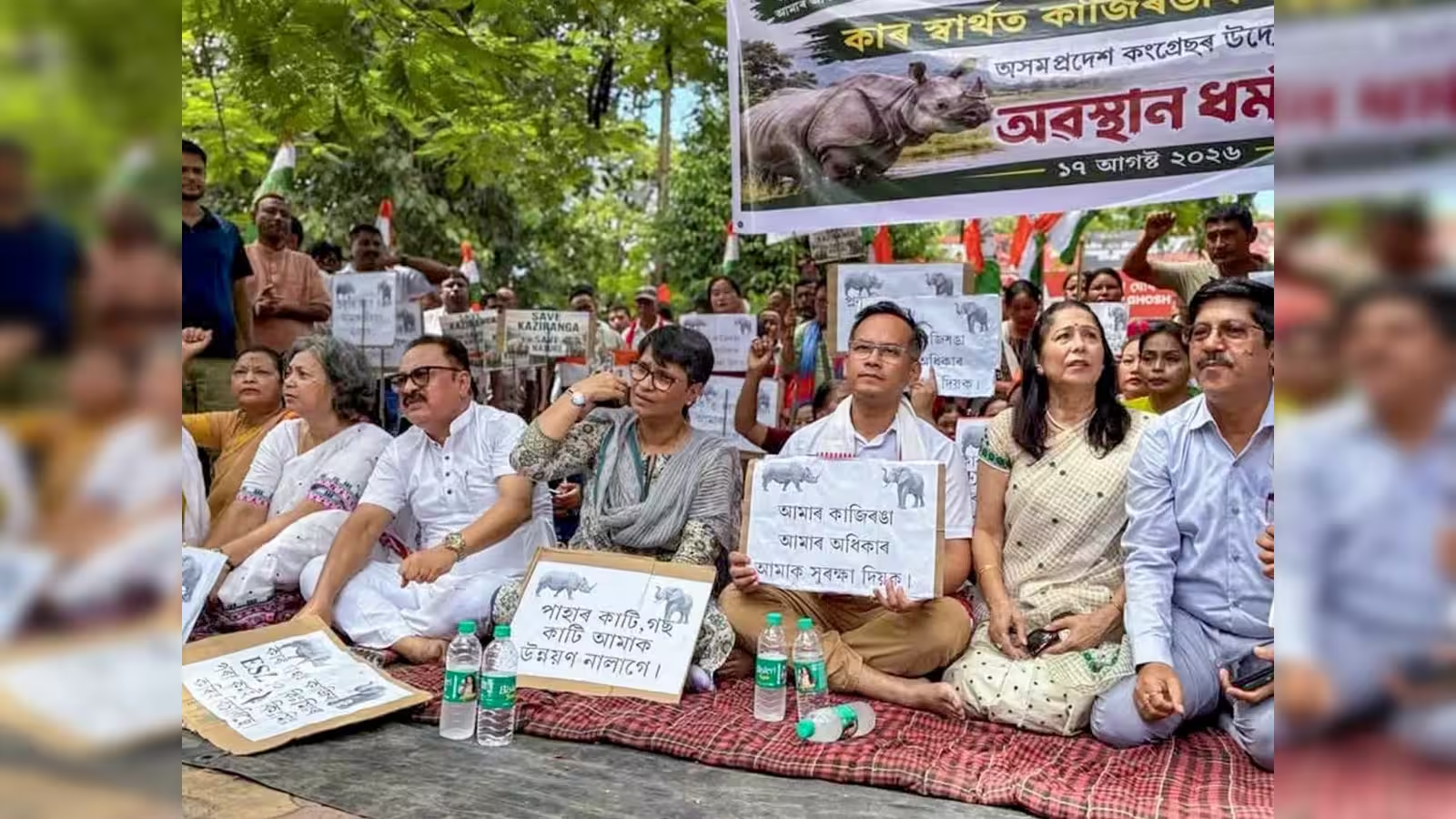
Hundreds of local residents have reportedly held a counter-rally near Kaziranga, supporting the Assam government’s proposal to limit the Eco-Sensitive Zone (ESZ) around Kaziranga National Park to 1 km. The residents argue that a narrower ESZ could better protect their land rights, livelihoods, and ability to pursue local development.
The rally comes amid a growing political dispute over the proposed ESZ change. While Congress and environmental critics have raised concerns about possible commercial exploitation, local residents have presented a different perspective, emphasising the restrictions that a wider protected zone could impose on communities.
The competing demonstrations have turned the Kaziranga ESZ proposal into a broader debate over conservation, development, and community rights.
Public Enumeration Boycott: Civil Society Groups Urge Residents to Skip Digital Census Phase
Residents Rally Behind 1 km ESZ
The Kaziranga local residents’ rally reportedly brought together hundreds of people supporting the proposed 1 km ESZ.
Participants argued that communities living around Kaziranga need sufficient freedom to manage their land and pursue legitimate economic activities. Furthermore, they believe that extending restrictions across a wider area could create difficulties for residents whose livelihoods depend on agriculture, small businesses, and other local activities.
The rally offered a strong counterpoint to recent opposition protests.
Land Rights Drive Community Support
Land ownership and use remain central to the residents’ concerns.
A wider ESZ can subject certain activities to additional environmental regulation, depending on the applicable notification and rules. Moreover, residents fear that extensive restrictions could affect construction, infrastructure development, and the use of privately held land.
Supporters of the 1 km proposal therefore view the change as a way to protect community interests.
Livelihood Concerns Take Centre Stage
Many communities surrounding protected areas depend on local economic activities.
Agriculture, tourism, transportation, small enterprises, and other occupations can support households in the region. Additionally, residents may require roads, homes, schools, healthcare facilities, and other infrastructure.
They argue that environmental policies should account for these practical requirements.
Counter-Rally Challenges Congress Narrative
The residents’ demonstration presents a different position from the Congress-led opposition to the proposed ESZ reduction.
Congress has alleged that reducing the ESZ could weaken environmental safeguards and potentially benefit commercial mining interests. However, local supporters of the proposal argue that the primary concern should remain the rights and livelihoods of people who live around Kaziranga.
The competing positions demonstrate the complexity of the debate.
Conservation and Community Rights Must Coexist
Kaziranga’s ecological importance remains undisputed.
The national park provides habitat for the greater one-horned rhinoceros and numerous other species. Furthermore, surrounding areas can contribute to wildlife movement and ecological connectivity.
At the same time, communities living around protected areas require secure livelihoods and access to basic infrastructure. Therefore, policymakers face the challenge of balancing conservation objectives with legitimate community interests.
What Does a 1 km ESZ Mean?
An ESZ does not automatically prohibit every activity within its boundaries.
Instead, environmental regulations generally classify activities according to their potential impact, with different rules applying to prohibited, regulated, and permitted activities. Moreover, the exact restrictions depend on the applicable notification.
Consequently, the practical impact of changing the ESZ boundary requires examination of the specific regulatory provisions involved.
Residents Seek Greater Development Flexibility
Supporters of the proposed 1 km zone believe it could provide greater flexibility for local development.
They may expect fewer regulatory complications for certain infrastructure and economic activities outside the narrower protected area. Additionally, communities could seek improved roads, public facilities, housing, and commercial opportunities.
However, development would still need to comply with other environmental and land-use regulations.
Political Dispute Deepens
The opposing rallies demonstrate the widening political disagreement surrounding Kaziranga.
Congress and environmental groups have questioned the proposed reduction, while local residents have publicly backed it. Moreover, the competing positions could push the state government to provide greater clarity about the proposal’s environmental and socioeconomic basis.
The controversy now extends beyond political parties to communities directly affected by the policy.
Transparent Assessment Remains Important
A balanced decision would require reliable information about both environmental and socioeconomic impacts.
Authorities could assess wildlife movement, habitat sensitivity, existing settlements, land ownership, economic activity, and infrastructure requirements. Furthermore, consultation with local communities and conservation experts could help identify potential solutions.
Such an approach could help reconcile competing interests.
What Happens Next?
The government is likely to face continued pressure from both conservation advocates and local residents.
Supporters of the 1 km proposal may continue demanding protection for land and livelihood rights, while opponents could seek stronger environmental safeguards. Additionally, further consultations and regulatory scrutiny could shape the final decision.
Until authorities complete the relevant process, the proposed 1 km ESZ should be treated as a proposal rather than a settled policy change.
Conclusion
The Kaziranga local residents’ rally has added another important dimension to Assam’s ongoing ESZ controversy. Hundreds of residents reportedly backed the proposed 1 km ESZ, arguing that a narrower zone would better protect their land rights, livelihoods, and development needs.
Moreover, the rally highlights concerns that often receive less attention in conservation debates: the rights and economic needs of communities living around protected areas. At the same time, Kaziranga’s ecological importance requires authorities to carefully assess the environmental consequences of any boundary change.
Overall, the 1 km ESZ debate now reflects a broader challenge—finding a sustainable balance between wildlife conservation and the legitimate livelihood interests of local communities.
FAQs
1. Why are local residents supporting the 1 km ESZ?
Residents reportedly believe that a narrower ESZ would reduce restrictions affecting their land, livelihoods, and local development.
2. How does their position differ from Congress?
Congress has opposed the proposed reduction on environmental grounds, while the residents’ rally reportedly supports the change as a means of protecting community interests.
3. Does a 1 km ESZ remove all environmental restrictions?
No. Other environmental, land-use, and wildlife regulations can still apply depending on the location and activity.
4. Why is community consultation important?
Local residents can provide information about land use, livelihoods, infrastructure needs, and the practical effects of environmental regulations.
5. Has the 1 km ESZ become final?
The information provided describes a government proposal and competing public positions. The final status depends on the applicable regulatory and approval process.