

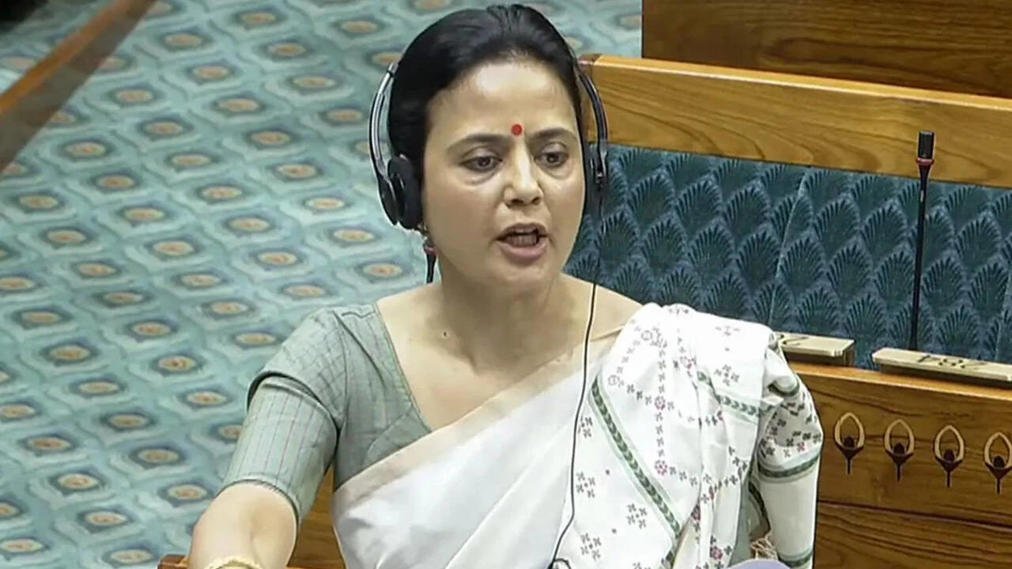
Trinamool Congress MP Mahua Moitra has alleged before the Supreme Court that the West Bengal government has made it difficult for her to function as a parliamentarian by stalling development projects linked to her Member of Parliament Local Area Development Scheme (MPLADS) funds. The Krishnanagar MP also alleged that her visits to the constituency have been impeded and that she has faced harassment during constituency visits.
Moitra Raises MPLAD Issues Before Supreme Court
Moitra raised the allegations before the Supreme Court on Wednesday while seeking judicial intervention over several issues concerning her functioning as an MP. According to the report, she claimed that development projects worth around Rs 3.5 crore, initiated through her MPLAD funds, have been stalled because officials were no longer cooperating with her.
The allegations concern projects in her Krishnanagar parliamentary constituency in Nadia district. MPLADS allows Members of Parliament to recommend developmental works in their constituencies, with the implementation carried out through designated government agencies.
Moitra’s complaint is part of a broader dispute over her ability to carry out constituency-related activities following political changes in West Bengal.
Allegations of Administrative Non-Cooperation
The TMC MP has alleged that officials have stopped cooperating with her on MPLAD-related works, preventing projects from progressing despite funds being available. She has argued that such administrative hurdles affect her ability to deliver development projects to constituents.
The allegations, however, are claims made by Moitra and do not by themselves establish that the state government deliberately blocked the projects. The matter is now before the judiciary, where the parties can present their respective positions.
Solicitor General Questions Supreme Court Petition
During the proceedings, Solicitor General Tushar Mehta questioned whether Moitra could approach the Supreme Court directly instead of first moving the Calcutta High Court.
According to the report, Mehta argued that the Calcutta High Court would be better placed to examine allegations concerning incidents that took place within West Bengal. Moitra’s counsel Gopal Sankaranarayanan was reportedly unavailable to argue the matter because of his engagement in another court.
The issue of jurisdiction therefore emerged as an important aspect of the proceedings, alongside Moitra’s allegations concerning her constituency work.
Security and Constituency Visits Also Raised
Moitra has also alleged difficulties in visiting Krishnanagar and claimed that she has faced harassment during constituency visits. These allegations come amid several recent incidents involving protests against the MP during visits to Nadia district.
In September, Moitra approached the Calcutta High Court alleging police inaction after eggs were allegedly thrown at her during a constituency visit. She said the incident occurred despite an earlier court direction concerning security during her visits.
The September incident followed an earlier confrontation in July, when protesters gathered outside a TMC office in Krishnanagar and allegedly threw eggs and vegetables. Moitra accused BJP workers of targeting her, while BJP representatives disputed the allegations.
Case Highlights Political and Administrative Dispute
The latest Supreme Court proceedings bring together several complaints raised by Moitra concerning her role as the elected representative of Krishnanagar. Her allegations include stalled MPLAD projects, difficulties in accessing her constituency and security concerns during visits.
The state government’s response and the Supreme Court’s eventual handling of the petition will determine how the issues raised by the MP are addressed. For now, the allegations remain part of an ongoing legal and political dispute between Moitra and authorities in West Bengal.
The MPLAD issue is particularly significant because constituency-level development works require coordination between MPs and government agencies. Any prolonged disagreement over administrative cooperation can affect the implementation of projects recommended under the scheme.