

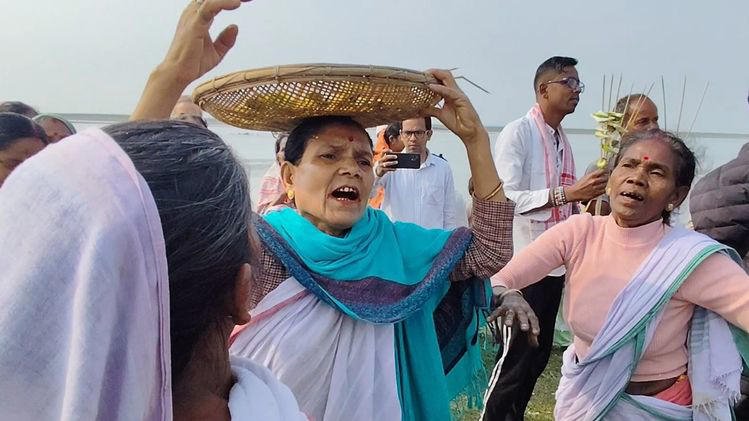
The Majuli Goru Bihu celebrations have brought the river island alive with vibrant traditions and rituals. People across Majuli observed the festival with devotion and enthusiasm.
Goru Bihu marks the beginning of the Rongali Bihu festivities. It is dedicated to cattle, which play a vital role in agrarian life. Therefore, the festival carries deep cultural and economic significance.
Residents gathered early in the morning to perform rituals. They honoured their livestock and prayed for prosperity. As a result, the celebrations reflected strong community values.
The atmosphere remained festive throughout the day. Traditional practices and social bonding defined the occasion.
Read More: Lurinjyoti Gogoi Calls for Unity on Goru Bihu
Age-old rituals honour cattle and nature
The Majuli Goru Bihu celebrations centre on age-old rituals. Farmers bathe their cattle in nearby rivers and ponds. They clean and decorate them with garlands and traditional items.
Special food is prepared for the animals. This act symbolises gratitude and respect. It also highlights the bond between humans and livestock.
People chant traditional verses during the rituals. These chants add cultural depth to the festival. They have been passed down through generations.
Experts believe such practices preserve heritage. They connect people to their roots. Therefore, the rituals remain an important part of Assamese culture.
Community participation strengthens social bonds
Community participation forms the backbone of Majuli Goru Bihu celebrations. Families, neighbours, and local groups come together. They share responsibilities and joy.
Villagers organise collective events. These include rituals, feasts, and cultural programmes. Such gatherings strengthen relationships.
Elders guide younger members during the rituals. They pass on knowledge and traditions. This process ensures continuity.
Visitors to Majuli also join the celebrations. Their presence adds diversity and interaction. Therefore, the festival promotes inclusivity.
Cultural performances add vibrancy to festivities
Cultural performances have added colour to the Majuli Goru Bihu celebrations. Traditional music and dance programmes took place in various locations. Artists showcased their talent with enthusiasm.
The beats of dhol and melodies of pepa filled the air. These instruments define Bihu celebrations. Audiences enjoyed the lively performances.
Young performers participated actively. Their involvement brought fresh energy to the festival. It also reflected the continuity of cultural practices.
Organisers arranged competitions and exhibitions. These activities engaged people of all age groups. As a result, the festival remained lively and interactive.
Majuli’s unique identity enhances celebrations
The unique identity of Majuli enhances the Goru Bihu experience. Known as the world’s largest river island, Majuli holds cultural and spiritual importance.
Its natural surroundings provide a scenic backdrop. Rivers, greenery, and open spaces create a peaceful environment. Therefore, celebrations gain a special charm.
Satras and cultural institutions in Majuli also contribute. They promote traditional values and practices. Their involvement adds depth to the festival.
Experts note that Majuli represents Assam’s cultural heart. Festivals like Goru Bihu highlight this identity.
Economic activity gets festive boost
The Majuli Goru Bihu celebrations have boosted local economic activity. Markets have seen increased footfall. People purchased goods required for rituals and festivities.
Local vendors sold traditional items and food. Artisans displayed handmade products. This activity supported livelihoods.
Transport services also experienced higher demand. Visitors travelled to Majuli to witness the celebrations. As a result, tourism received a boost.
Authorities encouraged organised market setups. These arrangements improved convenience. Therefore, economic benefits reached many people.
Youth participation ensures cultural continuity
Youth participation has played a key role in the Majuli Goru Bihu celebrations. Young people took part in rituals and cultural events. Their involvement ensures continuity.
Educational institutions encouraged students to engage. They learned about traditions and values. This exposure builds awareness.
Youth groups helped organise events. They managed logistics and coordination. Their efforts contributed to the success of celebrations.
Elders appreciated their participation. They see it as a positive sign for the future. Therefore, youth involvement remains crucial.
Leaders emphasise preservation of traditions
Community leaders used the occasion to stress preservation of traditions. They urged people to maintain cultural practices. Festivals like Goru Bihu play an important role.
They also highlighted the need for environmental care. Agriculture depends on natural balance. Therefore, sustainability remains important.
Leaders encouraged documentation of traditions. This step can help future generations. It can also support cultural studies.
Community organisations supported these efforts. They pledged to continue promoting heritage.
Conclusion
The Majuli Goru Bihu celebrations have once again showcased the rich cultural heritage of Majuli. Through rituals, performances, and community participation, the festival has created a strong sense of unity.
Goru Bihu remains a symbol of gratitude, tradition, and social harmony. It connects people to their roots while bringing communities together.
As celebrations continue, the focus remains on preserving heritage and promoting inclusivity. The festival reflects the enduring spirit of Assamese culture.
Ultimately, Majuli stands as a vibrant example of tradition and community life. Its Goru Bihu celebrations highlight the values that define Assam’s cultural identity.
Read More: Unidentified Woman Found Dead Amid Manipur Tensions