

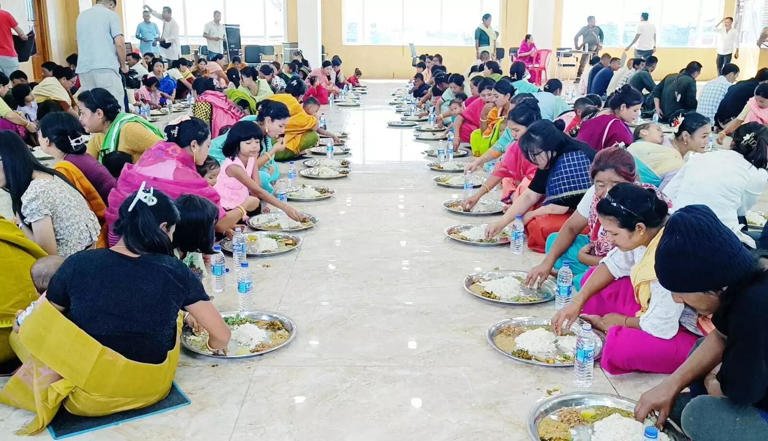
The spirit of Manipur Ningol Chakkouba, one of the state’s most cherished festivals, shone through tears and resilience this year. As families reunited across the state, thousands of internally displaced persons (IDPs) marked the occasion in relief camps, far from their ancestral homes. The festival, celebrated to honor the bond between brothers and sisters, carried both joy and sorrow for a state still recovering from months of ethnic unrest.
Chief Minister N. Biren Singh urged citizens to celebrate the festival in harmony, calling it a symbol of unity and love that transcends divisions. Despite ongoing challenges, Manipuris across communities expressed their hope for peace and reconciliation.
Read More: Assam Withdraws Two-Child Policy for Tribal and Tea Communities
A Festival of Bonds Amid Crisis
Manipur Ningol Chakkouba is traditionally observed by married women visiting their parental homes, where brothers shower them with love, blessings, and gifts. It represents family affection and social harmony. However, this year’s celebrations were marked by an undercurrent of grief.
Thousands of women living in displacement camps could not return home due to the ongoing ethnic conflict between the Meitei and Kuki communities. Makeshift celebrations were organized in camps across districts like Churachandpur, Kangpokpi, and Imphal. Brothers and sisters reunited briefly under uncertain circumstances, sharing food, laughter, and memories amid barbed wires and security presence.
For many, this year’s festival was not about grand feasts but about preserving traditions despite hardship. It became a moment of emotional strength—a reminder of what unites Manipuris even in times of division.
The Plight of the Displaced
Over 60,000 people remain displaced following months of violence that began in May 2023. Relief camps in both valley and hill districts continue to shelter families who have lost homes and livelihoods. For them, Manipur Ningol Chakkouba offered a fleeting sense of normalcy.
In several camps, local organizations and volunteers stepped in to provide traditional meals and gifts for women and children. Young men pooled resources to recreate the essence of the festival, preparing traditional dishes like eromba, chamthong, and ngari-based curries. Many shared that these efforts were more than symbolic—they represented the spirit of endurance and togetherness.
In Imphal, women displaced from hill districts celebrated the day with tearful smiles. “We have lost everything, but we still have each other,” said a displaced mother, expressing her wish to celebrate next year in her home village.
Government and Civil Society Initiatives
To mark Manipur Ningol Chakkouba, several local groups and NGOs organized community feasts and donation drives for displaced families. The state government distributed essential supplies to camps and urged citizens to extend solidarity to those affected.
Chief Minister N. Biren Singh, in his message, said that the festival reflects Manipur’s cultural unity and resilience. He appealed for compassion across communities and reiterated the government’s commitment to rehabilitating displaced persons.
Civil society groups also played a crucial role. Women’s organizations, student unions, and local volunteers across both valley and hill districts coordinated small-scale celebrations, ensuring that the cultural essence of the festival remained alive despite adversity.
Hope for Peace and Reconciliation
The celebration of Manipur Ningol Chakkouba amid displacement reflected a growing desire for peace among ordinary citizens. Many women used the occasion to pray for reconciliation and healing. Religious institutions across the state held special gatherings, urging both communities to rebuild trust and harmony.
The symbolic reunion of brothers and sisters was seen as a message to policymakers to restore peace and rebuild fractured relationships. Community elders emphasized that festivals like Ningol Chakkouba can serve as platforms for cultural healing, bridging emotional divides created by conflict.
Cultural Resilience in Times of Turmoil
Despite the challenges, Manipur Ningol Chakkouba demonstrated the resilience of Manipuri culture. Traditional attire, folk music, and rituals were seen even in relief camps. Youth volunteers organized small programs where children performed songs and dances that celebrated sibling love.
For many, continuing the tradition was an act of defiance against despair. Families believed that preserving the festival’s rituals would help maintain cultural identity and hope. The sight of brothers feeding their sisters, even in camps, reflected a deep-rooted belief that unity and love can overcome hardship.
Emotional Reunions Across Divides
While some families were torn apart by conflict, others found ways to reconnect. In border areas, displaced brothers and sisters met at neutral zones with the help of security personnel. They exchanged gifts, tears, and food—moments that transcended violence.
These quiet reunions sent a strong message of human connection. Many brothers expressed their determination to rebuild their homes and lives so that next year’s Ningol Chakkouba could be celebrated in peace.
A Call for Healing and Unity
As the day ended, the sounds of laughter mixed with prayers for stability and reconciliation. The Manipur Ningol Chakkouba festival reminded people of their shared heritage, even in times of suffering. Citizens, activists, and leaders called for dialogue and compassion as the only path forward.
Analysts say that cultural events like these can play a vital role in post-conflict healing. When communities celebrate shared traditions, it helps rebuild emotional and social bridges.
Looking Ahead
Manipur stands at a crossroads—torn between memories of violence and hopes for peace. Yet, this year’s Manipur Ningol Chakkouba has proven that love and unity remain stronger than division. The festival rekindled hope that one day, families now living in camps will celebrate again in their homes, free from fear and displacement.
For the people of Manipur, Ningol Chakkouba 2025 was not just a festival—it was a testament to endurance, faith, and the unbroken spirit of togetherness that continues to define their land.
Read More: Eco Park Kohima to Open Ahead of Hornbill Festival: CM Rio