

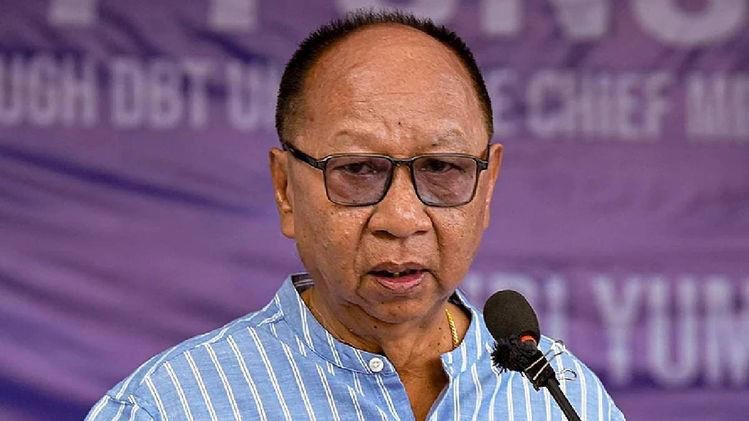
Manipur Chief Minister Yumnam Khemchand Singh has called for firm action against what he described as “elements” working against peace in the state, stressing that collective efforts are necessary to restore normalcy and rebuild confidence among communities.
The Chief Minister’s remarks come amid continuing efforts to bring stability to Manipur following the prolonged ethnic conflict that erupted in May 2023. The violence has resulted in deaths, displacement and deep social divisions, making the restoration of peace and trust a major challenge for the state government.
CM Calls for Collective Action to Restore Peace
Khemchand emphasised that maintaining peace cannot be left solely to the government or security agencies. He called upon citizens, community leaders, civil society organisations and political stakeholders to contribute to efforts aimed at rebuilding a peaceful environment.
The Chief Minister stressed the importance of identifying and dealing with individuals or groups that deliberately attempt to disrupt peace or create fresh tensions.
According to him, those working against reconciliation should not be allowed to undermine efforts being made to restore normal life across the state.
The appeal comes as authorities continue to focus on improving security while simultaneously pursuing measures aimed at rebuilding trust between communities.
‘Elements’ Opposing Peace Face Government Action
The Chief Minister’s call for action against anti-peace elements reflects concerns that isolated incidents, inflammatory statements or deliberate attempts to provoke communities could derail the broader peace process.
Manipur remains particularly vulnerable to rumours and misinformation because of the deep mistrust created by the conflict. Any incident capable of triggering fear or anger can potentially have wider consequences.
Khemchand therefore stressed the need for vigilance and responsible behaviour. He indicated that those who intentionally attempt to disturb the prevailing peace should face appropriate action under the law.
At the same time, maintaining public order will require security agencies to operate carefully while ensuring that the rights and safety of ordinary citizens are protected.
Rebuilding Trust Remains a Priority
The Chief Minister’s remarks also underline the importance of rebuilding trust among communities.
The conflict has created significant psychological and social barriers, with communities developing concerns about their safety and future. Restoring confidence will therefore require sustained engagement rather than short-term measures.
Dialogue between community representatives can help address grievances and create channels for communication. Political leaders and civil society organisations can also play an important role by encouraging moderation and preventing inflammatory rhetoric.
The state government’s peace efforts will ultimately depend on whether communities believe that their concerns are being heard and addressed.
Security Measures Needed to Prevent Fresh Violence
Maintaining security remains a crucial component of restoring normalcy in Manipur.
Recent incidents of violence and attacks in sensitive areas have continued to generate concerns about the possibility of renewed tensions. Security forces have therefore been required to maintain vigilance in vulnerable locations and respond to emerging threats.
The Chief Minister’s call for action against elements opposing peace is expected to reinforce the government’s position that violence and attempts to destabilise communities cannot be allowed to derail the peace process.
Effective intelligence gathering and coordination between security agencies and local authorities will be important in preventing attacks and protecting civilians.
Role of Communities in Peace-Building
Community participation is essential for sustaining peace in a state as socially diverse as Manipur.
Local organisations and community leaders can help identify emerging tensions, counter misinformation and encourage dialogue. Their involvement can also help authorities understand the concerns of residents more effectively.
The Chief Minister has repeatedly emphasised the importance of collective responsibility. Citizens can contribute by avoiding rumours, rejecting provocative messaging and supporting initiatives that bring communities together.
Such grassroots engagement can complement government and security measures and create a stronger foundation for reconciliation.
Youth Can Help Strengthen Peace Efforts
Young people also have an important role in Manipur’s efforts to rebuild social cohesion.
The conflict has disrupted education, employment and opportunities for many young people. Providing constructive avenues through education, sports, skill development and employment can help reduce frustration and encourage positive engagement.
Inter-community programmes involving young people could also create opportunities to rebuild relationships that have been damaged by the conflict.
The government and civil society groups can therefore support initiatives that encourage young people to become participants in peace-building rather than allowing them to be influenced by forces seeking to deepen divisions.
Need for Responsible Political Leadership
Political parties and leaders have an important responsibility in the current environment.
Statements made by political figures can have a significant impact on public sentiment, particularly during periods of heightened tension. Responsible political communication can help reduce uncertainty and create space for constructive dialogue.
Khemchand’s call for action against those opposing peace also places emphasis on the need for political stakeholders to work towards common objectives.
Differences over governance and policy can be addressed through democratic institutions, but maintaining peace and protecting citizens require broader cooperation.
Development and Peace Must Progress Together
Long-term stability in Manipur will also depend on restoring economic activity and development.
Conflict-related displacement and insecurity have disrupted businesses, agriculture, education and public services in many areas. Rebuilding infrastructure and restoring livelihoods will therefore be an important part of the recovery process.
A stable security environment can create the conditions needed for development, while improved economic opportunities can contribute to greater social stability.
The government will consequently need to pursue security, rehabilitation and development as interconnected priorities.
Sustained Effort Needed for Lasting Normalcy
Restoring peace in Manipur will not be an overnight process. The divisions created by years of conflict mean that rebuilding trust and confidence will take time.
The Chief Minister’s latest appeal highlights the need for a united approach in which government institutions, communities and civil society work together while firmly addressing attempts to undermine peace.
Preventing fresh violence, protecting civilians and encouraging dialogue will remain critical to the state’s recovery.
Manipur’s Peace Process Faces a Crucial Test
Chief Minister Yumnam Khemchand Singh’s call for action against elements opposing peace underscores the government’s determination to prevent fresh disruptions as it works towards restoring normalcy.
The challenge now is to ensure that security measures are combined with meaningful dialogue, rehabilitation and confidence-building efforts. Communities will need reassurance that their safety and concerns remain central to the government’s approach.
For Manipur to move beyond the cycle of conflict, peace efforts must be sustained at both the institutional and grassroots levels. Firm action against those deliberately attempting to disturb peace, alongside dialogue and reconciliation, could help create the conditions necessary for a more stable and peaceful future.