

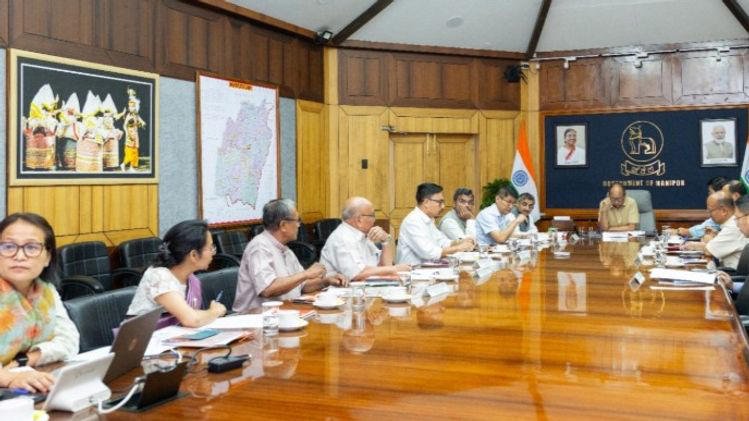
The Manipur government has reaffirmed its commitment to preserving and promoting the state’s rich cultural heritage following a meeting of the Kangla Board chaired by Chief Minister N. Biren Singh. Emphasising the historical and cultural significance of Manipur’s heritage sites, the Chief Minister said the government remains dedicated to protecting the state’s unique traditions, monuments, and historical landmarks while ensuring that future generations continue to appreciate and benefit from this invaluable legacy.
The meeting reviewed ongoing conservation initiatives, infrastructure development within heritage zones, and measures aimed at strengthening tourism while preserving the historical integrity of important cultural sites. Officials discussed strategies to improve visitor facilities, enhance heritage management, and promote greater public awareness about Manipur’s rich cultural history.
The Chief Minister observed that preserving cultural heritage is not only about protecting monuments but also about safeguarding the identity, traditions, and collective memory of the people of Manipur.
Kangla Board Reviews Conservation Initiatives
The Kangla Board meeting focused on reviewing the progress of conservation and development activities at the historic Kangla Fort and other heritage sites under its jurisdiction. Officials presented updates on restoration projects, maintenance work, visitor amenities, and future plans designed to improve heritage management while maintaining the historical character of these important locations.
Discussions also covered the preservation of archaeological structures, landscaping, environmental management, and measures to improve accessibility for visitors. The government reiterated that all development activities within heritage areas would be carried out with due regard for historical authenticity and cultural significance.
The board also examined proposals aimed at enhancing the overall visitor experience without compromising the integrity of heritage structures.
CM Reaffirms Commitment to Heritage Preservation
Addressing the meeting, Chief Minister N. Biren Singh stated that protecting Manipur’s cultural heritage remains one of the government’s important priorities. He said the state’s historical monuments, traditional institutions, cultural practices, and archaeological sites represent a priceless legacy that must be preserved for future generations.
The Chief Minister noted that heritage conservation contributes not only to cultural identity but also to education, research, and tourism. He emphasised that development and conservation should progress together through careful planning and scientific restoration methods.
According to the Chief Minister, preserving heritage requires continuous collaboration between government agencies, historians, archaeologists, conservation experts, and local communities.
Kangla’s Historical Importance
Kangla occupies a unique place in Manipur’s history and has long served as a symbol of the state’s cultural and political heritage. Once the seat of the ancient Meitei kingdom, the historic complex contains archaeological remains, religious sites, monuments, and structures that reflect centuries of Manipur’s civilisation.
Over the years, Kangla has become an important destination for researchers, historians, students, and tourists interested in understanding the state’s historical evolution. The government has undertaken several initiatives to restore parts of the complex while improving public access and educational outreach.
Officials stressed that protecting Kangla remains essential for preserving the historical narrative and cultural identity of Manipur.
Promoting Heritage Tourism
The government also discussed ways to strengthen heritage tourism while ensuring sustainable management of historical sites. Improved visitor facilities, better interpretation centres, guided tours, digital information systems, and enhanced infrastructure are expected to make heritage locations more accessible to domestic and international tourists.
Tourism linked to cultural heritage can contribute significantly to the local economy by generating employment opportunities for guides, artisans, hospitality businesses, transport operators, and local entrepreneurs.
Officials observed that responsible tourism also encourages greater public appreciation of history and creates additional resources for conservation activities.
Balancing Development with Conservation
One of the key themes of the meeting was the importance of balancing infrastructure development with heritage conservation. The Chief Minister emphasised that any improvements within heritage areas must respect historical authenticity while meeting modern visitor requirements.
Experts participating in conservation projects are expected to follow established preservation standards, ensuring that restoration work protects original architectural features and archaeological remains. Environmental sustainability, proper landscaping, and effective maintenance will also remain important considerations during future development.
Officials noted that careful planning is necessary to ensure that increased tourism does not negatively affect fragile heritage structures.
Community Participation in Heritage Protection
The government highlighted the important role of local communities in preserving Manipur’s cultural heritage. Community participation is considered essential for protecting monuments, promoting traditional knowledge, and encouraging responsible tourism.
Educational institutions, cultural organisations, historians, and youth groups are expected to play an active role in heritage awareness programmes that promote appreciation for Manipur’s historical legacy. Public involvement can also strengthen conservation efforts by encouraging responsible behaviour at heritage sites and supporting cultural events that celebrate traditional practices.
Officials believe that heritage preservation becomes more effective when communities develop a strong sense of ownership and responsibility towards their cultural assets.
Strengthening Cultural Identity
The Chief Minister observed that preserving heritage extends beyond physical monuments to include traditional arts, languages, customs, festivals, and indigenous knowledge systems. These cultural elements collectively shape Manipur’s identity and contribute to its rich social fabric.
Government initiatives aimed at supporting traditional artisans, promoting cultural festivals, documenting historical records, and encouraging research are expected to complement efforts to conserve historical sites. Such programmes help ensure that both tangible and intangible cultural heritage continue to thrive.
Officials stated that preserving cultural identity strengthens social cohesion while promoting greater understanding of the state’s diverse traditions.
A Vision for Sustainable Heritage Management
The discussions during the Kangla Board meeting reflected the government’s long-term vision of creating a sustainable heritage management framework that integrates conservation, education, tourism, and community participation. Modern technologies, scientific restoration techniques, digital documentation, and improved institutional coordination are expected to strengthen future conservation efforts.
Regular monitoring, professional expertise, and adequate funding will remain essential for protecting heritage sites from environmental degradation, urban pressures, and the effects of time. The government intends to continue investing in preservation projects while encouraging collaboration with national and international conservation institutions.
Officials believe that sustained commitment will ensure the long-term protection of Manipur’s invaluable cultural assets.
Preserving History for Future Generations
The Manipur government’s renewed commitment to heritage conservation following the Kangla Board meeting highlights the importance of safeguarding the state’s historical and cultural legacy. By focusing on restoration, sustainable tourism, community participation, and scientific conservation, the government aims to protect heritage sites while making them more accessible and meaningful for future generations.
As Manipur continues to promote its rich cultural traditions alongside modern development, preserving historical landmarks such as Kangla will remain central to strengthening the state’s identity and fostering greater appreciation of its unique heritage. Through coordinated efforts involving government agencies, experts, and local communities, Manipur hopes to ensure that its cultural treasures continue to inspire, educate, and enrich society for generations to come.