

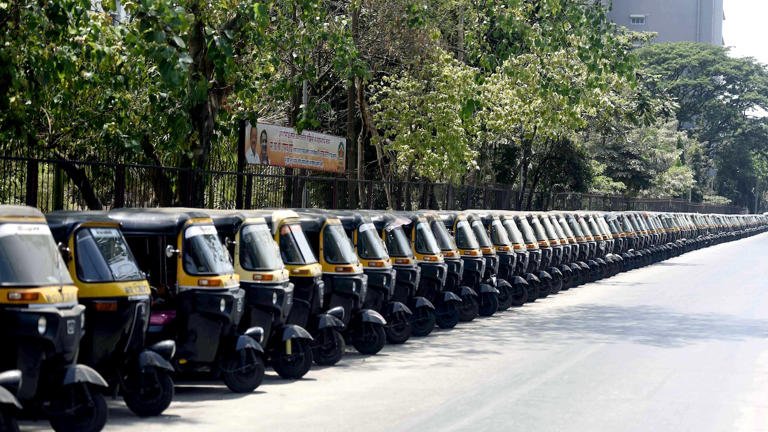
Mumbai’s auto-rickshaw, taxi and app-based cab drivers are facing a new regulatory requirement from August 18, 2026. The Maharashtra government has begun enforcing its requirement that passenger-transport drivers should have a working knowledge of Marathi.
The rule does not mean that drivers who cannot speak Marathi will immediately lose their licences. Instead, the government has introduced a step-by-step process. Regional Transport Office (RTO) officials will check drivers’ ability to communicate in Marathi. Drivers who fail the requirement will receive time to improve their language skills before authorities take stricter action.
The move has attracted considerable attention in Mumbai, where auto-rickshaw and taxi drivers come from different linguistic backgrounds. The government says the requirement will help drivers communicate more effectively with passengers, while critics have raised concerns about its implementation and possible impact on drivers’ livelihoods.
Marathi Checks Begin From August 18
RTO officials across Maharashtra will begin checking the Marathi-speaking abilities of auto-rickshaw, taxi and app-based cab drivers from Tuesday, August 18.
The checks will focus on functional or working Marathi, rather than advanced language skills. Drivers need to demonstrate that they can communicate sufficiently with passengers during their daily work.
The government amended the Maharashtra Motor Vehicles Rules, 1989, to provide a legal basis for action against drivers who fail to meet the language requirement.
The requirement applies to existing passenger-transport drivers as well as new applicants.
Drivers Will Not Lose Licences Immediately
One of the most important points is that drivers who fail the initial check will not immediately lose their licences.
According to the latest clarification from the transport department, RTO officials will first issue a formal notice to drivers who cannot demonstrate the required Marathi proficiency.
The driver will then receive 30 days to learn Marathi and appear for another test.
This gives drivers an opportunity to meet the requirement before authorities impose a suspension.
The government has therefore moved away from an immediate-penalty approach and introduced a gradual enforcement mechanism.
What Happens After the 30-Day Notice?
If a driver fails to acquire the required Marathi skills during the notice period, the authorities can take stronger action.
The next step involves suspension of the driving licence for three months.
The driver will therefore have multiple opportunities to comply before facing the most serious penalty.
Officials have clarified that the system aims to encourage compliance rather than immediately remove drivers from the road.
However, repeated non-compliance can eventually lead to the cancellation of the driver’s licence or relevant authorisation.
Repeat Violations Could Lead to Cancellation
The rules become significantly stricter for repeat violations.
If a driver continues to fail the Marathi requirement even after the suspension period, authorities can begin proceedings that could result in permanent cancellation of the licence or applicable commercial driving authorisation.
The three-step approach can therefore be understood simply:
First: RTO checks the driver’s Marathi proficiency.
Second: If the driver fails, authorities issue a notice and provide time to improve.
Third: Continued failure can lead to a three-month suspension and, for repeated violations, cancellation.
This system gives drivers time to comply while retaining a strong penalty for continued non-compliance.
Around 1.25 Lakh Drivers Already Completed Training
A large number of drivers have already taken steps to meet the requirement.
Around 1.25 lakh auto-rickshaw and taxi drivers completed the Marathi language course organised by the Maharashtra government and received certificates.
These drivers will not face action under the new enforcement process because they have completed the required training and certification.
The government conducted the programme through 58 RTOs across Maharashtra over a period of around 105 days.
The initiative aimed to teach drivers basic Marathi that they could use while interacting with passengers.
Nearly 25,000 Drivers Still Need Certification
Despite the large number of drivers who completed the programme, thousands still remain outside the certified group.
As of August 16, around 25,000 autorickshaw drivers in Maharashtra had not received certification.
Of these, approximately 7,750 drivers had taken the proficiency test but failed, while another 17,427 had not yet completed the training.
These drivers now face the possibility of RTO checks and notices.
The numbers demonstrate the scale of the challenge facing the transport department as it begins enforcement.
What Will the Marathi Test Involve?
The requirement focuses on practical communication rather than academic Marathi.
Reports on the testing process indicate that drivers may need to demonstrate their ability to communicate in basic Marathi and read short passages.
The purpose is to determine whether a driver can understand and respond to passengers during ordinary interactions.
The government says drivers need only a working knowledge of the language. It does not require them to demonstrate advanced grammar or literary knowledge.
This distinction is important because the rule primarily concerns communication between public-transport drivers and commuters.
Why Has Maharashtra Introduced the Rule?
Transport Minister Pratap Sarnaik has argued that passenger-transport drivers should know Marathi so they can communicate effectively with commuters.
The government has presented the measure as a language and public-service requirement.
The rule also seeks to clarify an existing requirement under Maharashtra’s motor-vehicle framework. The state amended its rules to remove ambiguity and establish a clearer mechanism for dealing with drivers who lack the required language knowledge.
Deputy Chief Minister Eknath Shinde has described Marathi as a “language of devotion, not compulsion” while praising drivers who completed the government training programme.
Mumbai Drivers Face a Major Adjustment
The rule has particular significance in Mumbai because the city’s transport workforce includes drivers from many parts of India.
Many drivers have worked in Mumbai for years without having formal Marathi-language training.
For these workers, the new requirement means they must demonstrate basic proficiency or risk regulatory action.
Some drivers have already attended government classes, while others have reportedly turned to private courses to prepare for the assessment.
The transport department now needs to ensure that the testing process remains consistent and accessible.
Drivers Had Already Faced Long Queues
The language requirement has already led to large numbers of drivers visiting RTO offices.
Reports from Mumbai showed long queues at centres such as the Tardeo RTO, with drivers waiting for hours to take the test.
Some drivers reportedly had to leave without taking the test because of the large crowds.
The heavy turnout demonstrates how seriously drivers are taking the new rule.
It also highlights the administrative challenge of testing such a large workforce within a limited period.
Government Training Programme Has Ended
Another important point is that the government-sponsored training programme is not currently being extended.
Drivers who still need to improve their Marathi may therefore have to find alternative ways to prepare for the test.
Reports indicate that some drivers may use private language courses.
This has also raised concerns about unregulated training providers charging drivers money for language classes.
Authorities will need to ensure that drivers receive clear information about the official testing process and avoid unnecessary expenses.
Rule Aims to Improve Passenger Communication
The government says the main purpose of the requirement is practical communication.
Passengers often need to provide directions, explain destinations, ask about fares or communicate other information to drivers.
A basic understanding of Marathi can make these interactions easier, particularly for passengers who are more comfortable speaking the local language.
The government therefore sees language proficiency as part of improving public transport services.
Concerns Over Livelihoods
At the same time, the new rule has raised concerns among sections of the driver community.
For drivers who have difficulty learning Marathi, the possibility of licence suspension can directly affect their income.
Many auto and taxi drivers depend on daily earnings to support their families.
A three-month suspension could therefore create a significant financial burden.
The government’s decision to provide a 30-day notice before suspension offers some relief, but drivers will still need to meet the language requirement to continue working without restrictions.
What Mumbai Drivers Should Know
For Mumbai’s auto, taxi and app-based cab drivers, the situation from August 18 can be summarised simply.
If you already have a Marathi proficiency certificate: you are not expected to face action under this provision.
If you do not have certification: RTO officials can check your Marathi proficiency.
If you fail the check: you receive a notice and time to improve.
If you still fail: authorities can suspend the licence for three months.
If you repeatedly fail to comply: the licence or relevant authorisation can ultimately face cancellation.
A New Phase for Mumbai’s Transport Sector
The Mumbai Marathi test 2026 marks a significant change for the city’s auto-rickshaw, taxi and app-based cab drivers.
The Maharashtra government has chosen a phased enforcement model rather than immediate licence cancellation. This gives drivers an opportunity to learn basic Marathi and demonstrate their ability to communicate.
Around 1.25 lakh drivers have already completed the government’s training programme, while thousands more still need to meet the requirement.
For drivers, the message from the government is straightforward: basic Marathi proficiency is now part of the requirements for passenger-transport work in Maharashtra.
The immediate focus will be on RTO checks and notices. Drivers who fail will have time to improve before facing suspension.
The bigger question will be how smoothly the government can implement the rule across Maharashtra while protecting both passenger interests and the livelihoods of the state’s large auto and taxi-driving community.