

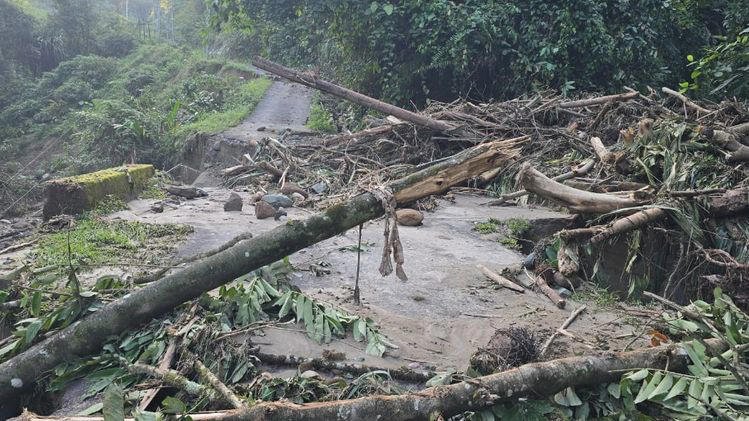
Heavy rainfall accompanied by devastating cloudbursts has triggered widespread destruction across several districts of Arunachal Pradesh, cutting off numerous villages from the rest of the state. Torrential rains over the past few days have led to flash floods, landslides, and the collapse of critical road infrastructure, severely affecting transportation, communication, and access to essential services. The disaster has once again highlighted the vulnerability of the Himalayan state to extreme weather events during the monsoon season.
Local authorities, disaster response teams, and security personnel have been working tirelessly to restore connectivity, rescue stranded residents, and provide relief materials to affected communities. While no major loss of life has been reported in several of the affected areas, the damage to infrastructure has been extensive, leaving thousands of people facing significant hardships.
Widespread Damage Across Multiple Districts
Several districts, including East Kameng, Kurung Kumey, Upper Subansiri, West Kameng, and parts of Papum Pare, have witnessed severe flooding and landslides following continuous heavy rainfall. Cloudbursts in hilly regions intensified the situation, causing sudden surges of water that swept away roads, culverts, and small bridges.
Many interior villages have become completely inaccessible after key road links were washed away or blocked by massive landslides. Residents in remote locations are now dependent on emergency relief operations as regular transportation has come to a standstill. In several places, people have been forced to walk long distances through difficult terrain to reach safer locations or obtain essential supplies.
The overflowing rivers and streams have also damaged agricultural land, fish ponds, and livestock shelters, affecting the livelihoods of farming families who depend on seasonal cultivation.
Villages Left Isolated as Roads Collapse
One of the biggest challenges emerging from the disaster is the complete isolation of several villages. Road connectivity remains the primary means of transportation in most parts of Arunachal Pradesh, and when landslides destroy highways or village roads, communities can remain cut off for days.
Collapsed retaining walls, damaged culverts, and debris-covered roads have made restoration efforts difficult. Heavy machinery has been deployed wherever possible, but continuous rainfall has slowed repair work and increased the risk for workers operating in unstable terrain.
Essential supplies such as food, medicines, drinking water, and fuel are becoming increasingly difficult to transport to remote areas. Authorities are closely monitoring the situation and prioritising the restoration of strategic road links to reconnect isolated settlements.
Rescue and Relief Operations Underway
The state administration, along with district disaster management authorities, has launched extensive rescue and relief operations in the affected regions. Teams from the State Disaster Response Force (SDRF), National Disaster Response Force (NDRF), police personnel, and local volunteers have been mobilised to assist stranded residents.
Temporary relief camps have been established in safer locations for families forced to leave their homes. These camps are providing food, drinking water, blankets, medical assistance, and emergency shelter.
Officials are also conducting assessments to identify vulnerable areas that may require evacuation if rainfall continues. Medical teams have been deployed to monitor public health conditions and prevent the spread of waterborne diseases that often follow floods.
Community participation has played a crucial role in the ongoing rescue efforts. Local villagers have joined hands with rescue teams by helping transport elderly residents, clearing smaller debris, and distributing emergency supplies to those in need.
Infrastructure Suffers Major Setback
The floods have dealt a significant blow to the state’s infrastructure. Several highways connecting district headquarters with remote villages have suffered extensive damage, disrupting both passenger movement and the transportation of goods.
Electricity supply has been interrupted in many areas after power lines and poles were damaged by landslides and falling trees. Telecommunications have also been affected, making it difficult for families to contact relatives and for authorities to coordinate rescue operations efficiently.
Educational institutions in several districts have suspended classes due to safety concerns and damaged roads. Government offices have also experienced disruptions as employees struggle to reach their workplaces.
Public Works Department officials are working around the clock to assess structural damage and prepare plans for restoring essential infrastructure once weather conditions improve.
Agriculture and Local Economy Face Heavy Losses
Agriculture remains one of the primary sources of livelihood for many communities in Arunachal Pradesh, and the ongoing floods have caused extensive losses to standing crops. Paddy fields, vegetable farms, and horticultural plantations have been submerged, while fertile topsoil has been washed away in several locations.
Farmers also reported losses of livestock and damage to irrigation channels that support agricultural activities throughout the growing season. The destruction is expected to impact household incomes and local markets over the coming months.
Small businesses have also suffered as transportation disruptions prevent the movement of goods. Shops in isolated villages are experiencing shortages of essential commodities, while tourism-related activities have come to a temporary halt in many scenic destinations affected by the heavy rains.
Government Monitoring the Situation Closely
The Arunachal Pradesh government has been continuously monitoring developments through district administrations and disaster management authorities. Senior officials are reviewing damage reports and coordinating emergency response measures to ensure timely assistance reaches affected communities.
Authorities have appealed to residents living in vulnerable areas to remain alert, avoid unnecessary travel, and immediately report signs of fresh landslides or rising water levels. People have also been advised to stay away from swollen rivers and unstable hill slopes until weather conditions stabilise.
Relief materials are being dispatched to the worst-affected districts, while engineers continue efforts to reopen blocked roads and restore communication networks.
Monsoon Preparedness Remains Critical
Every monsoon season brings the risk of floods and landslides to Arunachal Pradesh due to its mountainous geography, steep slopes, and numerous river systems. Climate experts have increasingly pointed to changing weather patterns that are contributing to more intense rainfall events and cloudbursts across Himalayan regions.
The latest disaster has reinforced the importance of strengthening early warning systems, improving drainage infrastructure, building climate-resilient roads, and enhancing disaster preparedness at the village level. Community awareness, timely evacuation plans, and stronger coordination among government agencies remain essential for reducing the impact of such natural disasters.
As restoration work continues, the immediate priority remains ensuring the safety of affected residents, reconnecting isolated villages, and rebuilding damaged infrastructure. The resilience shown by local communities, rescue personnel, and government agencies offers hope that normalcy can gradually return despite the enormous challenges posed by the ongoing monsoon.