

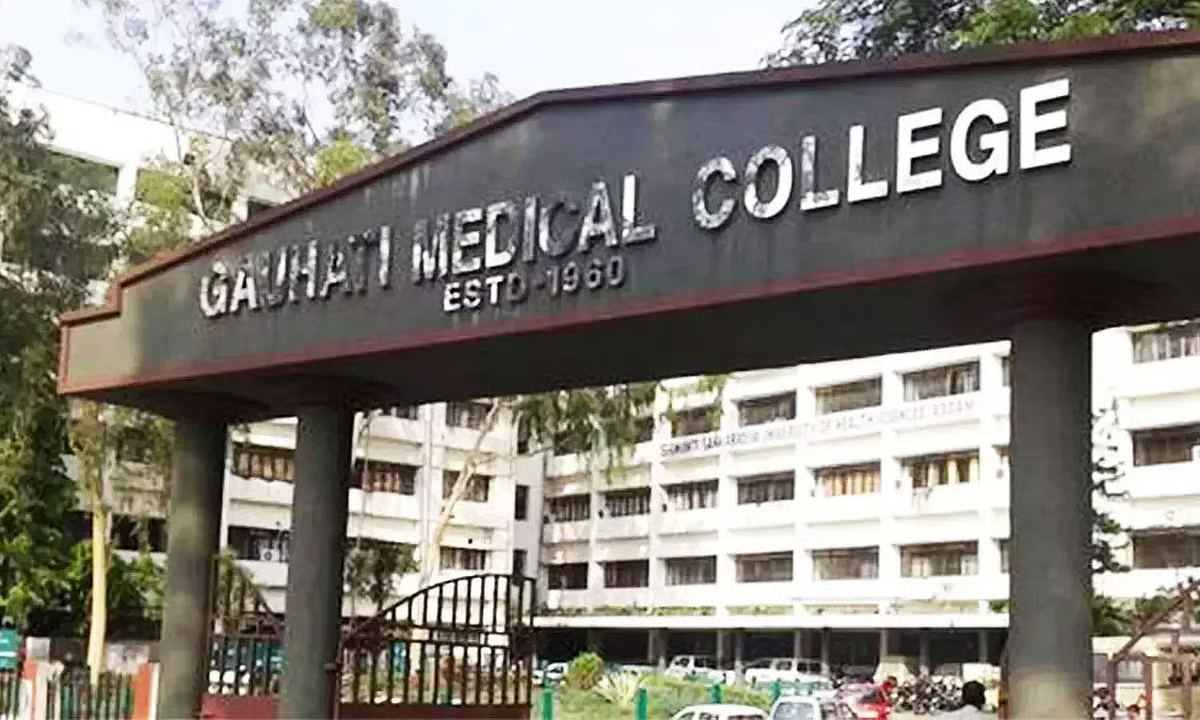
The Medical Infrastructure network in Assam has received a significant addition as Guwahati Medical College Hospital opened a dedicated 50-bed treatment wing for Japanese Encephalitis. The facility aims to strengthen the hospital’s capacity to manage patients affected by the mosquito-borne viral disease.
A dedicated treatment wing can help hospitals organize specialized care and manage patients more efficiently during periods of increased disease activity. Moreover, additional beds can provide greater capacity for patients requiring medical observation and treatment.
The development highlights the importance of strengthening healthcare infrastructure for infectious diseases in Assam. However, the available information does not specify the facility’s inauguration date, construction cost, staffing levels, or the medical equipment installed in the new wing.
Assam Flood Situation Shows Strong Recovery as Impact Eases
Medical Infrastructure Expands Japanese Encephalitis Care
The new Medical Infrastructure facility provides 50 dedicated beds for Japanese Encephalitis treatment at Guwahati Medical College Hospital.
Japanese Encephalitis can cause serious neurological illness and requires timely medical attention. Furthermore, patients with severe disease may require close monitoring and supportive hospital care.
A dedicated ward can therefore help organize treatment capacity around the needs of affected patients.
However, the available information does not specify whether all 50 beds will operate simultaneously or whether the facility will expand capacity according to seasonal demand.
Medical Infrastructure Supports Specialized Patient Management
The Medical Infrastructure expansion can improve the hospital’s ability to manage patients requiring care for Japanese Encephalitis.
A dedicated treatment area allows healthcare teams to organize patient beds and clinical services around a specific medical condition. Additionally, centralized treatment arrangements can help medical staff coordinate monitoring and supportive care.
This can be particularly valuable during periods when hospitals experience increased patient numbers.
However, the available information does not provide details about the number of doctors, nurses, or other healthcare professionals assigned to the new wing.
Medical Infrastructure Addresses Seasonal Disease Pressure
The Medical Infrastructure initiative could help Assam respond to seasonal increases in Japanese Encephalitis cases.
Mosquito-borne diseases can become a significant public-health concern under suitable environmental conditions. Moreover, hospitals may face increased demand for specialized care when disease transmission rises.
Additional dedicated beds can provide greater flexibility during such periods.
However, the available information does not provide current case numbers or projections for Japanese Encephalitis in Assam.
Consequently, the immediate demand for the new facility cannot be quantified.
Medical Infrastructure Strengthens Hospital Capacity
The Medical Infrastructure expansion increases the treatment capacity available at one of Assam’s major medical institutions.
Guwahati Medical College Hospital serves patients from Guwahati and other parts of the state. Furthermore, a specialized facility can support referrals when patients from districts require higher-level medical care.
The additional 50 beds could therefore strengthen the hospital’s ability to respond to serious cases.
However, the available information does not indicate how many additional patients the hospital expects to accommodate annually.
Medical Infrastructure Could Improve Referral Management
The Medical Infrastructure wing could also support the referral system for Japanese Encephalitis patients.
Patients with serious symptoms may require care at facilities equipped to provide advanced medical monitoring and treatment. Additionally, dedicated capacity at a major referral hospital can help district-level healthcare facilities transfer patients when necessary.
This can contribute to a more coordinated healthcare response.
However, the available information does not specify whether the new wing includes a formal referral protocol with district hospitals.
Medical Infrastructure Highlights Need for Early Treatment
The Medical Infrastructure development also reinforces the importance of timely medical attention for serious mosquito-borne diseases.
Japanese Encephalitis can produce severe neurological complications, making early recognition and appropriate medical care important. Moreover, public-health systems rely on both prevention and clinical treatment to reduce the impact of infectious diseases.
The new treatment capacity addresses the clinical-care component of that response.
However, the available information does not indicate whether the hospital has introduced any new diagnostic services alongside the treatment wing.
Medical Infrastructure Complements Disease Prevention
The Medical Infrastructure expansion represents one part of a broader Japanese Encephalitis response.
Hospital treatment needs to complement preventive measures such as mosquito-control activities, vaccination programmes where applicable, public awareness, and early detection. Furthermore, coordination between hospitals and public-health authorities can help identify changing disease patterns.
A dedicated treatment facility can therefore strengthen the healthcare response while prevention efforts continue elsewhere.
However, the available information does not link the new wing to any specific vaccination or mosquito-control programme.
Medical Infrastructure Could Support Better Hospital Preparedness
The Medical Infrastructure addition can improve preparedness for periods of increased demand.
Hospitals need adequate beds, trained personnel, medicines, monitoring capacity, and infection-control arrangements to respond effectively to serious illnesses. Additionally, dedicated wards can help hospitals organize resources more efficiently during disease outbreaks or seasonal surges.
The new 50-bed wing could therefore provide additional preparedness capacity.
However, the available information does not provide details about the wing’s equipment, oxygen capacity, or other clinical resources.
Medical Infrastructure Strengthens Assam’s Public Health Response
The Medical Infrastructure development has significance for Assam’s wider public-health system.
Guwahati Medical College Hospital serves as an important medical centre for patients requiring advanced treatment. Moreover, strengthening specialized capacity at such institutions can improve the state’s ability to respond to serious infectious diseases.
The new wing can therefore contribute to broader healthcare preparedness.
However, the available information does not provide comparative data on Japanese Encephalitis treatment capacity before and after the expansion.
Medical Infrastructure Focuses on Patient-Centred Care
The Medical Infrastructure expansion provides a dedicated environment for patients requiring Japanese Encephalitis treatment.
Specialized spaces can help medical teams organize patient monitoring and clinical care according to disease-specific needs. Furthermore, dedicated capacity can reduce pressure on general hospital wards when patient numbers increase.
The effectiveness of the facility will depend on appropriate staffing, equipment, and clinical management.
However, those operational details have not been provided.
Conclusion
The Medical Infrastructure expansion at Guwahati Medical College Hospital has added a dedicated 50-bed treatment wing for Japanese Encephalitis. The facility aims to strengthen specialized hospital capacity and improve the management of patients affected by the mosquito-borne disease.
Moreover, the new wing can support referral care, hospital preparedness, and treatment capacity during periods of increased demand. However, the available information does not specify the facility’s cost, staffing, equipment, inauguration date, or expected patient capacity beyond the 50 beds.
Overall, the Medical Infrastructure development represents an important addition to Assam’s healthcare capacity for Japanese Encephalitis. Continued disease surveillance, prevention programmes, early diagnosis, and adequate hospital staffing will remain essential for reducing the impact of the disease.
FAQs
1. What is the new Medical Infrastructure facility?
Guwahati Medical College Hospital has opened a dedicated 50-bed treatment wing for Japanese Encephalitis.
2. How many beds does the new wing have?
The dedicated treatment wing has 50 beds.
3. Why is a specialized Japanese Encephalitis wing important?
It can provide additional organized treatment capacity for patients affected by a serious mosquito-borne viral disease.
4. Does the facility replace disease-prevention programmes?
No. Hospital treatment complements prevention measures such as vaccination where appropriate, mosquito control, surveillance, and public-health awareness.
5. Where is the new treatment wing located?
The facility is located at Guwahati Medical College Hospital in Assam.