

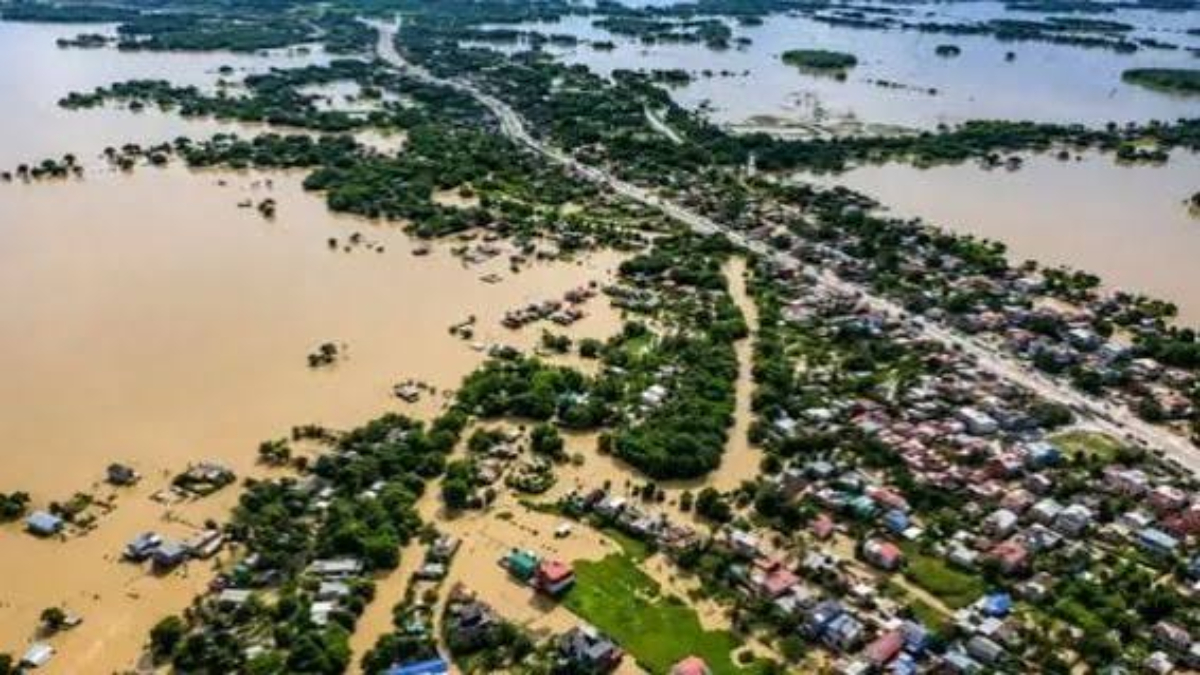
Assam flood situation showed further signs of improvement on Saturday, August 15, as the number of people affected by the deluge fell to 62,443 from more than 78,000 a day earlier. The number of flood-hit districts also declined from seven to five, according to the latest bulletin issued by the Assam State Disaster Management Authority (ASDMA).
Assam flood situation improves across five districts
The latest ASDMA assessment showed that flooding continued to affect 16 revenue circles and 235 villages across Golaghat, Hojai, Nagaon, Sivasagar and Jorhat. While the overall situation has improved, several communities remain affected and continue to require relief and support.
Nagaon remained the worst-hit district, accounting for 33,332 affected people. It was followed by Golaghat with 12,641 affected residents and Jorhat with 8,523. The sharp reduction from the previous day’s figure indicates that floodwaters have receded in several areas, allowing some communities to begin returning towards normal life.
The improvement comes after a difficult phase of flooding that affected a much larger population across Assam. On August 14, more than 78,000 people across seven districts were still dealing with the impact of the deluge. The latest figures therefore mark a significant decline in the immediate scale of the crisis.
Relief camps continue to support displaced families
Despite the improvement, relief operations remain active in the affected districts. Twenty-eight relief camps were operational as of Saturday, providing shelter to more than 4,800 displaced people. Authorities were also operating nine relief distribution centres to provide essential assistance to affected communities.
The continuing need for relief highlights the fact that falling water levels do not immediately end the difficulties faced by flood-hit families. Many residents still need food, clean water, temporary shelter and other basic supplies before they can safely return home.
Damage to houses, cattle sheds, fisheries and health centres has also been reported from the affected districts. Such losses could create longer-term challenges for families whose homes and livelihoods have been damaged by the floods.
Crop losses and livestock damage remain concerns
Agriculture continues to be among the major sectors affected by the floods. According to the ASDMA bulletin, 4,954.43 hectares of crop area remained submerged across the affected areas.
The impact on livestock has also been substantial. More than 21,000 animals were reported affected, including over 10,000 large animals and more than 3,500 poultry. For rural households dependent on farming and livestock, these losses can directly affect income and food security even after floodwaters recede.
The latest assessment suggests that recovery will require more than simply clearing floodwater. Restoration of damaged homes, agricultural land, fisheries, cattle sheds and public health facilities will remain an important part of the post-flood response.
Assam flood situation toll remains at 104
The human cost of this year’s floods remains significant despite the recent improvement. The death toll stood at 104 on August 15, with no fresh fatalities reported during the preceding 24 hours.
The unchanged death toll offers some relief after several weeks of serious flooding across the state. However, authorities will continue to need close monitoring as rainfall, river levels and local drainage conditions can change quickly during the monsoon.
Assam remains particularly vulnerable to recurring floods because of its extensive river network and low-lying areas. The Brahmaputra and its tributaries frequently swell during the monsoon, making flood preparedness, early warnings and timely evacuation essential. Official flood-management systems include daily situation reporting and monitoring through the state disaster management framework.
Recovery begins but monitoring remains crucial
The latest Assam flood situation figures offer a positive indication that the current wave of flooding is gradually weakening. However, with thousands of people still displaced and significant damage reported to crops, homes, livestock and public infrastructure, the recovery process is far from complete.
For residents in the five affected districts, continued relief operations and close monitoring of water levels will remain important in the coming days. A sustained decline in affected populations would provide stronger evidence of recovery, but authorities will need to remain prepared for renewed rainfall and possible rises in river levels during the remaining monsoon period.
For now, the fall to 62,443 affected people and the reduction in flood-hit districts from seven to five represent a welcome improvement. The focus is increasingly shifting from emergency response towards rehabilitation and restoring livelihoods in communities that have borne the brunt of the floods.
Tura Youth Delegate: Meghalaya Student Arrives in Australia for Commonwealth Youth Parliament