

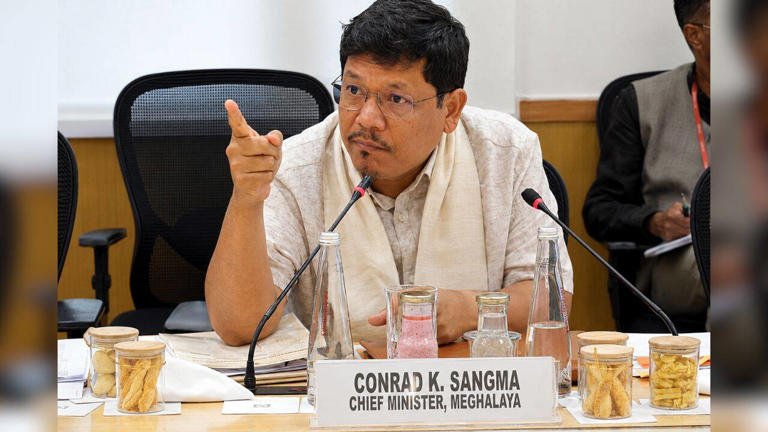
Meghalaya Chief Minister Conrad K. Sangma has expressed serious concern over the state’s alarming rainfall deficit, revealing that Meghalaya is currently experiencing nearly an 80% shortfall in rainfall. Describing the situation as unprecedented and deeply concerning, the Chief Minister warned that the emerging weather pattern, coupled with the potential impact of El Niño, could significantly affect agriculture, water resources, livelihoods, and the state’s overall ecological balance.
Addressing the issue, Sangma stressed that while Meghalaya is globally known for receiving some of the highest annual rainfall, the present deficit signals an unusual climatic shift that requires immediate attention from both the government and the public. He called for proactive measures to mitigate the possible consequences of prolonged dry conditions and prepare the state for potential water-related challenges in the coming months.
The warning comes at a time when several regions across India are witnessing changing weather patterns influenced by global climate variability.
Chief Minister Highlights the Impact of El Niño
Conrad Sangma attributed the unusually low rainfall partly to the anticipated effects of the El Niño weather phenomenon, which is known to influence rainfall distribution across South Asia. El Niño occurs when sea surface temperatures in the central and eastern Pacific Ocean become warmer than normal, often leading to reduced monsoon rainfall in several parts of the Indian subcontinent.
The Chief Minister noted that while weather patterns cannot be controlled, governments must be prepared to respond effectively to their consequences. He emphasized that changing climatic conditions demand long-term planning, stronger disaster preparedness, and improved water resource management.
According to Sangma, understanding the impact of global climate systems has become increasingly important for states like Meghalaya that depend heavily on seasonal rainfall for agriculture, drinking water, and ecological sustainability.
Agriculture Could Face Major Challenges
Agriculture remains one of the sectors most vulnerable to prolonged rainfall shortages. Meghalaya’s farmers depend significantly on monsoon rainfall for cultivating paddy, horticultural crops, vegetables, spices, and other agricultural produce.
The Chief Minister cautioned that if rainfall remains substantially below normal levels, crop productivity may decline, affecting farmers’ incomes and food security across rural communities.
Reduced soil moisture, lower groundwater recharge, and insufficient irrigation water could further complicate agricultural activities during the growing season. Farmers may also experience increased production costs if they are required to rely more heavily on artificial irrigation methods.
The government is closely monitoring the evolving weather situation and assessing possible support measures to minimize the impact on the farming community.
Water Resources Under Growing Pressure
Apart from agriculture, the rainfall deficit has raised concerns regarding the state’s water resources. Rivers, streams, reservoirs, springs, and groundwater systems rely heavily on consistent seasonal rainfall to maintain adequate water levels throughout the year.
The Chief Minister warned that continued dry conditions could affect drinking water availability in both urban and rural areas if rainfall does not improve in the coming weeks.
Authorities have been encouraged to strengthen water conservation measures while promoting efficient management of available resources. Officials are also monitoring reservoir levels and assessing the condition of water supply systems across various districts.
The government believes that public participation in water conservation will play an important role in reducing pressure on existing resources during periods of below-normal rainfall.
Climate Change and Weather Variability
Conrad Sangma observed that the current rainfall deficit reflects the broader challenges posed by climate change and increasing weather variability. He noted that changing rainfall patterns, rising temperatures, and more frequent extreme weather events are becoming increasingly evident across many parts of the world.
The Chief Minister stressed that governments must incorporate climate resilience into development planning, infrastructure projects, agriculture, water management, and environmental conservation initiatives.
Long-term adaptation strategies, including sustainable land management, watershed development, afforestation, and improved climate forecasting, will become increasingly important as weather patterns continue to evolve.
He also highlighted the need for greater public awareness regarding environmental conservation and responsible resource utilization.
Government Strengthens Preparedness Measures
The Meghalaya government has begun reviewing preparedness measures to address the possible consequences of prolonged dry conditions. Departments responsible for agriculture, water resources, disaster management, and rural development are working together to assess risks and formulate response strategies.
Officials have been instructed to monitor rainfall trends, evaluate water availability, and prepare contingency plans for districts that may experience significant shortages if the situation persists.
The government is also encouraging scientific monitoring and data-driven decision-making to support effective planning. Close coordination with meteorological agencies will help authorities receive timely weather forecasts and respond proactively to changing conditions.
Preparedness efforts are expected to focus not only on immediate concerns but also on building long-term resilience against future climate-related challenges.
Importance of Sustainable Water Conservation
The Chief Minister emphasized that sustainable water management must become a shared responsibility involving government agencies, local communities, institutions, and individual citizens.
He encouraged greater adoption of rainwater harvesting, watershed conservation, groundwater recharge, efficient irrigation practices, and responsible water consumption.
Community participation in protecting forests, wetlands, and natural water sources was also highlighted as an essential component of long-term environmental sustainability.
Investments in water storage infrastructure and conservation projects, Sangma noted, can help reduce the impact of future rainfall deficits while ensuring greater water security for both rural and urban populations.
Such measures will strengthen Meghalaya’s capacity to cope with increasingly unpredictable weather conditions linked to climate change.
Long-Term Focus on Climate Resilience
Concluding his remarks, Chief Minister Conrad Sangma reaffirmed the Meghalaya government’s commitment to addressing the challenges posed by climate variability through proactive planning and sustainable development.
He stressed that while the current rainfall deficit is a cause for concern, timely action, scientific planning, community participation, and effective governance can significantly reduce its long-term impact.
The government will continue monitoring weather developments, coordinating with relevant agencies, and implementing measures aimed at protecting agriculture, water resources, and public welfare.
The warning over the nearly 80% rainfall deficit serves as an important reminder of the growing influence of climate change and global weather systems on regional environments. By focusing on preparedness, conservation, and climate resilience, Meghalaya aims to safeguard its natural resources, support vulnerable communities, and strengthen its ability to respond to future environmental challenges while ensuring sustainable development for generations to come.