

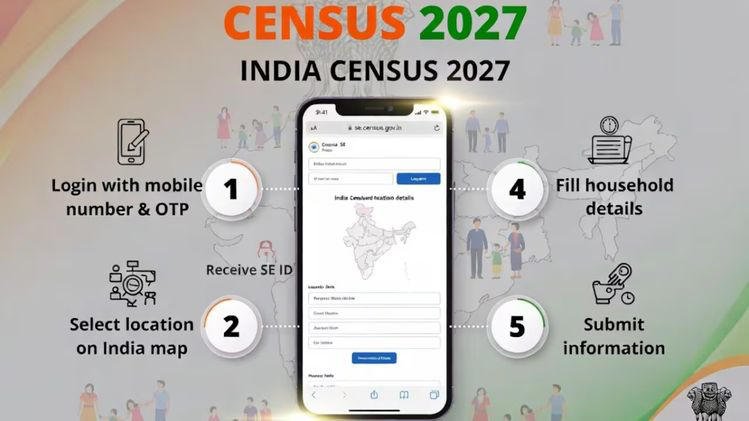
Meghalaya Census 2027 initiative has taken a major step forward as Meghalaya prepares to begin its self-enumeration drive from May 1. The move marks a shift toward a digital-first approach, aiming to improve accuracy, efficiency, and public participation in the census process.
Officials stated that the self-enumeration phase allows residents to submit their details online. Therefore, it reduces dependency on manual data collection and speeds up the process.
Read More: Ratan Lal Nath Urges Women to Expose Bill Opponents
Moreover, the initiative aligns with India’s broader push for digital governance. By adopting technology, the state aims to modernize data collection methods. As a result, the census is expected to be more streamlined and reliable.
What is self-enumeration in Census 2027
The Meghalaya Census 2027 self-enumeration process enables citizens to fill in their demographic details using digital platforms. This approach empowers individuals to participate directly in the census.
Authorities have developed user-friendly systems to facilitate this process. Residents can access the platform through mobile devices or computers. Therefore, participation becomes more convenient.
In addition, the system includes verification measures to ensure data accuracy. Users must provide correct information, which will be cross-checked by officials. As a result, the quality of data improves.
Furthermore, self-enumeration reduces the workload on enumerators. They can focus on areas where digital access is limited. Consequently, the process becomes more efficient.
Digital-first approach and its benefits
The Meghalaya Census 2027 digital-first strategy offers several advantages. Meghalaya aims to leverage technology to enhance data collection.
One key benefit is improved accuracy. Digital entry minimizes errors associated with manual recording. Therefore, the final data is more reliable.
Another advantage is faster processing. Information submitted online can be compiled and analyzed quickly. As a result, policymakers can access insights sooner.
In addition, the approach promotes transparency. Citizens can review their entries before submission. This ensures that data reflects actual conditions.
Moreover, the digital system supports environmental sustainability. Reducing paper usage contributes to eco-friendly practices. Therefore, the initiative aligns with sustainable development goals.
Government preparations and awareness campaigns
To ensure the success of Meghalaya Census 2027, authorities have undertaken extensive preparations. Awareness campaigns are being conducted to inform citizens about the self-enumeration process.
Officials are using multiple channels, including media and community outreach, to spread information. Therefore, people can understand how to participate.
Training programs have also been organized for enumerators and officials. These sessions focus on digital tools and data management. As a result, the workforce is better equipped.
In addition, help centers are being set up to assist citizens. Individuals who face difficulties can seek guidance. Consequently, participation is expected to increase.
The government has emphasized the importance of accurate data. Reliable census information is essential for planning and development. Therefore, public cooperation remains crucial.
Challenges in implementing digital census
Despite its advantages, the Meghalaya Census 2027 digital-first approach faces certain challenges. One major concern is digital accessibility.
Not all residents have access to smartphones or internet connectivity. Therefore, authorities must ensure alternative methods for participation.
In addition, digital literacy remains a challenge. Some individuals may find it difficult to use online platforms. As a result, awareness and training become essential.
Security is another important aspect. Protecting personal data is crucial in digital systems. Authorities must implement robust measures to prevent misuse.
Moreover, ensuring inclusivity is vital. The census must cover all sections of society. Therefore, special efforts are required to reach remote areas.
Importance of accurate census data
The Meghalaya Census 2027 initiative highlights the importance of accurate data for governance. Census information serves as the foundation for policy-making and resource allocation.
Governments rely on census data to plan infrastructure, healthcare, education, and welfare programs. Therefore, accuracy is essential for effective decision-making.
In addition, demographic data helps identify social and economic trends. Policymakers can use this information to address challenges and improve living conditions.
Moreover, census data supports development planning at both state and national levels. Therefore, participation from all citizens becomes important.
The digital-first approach aims to enhance data quality. By reducing errors and improving accessibility, it can provide more reliable insights.
Public participation and responsibility
The success of Meghalaya Census 2027 depends on active public participation. Meghalaya authorities have urged citizens to take part in the self-enumeration process.
Individuals must provide accurate and complete information. This ensures that the data reflects real conditions. Therefore, honesty and responsibility are crucial.
In addition, community leaders and organizations can play a role. They can encourage participation and assist those who need help. As a result, coverage can improve.
Moreover, public awareness campaigns emphasize the importance of the census. Understanding its impact can motivate people to participate.
The government has assured that all data will be handled confidentially. Therefore, citizens can feel secure while sharing information.
Conclusion
The Meghalaya Census 2027 digital-first self-enumeration drive marks a significant step toward modernizing data collection. By leveraging technology, Meghalaya aims to improve accuracy, efficiency, and inclusivity.
While challenges remain, the initiative offers promising benefits. With proper implementation and public cooperation, it can set a benchmark for future census operations.
In conclusion, the success of the census depends on collective effort. By participating actively, citizens can contribute to better governance and development planning.
Read More: Tripura Assembly Special Session on Women’s Reservation