

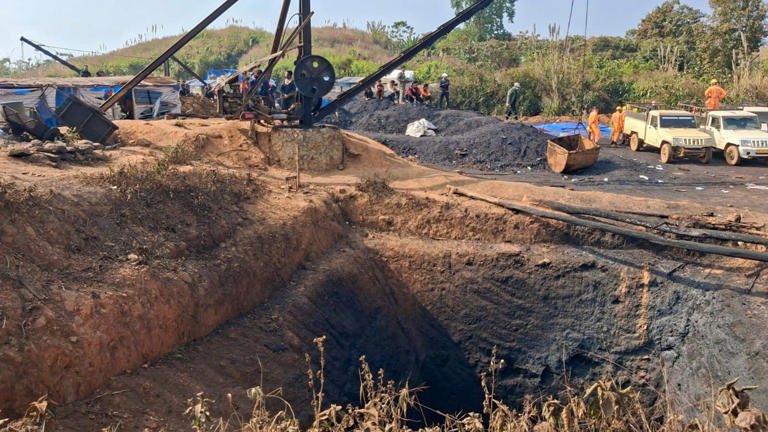
Twenty-seven deaths later, the Meghalaya government has ordered a massive crackdown on rat-hole mines, marking one of the strongest enforcement drives against the illegal and dangerous practice in recent years. The decision follows a series of fatal accidents, including mine blasts and collapses, that exposed the continued operation of rat-hole mining despite bans, court orders, and repeated warnings.
Senior officials said the Meghalaya crackdown on rat-hole mining will involve coordinated action by police, district administrations, and mining authorities. The government has directed agencies to identify, seal, and dismantle illegal mines while initiating criminal proceedings against those involved in operating and financing them.
The move comes amid mounting public outrage and political pressure after the death toll from recent mining incidents climbed to 27, many of them daily wage and migrant workers.
Read More: Tripura CM Lays Foundation Stone of Manu River Bridge
Meghalaya crackdown on rat-hole mining after deadly toll
The Meghalaya crackdown on rat-hole mining was ordered after authorities reviewed recent accidents that claimed dozens of lives. Officials said the scale of fatalities made it clear that existing enforcement measures were insufficient.
Rat-hole mining, a method involving narrow tunnels dug manually to extract coal, has long been criticised for its extreme risk and lack of safety standards. Despite restrictions, the practice continued clandestinely in several districts.
Officials said the latest deaths forced the government to move from sporadic action to a comprehensive crackdown.
What the crackdown involves
According to government sources, the Meghalaya crackdown on rat-hole mining will include large-scale raids, sealing of mine entrances, seizure of equipment, and arrests of operators. District magistrates have been instructed to prepare detailed action plans.
Police have been asked to identify not only mine operators but also middlemen and financiers who profit from illegal coal extraction. Authorities said targeting the entire supply chain remains crucial.
In addition, surveillance in known mining belts will increase, and intelligence inputs will guide enforcement teams to prevent mines from reopening.
Why rat-hole mining persists
Despite a ban, rat-hole mining persists due to economic dependence, difficult terrain, and weak enforcement. Many workers, including migrants, rely on mining as a source of livelihood in the absence of alternatives.
Officials acknowledged that poverty and lack of employment options push people into unsafe mines. However, they stressed that human life cannot be sacrificed for illegal economic activity.
The Meghalaya crackdown on rat-hole mining aims to break this cycle by combining enforcement with policy review.
Human cost behind the numbers
The 27 deaths that triggered the crackdown represent more than statistics. Most victims were young men supporting families, often working without contracts, insurance, or safety equipment.
In several cases, bodies were recovered after hours of rescue operations in unstable tunnels. Families struggled to receive information, compensation, or even identify victims.
Civil society groups said the Meghalaya crackdown on rat-hole mining must also address the plight of workers and their families.
Government response and accountability
The state government announced ex-gratia assistance for families of those killed in recent incidents. Officials also promised medical support for injured survivors.
At the same time, the government admitted that enforcement gaps allowed illegal mining to continue. Senior officials said departmental accountability will be examined as part of the review process.
The Meghalaya crackdown on rat-hole mining, they said, reflects a renewed commitment to rule of law.
Political reactions and public pressure
Political reactions intensified after the death toll crossed 27. Opposition parties accused the government of acting only after repeated tragedies.
They demanded a high-level inquiry and strict punishment for officials and operators who ignored warnings. Some leaders said enforcement drives often fade once public attention shifts.
The government countered that the current Meghalaya crackdown on rat-hole mining will be sustained and monitored at the highest level.
Environmental damage and safety risks
Beyond loss of life, rat-hole mining causes severe environmental damage. Unregulated excavation pollutes rivers, destabilises land, and destroys forests.
Environmental experts said mine collapses and gas explosions remain inevitable under such conditions. Therefore, eliminating rat-hole mining remains essential for both safety and sustainability.
The crackdown also aims to curb long-term ecological harm caused by illegal coal extraction.
Challenges in enforcement
Enforcing a complete shutdown of rat-hole mining poses significant challenges. Mines often operate in remote, forested areas, making detection difficult.
Local resistance, economic dependency, and political influence further complicate action. Officials said enforcement teams often face threats and obstruction.
Despite these challenges, authorities said the Meghalaya crackdown on rat-hole mining will continue with greater coordination and backing.
Call for alternative livelihoods
Experts and activists stressed that enforcement alone will not end rat-hole mining. They called for alternative livelihood programmes for communities dependent on coal extraction.
Skill development, legal mining frameworks, and economic diversification remain essential. Without such measures, workers may return to illegal mines once crackdowns ease.
The government said it will explore development schemes alongside enforcement.
Migrant workers and cross-border concerns
Many victims of rat-hole mining accidents are migrant workers from other states and neighbouring countries. Their vulnerability adds a humanitarian dimension to the crisis.
Activists said the Meghalaya crackdown on rat-hole mining must include mechanisms to protect migrant labour and ensure accountability for exploitation.
Better tracking, registration, and labour safeguards could prevent future tragedies.
Monitoring and long-term strategy
The government has set up monitoring mechanisms to track enforcement progress. Districts will submit regular reports on mine closures, arrests, and preventive measures.
Officials said the aim is not just a temporary drive but a long-term strategy to end rat-hole mining permanently.
The Meghalaya crackdown on rat-hole mining, they said, will remain under continuous review.
Public trust and governance challenge
Repeated mining tragedies have eroded public trust in governance. Many residents question why action follows deaths rather than preventing them.
The current crackdown offers an opportunity to restore confidence if implemented consistently and transparently.
Analysts said sustained enforcement, accountability, and livelihood support will determine credibility.
What lies ahead
In the coming weeks, authorities plan intensified raids and legal action. The government also said it will review mining policies and enforcement structures.
Whether the Meghalaya crackdown on rat-hole mining succeeds depends on political will and sustained effort.
For families who lost loved ones, justice and prevention remain the true tests.
Conclusion
Twenty-seven deaths later, Meghalaya’s decision to order a massive crackdown on rat-hole mines marks a critical turning point in its fight against illegal and deadly mining practices. The move reflects both public pressure and recognition of systemic failure.
However, lasting change will require more than raids and arrests. Strong enforcement, accountability, environmental protection, and alternative livelihoods must work together. Only then can Meghalaya ensure that rat-hole mining ends not after tragedies, but before lives are lost again.
Read More: Manipur Voice Highlights AI Sovereignty at UN AI Summit