

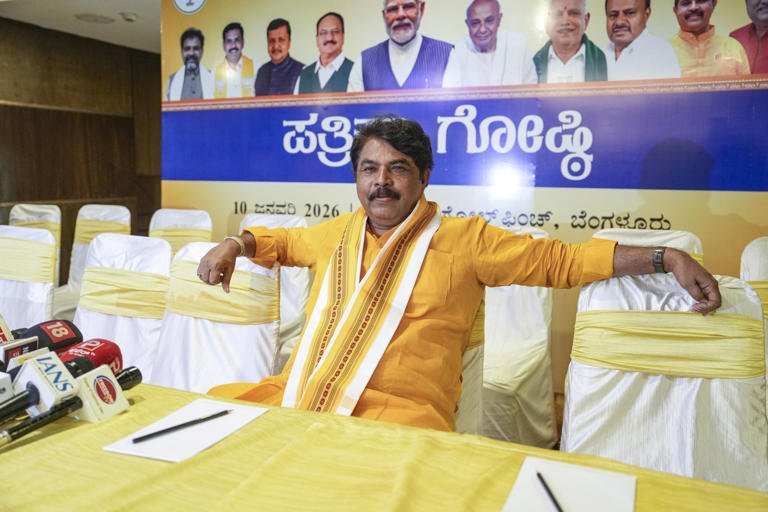
Karnataka Leader of Opposition and senior BJP leader R Ashoka has launched a fresh attack on the ruling Congress government, alleging that a minister is attempting to distance himself from what he described as the “disastrous legacy” left by Deputy Chief Minister D K Shivakumar. The remarks have added a new dimension to the ongoing political confrontation between the Bharatiya Janata Party (BJP) and the Congress in the state.
Ashoka’s comments come amid intense political exchanges over governance, infrastructure projects, and administrative decisions. The BJP leader claimed that differences within the ruling party have become increasingly visible and suggested that certain ministers are seeking to avoid responsibility for decisions associated with Shivakumar’s tenure and policies.
The Congress, meanwhile, has consistently defended its governance record and dismissed opposition criticism as politically motivated. The latest remarks have once again brought internal dynamics within the ruling party into the spotlight.
Political observers note that such exchanges are likely to intensify as both parties seek to strengthen their positions ahead of future electoral contests.
Ashoka Alleges Efforts to Avoid Responsibility
Addressing the issue, Ashoka alleged that a minister in the Congress government appears to be creating distance from policies and decisions that have attracted criticism in recent months. According to the BJP leader, the move indicates growing concern within the ruling establishment regarding public perception and accountability.
Ashoka argued that leaders cannot selectively accept credit for achievements while distancing themselves from controversial decisions. He maintained that members of the government share collective responsibility for administrative actions and policy outcomes.
The BJP leader claimed that attempts to shift responsibility reflect deeper concerns within the ruling party about governance issues and public dissatisfaction. He also suggested that the development points to emerging differences among senior Congress leaders.
According to Ashoka, the government should focus on addressing public concerns rather than engaging in internal blame games. He emphasized that accountability remains a fundamental principle of democratic governance.
The allegations have sparked fresh political debate, with rival parties presenting differing interpretations of recent developments.
Shivakumar Remains Central Figure in Karnataka Politics
D K Shivakumar continues to be one of the most influential leaders in Karnataka politics. As Deputy Chief Minister and a senior Congress strategist, he plays a significant role in the state’s administration and political decision-making.
Over the years, Shivakumar has emerged as a key figure within the Congress organization. His supporters credit him with strengthening the party’s position and contributing to its electoral success in Karnataka.
However, political opponents have frequently targeted him over various policy decisions and administrative issues. The BJP has often used Shivakumar as a focal point in its criticism of the Congress government.
Ashoka’s latest remarks reflect this broader political strategy. By linking current controversies to Shivakumar’s leadership, the BJP seeks to challenge the Congress narrative regarding governance and development.
Political analysts note that Shivakumar’s prominence ensures that he remains a central figure in both policy discussions and political debates.
Congress Defends Government’s Performance
Congress leaders have repeatedly rejected opposition allegations and defended the government’s record. They argue that the administration has focused on welfare initiatives, infrastructure development, and public service delivery since assuming office.
Party leaders maintain that criticism from the BJP is aimed at creating political controversy rather than contributing constructively to policy discussions. They have also accused the opposition of ignoring achievements made by the government in various sectors.
Congress representatives insist that the administration remains united and committed to implementing its development agenda. They have dismissed suggestions of internal divisions and emphasized collective responsibility in governance.
According to party leaders, political attacks from the opposition reflect normal democratic competition rather than genuine concerns about governance.
The Congress continues to project confidence regarding its performance and policy direction despite sustained criticism from rival parties.
Political Battle Intensifies in Karnataka
The latest exchange highlights the increasingly competitive nature of Karnataka’s political landscape. Both the BJP and Congress have intensified their efforts to shape public opinion and define the narrative surrounding governance issues.
Opposition leaders have sought to highlight administrative challenges, policy controversies, and alleged shortcomings of the government. At the same time, the ruling party has focused on promoting its achievements and welfare initiatives.
Political observers note that public perception often plays a crucial role in determining the effectiveness of such strategies. Both parties are therefore keen to present themselves as more capable of addressing citizens’ concerns.
The debate surrounding Ashoka’s remarks reflects the broader contest between the ruling party and the opposition for political influence in the state.
As future elections approach, issues related to governance, accountability, and development are expected to remain central themes in political discourse.
Governance and Accountability in Focus
At the heart of the controversy lies the issue of accountability in government. Opposition parties frequently argue that elected representatives should accept responsibility for policy decisions and administrative outcomes.
Ashoka’s comments emphasized this principle, suggesting that public officials should stand by their actions rather than attempt to separate themselves from controversial issues. He argued that governance requires transparency and collective accountability.
Supporters of the government, however, contend that opposition criticism often oversimplifies complex policy challenges. They argue that administrative decisions should be evaluated on the basis of outcomes rather than political rhetoric.
The discussion reflects broader debates about leadership, responsibility, and public expectations in democratic governance. Such issues frequently become focal points during political confrontations.
Observers believe that accountability will continue to be a major theme in Karnataka’s political discussions in the coming months.
Internal Dynamics Under Public Scrutiny
The allegations made by Ashoka have also drawn attention to the internal dynamics of the ruling party. Political opponents often seek to highlight perceived differences within rival organizations as a way of questioning their unity and effectiveness.
While Congress leaders have denied suggestions of internal discord, speculation about relationships among senior leaders continues to attract attention. Political analysts note that large parties often contain diverse viewpoints and competing priorities.
Differences of opinion are common in democratic organizations, particularly when governments face complex policy challenges. However, such differences can become politically significant when highlighted by opposition parties.
The BJP has repeatedly attempted to portray the Congress as divided on key issues, while Congress leaders insist that the party remains united in pursuing its objectives.
The latest controversy has once again brought these internal dynamics into public discussion.
Political Debate Likely to Continue
R Ashoka’s remarks regarding a minister allegedly distancing himself from the “disastrous legacy” of D K Shivakumar have added another chapter to Karnataka’s ongoing political battle. The comments reflect the sharp exchanges that continue to characterize relations between the BJP and the Congress.
While the opposition seeks to raise questions about accountability and governance, the ruling party remains focused on defending its record and advancing its policy agenda. Both sides are expected to continue using such issues to strengthen their political narratives.
The controversy also highlights the importance of leadership, public perception, and internal party dynamics in contemporary politics. As Karnataka moves forward, debates surrounding governance and accountability are likely to remain prominent.
For now, the exchange has ensured that political attention remains firmly focused on the ruling Congress government and its leadership. With both parties preparing for future electoral challenges, similar confrontations are expected to continue shaping the state’s political landscape in the months ahead.