

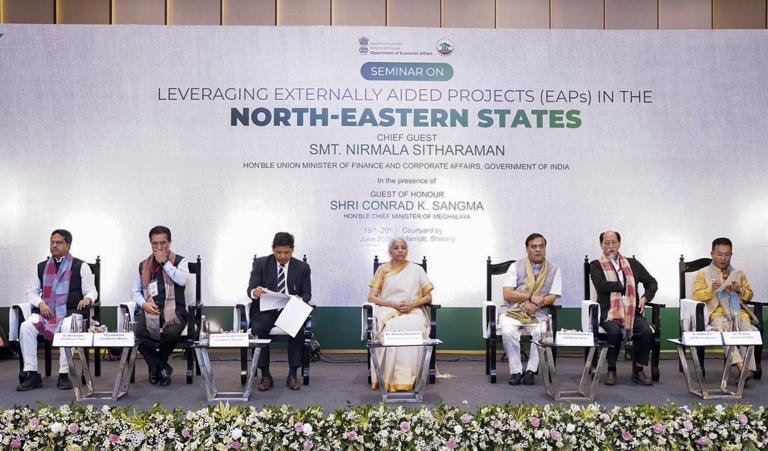
Mizoram Chief Minister Lalduhoma has called for a substantial increase in External Aided Project (EAP) allocations for the Northeastern states, emphasizing that greater financial support is essential to address infrastructure gaps, improve public services, and accelerate socio-economic development across the region. Highlighting the unique geographical and developmental challenges faced by the Northeast, the Chief Minister urged policymakers to adopt a more region-specific approach in distributing development resources.
Lalduhoma’s appeal reflects growing demands from Northeastern states for enhanced financial assistance to support critical projects in sectors such as transportation, healthcare, education, water supply, urban development, and climate resilience. He argued that increased EAP funding could significantly strengthen development efforts and help bridge long-standing disparities between the Northeast and other parts of the country.
The Chief Minister stressed that the region possesses enormous potential for growth and can contribute substantially to India’s development goals if supported with adequate investment and infrastructure.
Understanding the Importance of EAPs
External Aided Projects play a crucial role in financing large-scale development initiatives. These projects are generally supported through assistance from international financial institutions and development agencies, providing states with access to funding for infrastructure and social sector programs.
For many Northeastern states, EAPs have become important instruments for implementing projects that might otherwise face financial constraints. They support initiatives aimed at improving roads, urban infrastructure, water management systems, health services, educational institutions, and environmental sustainability.
Lalduhoma noted that while EAPs have already contributed significantly to development in the region, the scale of existing challenges requires greater allocations and broader support. He emphasized that expanding access to such funding would enable states to undertake more ambitious projects and achieve faster developmental outcomes.
According to the Chief Minister, enhanced EAP support can serve as a catalyst for transformative growth across the Northeast.
Unique Challenges of the Northeast
The Chief Minister pointed out that the Northeastern region faces distinctive challenges that require special consideration in development planning. Difficult terrain, dispersed populations, limited connectivity, and vulnerability to natural disasters often increase the cost and complexity of infrastructure projects.
Constructing roads, bridges, healthcare facilities, schools, and public utilities in mountainous and remote areas frequently requires greater financial resources than similar projects in other parts of the country. As a result, conventional funding mechanisms may not always be sufficient to meet the region’s needs.
Lalduhoma argued that higher EAP allocations would help address these challenges by providing states with additional resources to implement critical development initiatives. He stressed that equitable development requires recognizing the unique circumstances of geographically disadvantaged regions.
The Chief Minister maintained that tailored financial support is essential for ensuring balanced national growth.
Accelerating Infrastructure Development
Infrastructure development remains one of the top priorities for Northeastern states. Improved roads, transportation networks, airports, communication systems, and urban facilities are considered vital for economic growth and social progress.
Lalduhoma emphasized that enhanced EAP funding could significantly accelerate infrastructure expansion across the region. Better connectivity would facilitate trade, improve access to markets, strengthen tourism, and create opportunities for investment.
The Chief Minister noted that infrastructure projects often generate broader economic benefits by reducing transportation costs, improving service delivery, and enhancing overall productivity. Investments in connectivity are particularly important for states such as Mizoram, where geographical constraints can limit access to economic opportunities.
He argued that stronger infrastructure is essential for integrating the Northeast more effectively with national and international markets.
Strengthening Healthcare and Education
Beyond physical infrastructure, Lalduhoma highlighted the importance of investing in social sectors such as healthcare and education. Access to quality public services remains a key development priority for many Northeastern states.
The Chief Minister stated that increased EAP allocations could support the construction of hospitals, medical facilities, educational institutions, and skill development centers. Such investments would help improve human development indicators while enhancing the quality of life for residents.
Healthcare infrastructure has become particularly important in recent years as governments seek to strengthen public health systems and improve preparedness for future challenges. Similarly, educational investments are viewed as essential for empowering youth and building a skilled workforce.
Lalduhoma emphasized that development must be people-centered and focused on creating opportunities for future generations.
Supporting Sustainable and Climate-Resilient Growth
The Northeast is known for its rich biodiversity, abundant natural resources, and ecological significance. At the same time, the region is increasingly vulnerable to climate-related challenges, including floods, landslides, and extreme weather events.
The Chief Minister stressed the need for development strategies that promote sustainability and resilience. Enhanced EAP funding could support projects aimed at environmental conservation, disaster preparedness, renewable energy, and climate adaptation.
According to Lalduhoma, sustainable development is essential for protecting the region’s ecological heritage while ensuring long-term economic growth. Investments in environmentally responsible infrastructure can help communities adapt to changing conditions and reduce vulnerability to natural disasters.
He noted that climate resilience should be integrated into future development planning across the Northeast.
Unlocking Economic Potential
Lalduhoma argued that the Northeast possesses significant untapped economic potential in sectors such as tourism, agriculture, horticulture, renewable energy, handicrafts, and small-scale industries. However, realizing this potential requires substantial investments in infrastructure and capacity building.
Higher EAP allocations could help states create the conditions necessary for attracting investments and promoting entrepreneurship. Improved connectivity, stronger public services, and better infrastructure can encourage private sector participation and stimulate economic activity.
The Chief Minister emphasized that development investments should not be viewed solely as expenditures but as long-term investments in regional prosperity. By unlocking economic opportunities, states can generate employment, increase incomes, and improve living standards.
He expressed confidence that the Northeast can become a major contributor to India’s growth story if provided with adequate support.
Need for Region-Specific Development Strategies
A recurring theme in Lalduhoma’s remarks was the importance of adopting development strategies tailored to the Northeast’s unique circumstances. He argued that one-size-fits-all approaches may not adequately address the region’s specific needs and challenges.
The Chief Minister called for greater flexibility in funding mechanisms and project implementation frameworks to ensure that development programs are responsive to local realities. Enhanced EAP allocations, he suggested, should be accompanied by policies that empower states to design and execute projects suited to their priorities.
Such an approach would enable governments to address local challenges more effectively while maximizing developmental impact.
Looking Ahead
Lalduhoma’s call for higher External Aided Project allocations reflects broader aspirations for accelerated growth and inclusive development across the Northeast. As the region continues to gain strategic importance in national development policies, demands for enhanced financial support are likely to remain a key topic of discussion.
The Chief Minister’s appeal underscores the belief that increased investment can help address infrastructure deficits, improve public services, strengthen climate resilience, and unlock economic opportunities. By recognizing the unique needs of the Northeast and providing adequate resources, policymakers can support a more balanced and inclusive model of development.
For Mizoram and other Northeastern states, greater EAP funding represents an opportunity to accelerate progress and create a stronger foundation for future growth. As discussions on development priorities continue, the region remains hopeful that enhanced support will help transform its immense potential into lasting prosperity and sustainable advancement.