

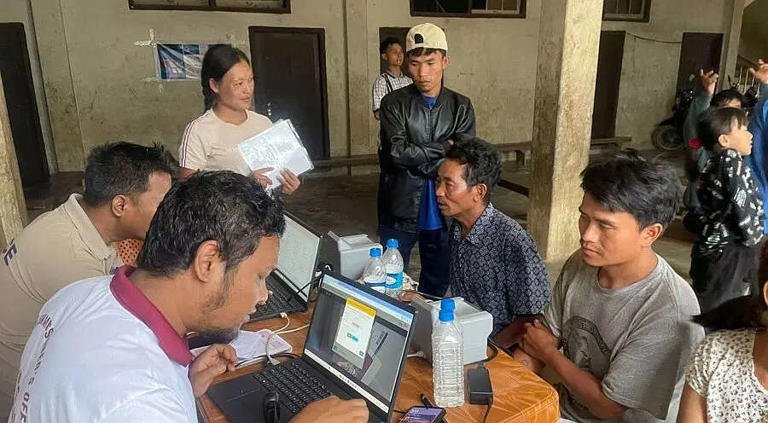
The Mizoram government has successfully collected the Mizoram refugee biometric data of 13,600 refugees who fled the violence in neighboring Myanmar, officials confirmed this week. The exercise, undertaken in coordination with the Ministry of Home Affairs (MHA), aims to verify identities, streamline humanitarian aid, and strengthen internal monitoring mechanisms.
According to senior officials, the ongoing registration process covers refugees sheltered across various districts in Mizoram, including Champhai, Saitual, and Lawngtlai. The initiative is part of a wider effort by the state to maintain accurate demographic records and ensure fair distribution of relief materials.
Read More: Thai Investors Eye Arunachal’s Agro and Food Processing Potential
Mizoram refugee biometric data collection progressing steadily
A senior Home Department official said the data collection process has reached an advanced stage, covering nearly 13,600 individuals so far. “We are conducting the Mizoram refugee biometric data drive systematically, ensuring every refugee’s identity is recorded. The process will continue until all arrivals are registered,” the official explained.
The biometric information includes fingerprints, photographs, and iris scans, which will help the authorities verify individual identities and prevent duplication. Officials stressed that the data will be used solely for administrative and humanitarian purposes, with strict privacy safeguards in place.
Mizoram currently hosts refugees from Myanmar’s Chin state, who have been arriving since 2021 following political unrest and military crackdowns in their home country. Most of them are staying in makeshift shelters and community-run camps along the border.
Local officials, in collaboration with the district administrations, have been working round-the-clock to ensure a smooth and transparent registration process. The state has also sought technical support from central agencies to handle the volume of data efficiently.
District administrations oversee refugee verification
Officials said district administrations are playing a central role in managing the Mizoram refugee biometric data drive. Champhai district, which shares the longest border with Myanmar, accounts for the highest number of registered refugees.
Deputy Commissioner of Champhai, James Lalrinchhana, said the administration has deployed special teams for verification. “We are coordinating with village-level task forces and community organizations to ensure that every individual is documented correctly,” he noted.
The district authorities have also set up mobile biometric units to reach remote border areas. These units help collect data from refugees who are unable to travel to registration centers due to poor road connectivity or health issues.
In addition, the Mizoram police and local volunteers are assisting in maintaining order and ensuring that the process remains transparent. Officials said the collected data will also help in better planning of relief supplies and healthcare services for the refugees.
Humanitarian focus remains a priority
Despite the scale of the registration process, the Mizoram government has emphasized that the Mizoram refugee biometric data collection effort remains guided by humanitarian principles. The Chief Minister’s Office has instructed all agencies to treat the refugees with dignity and compassion during the verification process.
An official from the Mizoram Home Department said, “Our objective is not surveillance but service. We want to ensure that all refugees receive fair access to food, shelter, and healthcare. Biometric data simply helps us organize and deliver that assistance effectively.”
Local NGOs and church organizations have been instrumental in supporting the state’s humanitarian efforts. They continue to provide essential supplies, including food and clothing, to thousands of displaced individuals. Many volunteers have also helped in translation and coordination between refugees and government staff.
The Mizoram government has maintained a consistent humanitarian stance on the refugee issue, despite logistical challenges. Officials reiterated that the state will continue offering shelter and aid as long as the situation in Myanmar remains unstable.
Central coordination and monitoring
The biometric registration is being carried out under the guidance of the Ministry of Home Affairs, which has directed all northeastern states bordering Myanmar to maintain a record of refugee inflows. Officials said that Mizoram has been the most proactive in implementing the Mizoram refugee biometric data system.
Coordination between the state government and central agencies ensures that the collected data can be used for future policy planning. The system helps authorities monitor the population size, track the movement of refugees, and identify individuals requiring special assistance.
An official from the MHA praised Mizoram’s efficiency in handling the process. “Mizoram’s local administration has set an example of coordination and compassion. Their structured approach is helping create a reliable refugee database,” the official said.
Meanwhile, discussions are ongoing between the state and the Centre regarding additional support for the relief camps. Proposals include improved sanitation facilities, better healthcare infrastructure, and increased financial aid for rehabilitation.
Community support strengthens refugee management
The success of the Mizoram refugee biometric data initiative also reflects the strong role of community participation. Mizo civil society groups, churches, and student organizations have been actively assisting the government in managing refugee welfare.
Many local residents have opened their homes to shelter families who arrived with nothing but minimal belongings. Their collective effort has significantly reduced pressure on government resources.
A local community leader from Champhai said, “We understand their pain. The Chin people share our ethnic ties, and helping them is part of our moral duty. The government’s biometric registration only ensures that aid reaches them properly.”
Officials confirmed that once the data collection is complete, the government will issue identification documents to refugees to facilitate access to relief benefits and medical care.
Towards efficient and humane refugee management
With more than 13,600 refugees registered under the Mizoram refugee biometric data initiative, the state is setting a benchmark in efficient refugee management. The combination of technology, coordination, and compassion has helped Mizoram navigate a complex humanitarian challenge with dignity.
Authorities believe that once the database is complete, it will allow better long-term planning, resource allocation, and coordination with central agencies. The move is also expected to enhance transparency in relief distribution, ensuring that aid reaches genuine beneficiaries.
While challenges remain—such as funding shortages and limited space in relief camps—the government remains committed to protecting and supporting those displaced by conflict.
As Mizoram continues to balance administrative responsibility with humanitarian compassion, the biometric registration drive stands as a symbol of its resilience and empathy. It reflects the state’s determination to uphold human dignity while maintaining order and accountability amid ongoing regional instability.
Read More: Manipur DGP Rajiv Singh Calls for Peaceful Dialogue to End Conflict