

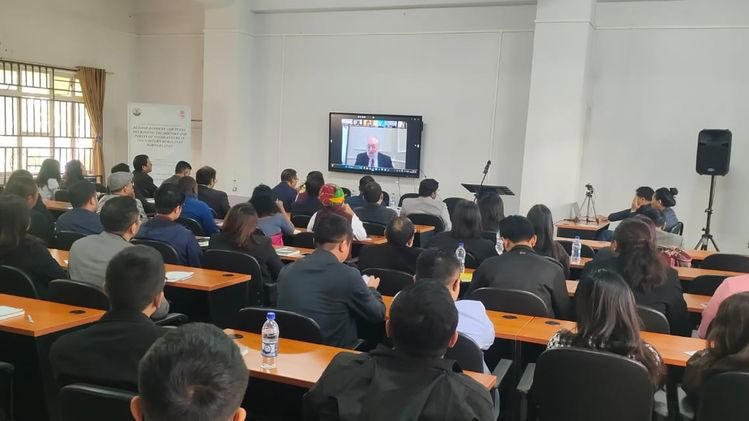
Mizoram has intensified efforts to expand research into the origins of the Mizo people, aiming to reclaim and clarify a historical narrative that many believe has remained fragmented or externally interpreted for decades. The initiative reflects a growing determination within the state to document its past through systematic research, indigenous perspectives, and scholarly inquiry.
By strengthening academic study around Mizo origins research, Mizoram seeks to preserve cultural identity, correct historical gaps, and ensure that future generations understand their heritage through evidence-based narratives rather than assumptions or colonial-era interpretations.
Read More: Mizoram Skill Competition 2025 Highlights Youth Talent
Renewed focus on Mizo origins research
The renewed push for Mizo origins research marks a significant shift in how the state approaches its history. For years, much of the written record on Mizo ancestry relied on external sources, missionary accounts, or colonial documentation. While these sources provided early records, they often lacked cultural depth and indigenous viewpoints.
State-backed research initiatives now aim to compile oral histories, archaeological findings, linguistic studies, and anthropological evidence to build a more comprehensive understanding of Mizo origins. Scholars involved in the process emphasise that reclaiming history requires both academic rigour and respect for traditional knowledge systems.
This expanded focus reflects Mizoram’s effort to move from inherited narratives toward self-authored historical understanding.
Importance of reclaiming the historical narrative
Reclaiming the historical narrative holds deep cultural and social importance. Many historians argue that incomplete or externally framed accounts have influenced how Mizo history is understood both within and outside the state.
Through structured Mizo origins research, Mizoram aims to correct misinterpretations and highlight the complexity of migration patterns, social structures, and cultural evolution. Accurate historical documentation also strengthens community pride and continuity.
Officials involved in cultural affairs note that understanding origins helps communities make sense of identity, values, and traditions that continue to shape present-day society.
Role of academic institutions and scholars
Universities, research institutes, and independent scholars play a central role in expanding Mizo origins research. Academic institutions in Mizoram have begun encouraging interdisciplinary studies that combine history, anthropology, linguistics, and archaeology.
Researchers stress the need for peer-reviewed work to ensure credibility and long-term academic value. Collaborative efforts with national and regional institutions also help integrate Mizo history into broader academic discourse.
By investing in research infrastructure and scholarly engagement, Mizoram aims to create a strong knowledge base that stands up to critical examination while remaining rooted in local realities.
Integrating oral traditions with modern research
Oral traditions form a vital part of Mizo historical memory. Songs, folklore, clan narratives, and ancestral accounts have preserved history across generations. However, oral history alone often lacks formal documentation.
The current Mizo origins research initiative seeks to integrate these oral traditions with modern research methods. Scholars record narratives from elders and community custodians, then cross-reference them with linguistic patterns, migration studies, and material evidence.
This approach allows traditional knowledge to gain academic recognition while preserving its authenticity. Researchers believe such integration ensures that history remains both accurate and culturally respectful.
Cultural identity and future generations
Strengthening Mizo origins research also serves an educational purpose. Clear and credible historical narratives help young people connect with their roots in a rapidly globalising world.
Educators note that students often engage more deeply when history reflects their lived culture and ancestral experiences. A well-documented past can inspire confidence and belonging while promoting respect for diversity within the broader national framework.
By reclaiming its historical narrative, Mizoram positions culture as a foundation for social cohesion and informed citizenship.
Challenges in reconstructing early history
Despite progress, researchers acknowledge challenges in reconstructing early Mizo history. Limited written records, migration across regions, and changing social structures complicate efforts to establish timelines and origins conclusively.
However, experts stress that uncertainty does not weaken the process. Instead, transparent research that acknowledges gaps enhances credibility. Continued funding, archival access, and community participation remain crucial for long-term success.
The state’s approach emphasises patience, accuracy, and inclusivity rather than rushed conclusions.
A long-term vision for historical clarity
Mizoram’s expanded commitment to Mizo origins research reflects a long-term vision rather than a short-term academic exercise. By reclaiming its historical narrative, the state aims to preserve identity, enrich education, and contribute meaningfully to regional and national history.
As research continues to evolve, the initiative promises to deepen understanding of the Mizo people’s past while reinforcing cultural confidence for the future.
Read More: Assam CM Warns of Demographic Shift