

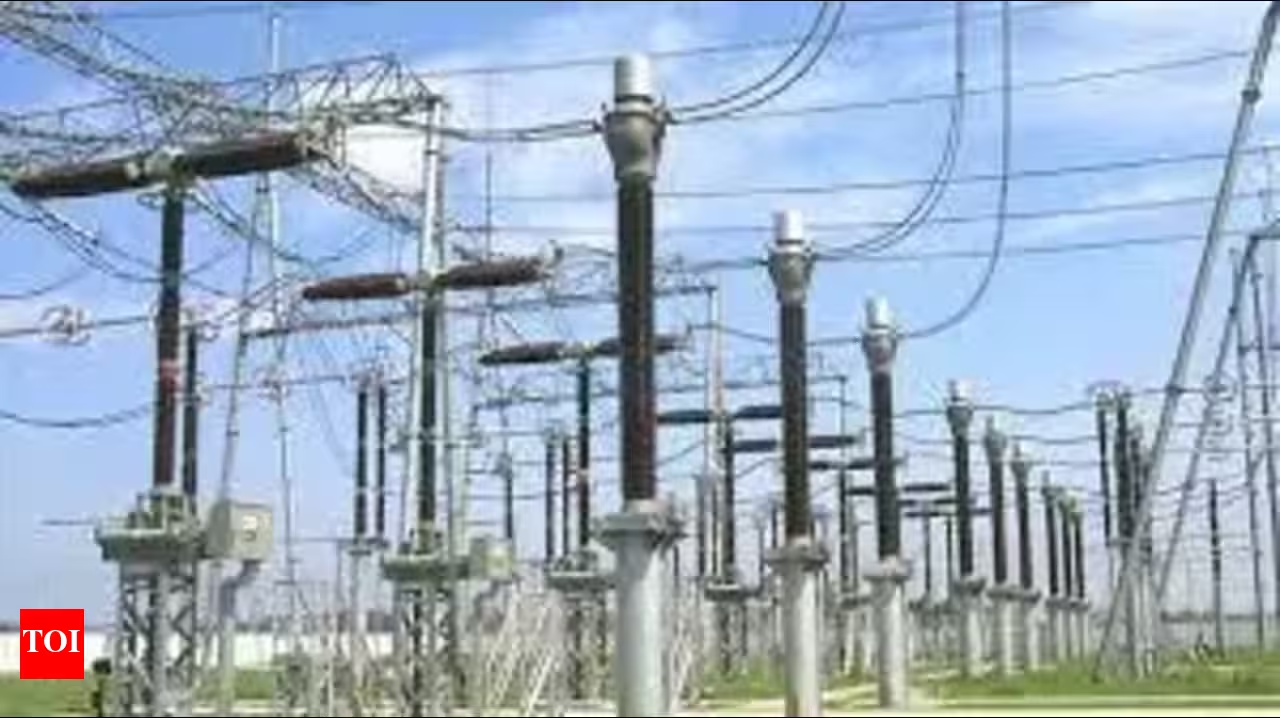
Mizoram Zero Power Bill Dues has emerged as an important financial detail amid the state’s substantial reliance on electricity purchased from external sources. The state government has confirmed that it currently has no outstanding or unpaid power bills. The development comes after the Power and Electricity Department reported spending more than ₹1,620 crore on externally procured electricity between April 2024 and August 2026. Therefore, the latest position highlights a contrast between high power procurement expenditure and the absence of pending payment obligations.
North Tripura water conservation gets major boost at India Water Week 2026
Mizoram Zero Power Bill Dues Despite High Procurement Costs
The government’s confirmation that no power bills remain outstanding provides an important perspective on Mizoram’s electricity finances. Although the state has spent heavily on purchasing electricity from outside sources, the reported expenditure has not resulted in an unpaid-bill backlog.
Moreover, the position indicates that the government has been meeting its payment obligations to power suppliers. This becomes significant because external electricity procurement forms an important part of Mizoram’s overall power-supply arrangement.
The state depends on electricity obtained through the wider national power system to supplement its own generation. Consequently, procurement costs can become substantial when demand increases or locally available generation cannot meet requirements.
However, the absence of outstanding dues distinguishes the state’s current financial position from a situation in which high procurement expenditure is accompanied by delayed payments. The government’s confirmation therefore provides a clearer picture of the payment side of the power sector.
External Electricity Purchases Continue to Support Supply
Mizoram’s electricity system combines locally generated power with supplies obtained through external sources. Hydropower and solar projects contribute to the state’s generation capacity, while electricity from Central and Inter-State generating stations supplements available supply.
Furthermore, external procurement allows the Power and Electricity Department to manage variations between electricity demand and available generation. This flexibility remains important because electricity consumption can change across households, businesses, government establishments and other users.
At the same time, dependence on external electricity can create significant expenditure requirements. The reported ₹1,620-crore-plus spending between April 2024 and August 2026 illustrates the scale of procurement involved over the period.
Therefore, the government’s confirmation of zero outstanding bills becomes particularly notable. It suggests that the state has continued to settle its electricity-related obligations despite the considerable amount spent on external power.
The distinction between expenditure and outstanding dues is also important. High spending does not automatically mean that payments remain pending. In this case, the government says the current outstanding amount is zero.
Power Finances Remain Important for Mizoram
Mizoram’s power-sector finances involve several components beyond electricity purchases. Transmission charges, distribution expenses, maintenance costs and investments in generation infrastructure also influence the overall cost of supplying electricity.
Moreover, the state must balance reliable electricity supply with financial sustainability. External procurement can help maintain supply, but its cost makes long-term planning increasingly important.
The Mizoram Electricity Regulatory Commission has previously approved substantial power-purchase costs for the Power and Electricity Department. Therefore, procurement remains a significant element of the state’s regulated electricity expenditure.
Meanwhile, strengthening local generation could help diversify the state’s supply sources. Hydropower and renewable-energy projects can potentially complement electricity obtained through external grids, although their contribution depends on capacity, availability and transmission infrastructure.
Consequently, Mizoram’s power strategy will need to consider both immediate supply requirements and longer-term financial sustainability. The absence of outstanding bills provides a positive payment position, but it does not remove the underlying cost of procuring electricity.
Zero Outstanding Dues Add Stability to Power Management
The reported zero outstanding power bills provide an additional indicator of financial discipline within the state’s electricity administration. Regular settlement of bills can help maintain relationships with electricity suppliers and support uninterrupted procurement.
Additionally, timely payments can reduce the risk of accumulated liabilities. This becomes especially relevant for a state that relies substantially on electricity purchased from outside its own generation network.
However, maintaining zero outstanding dues will require continued financial planning as power demand and procurement requirements change. Rising consumption could increase future electricity purchases, while changes in generation availability could also affect procurement needs.
Therefore, the government will need to balance procurement costs, consumer demand and available budgetary resources. Better demand forecasting, efficient distribution and stronger local generation could support this effort over time.
The latest position consequently presents two different aspects of Mizoram’s electricity finances. On one side, the state has spent more than ₹1,620 crore on externally sourced electricity during the reported period. On the other, the government says it currently has no unpaid power bills.
Conclusion
Mizoram Zero Power Bill Dues provides an important financial counterpoint to the state’s heavy dependence on external electricity. While more than ₹1,620 crore has reportedly been spent on externally procured power between April 2024 and August 2026, the government says no power bills remain outstanding. The position highlights the importance of continued financial planning as Mizoram works to maintain reliable electricity supply.
FAQs
1. Does Mizoram currently have outstanding power bills?
According to the state government’s confirmation, Mizoram currently has no outstanding or unpaid power bills.
2. How much has Mizoram spent on externally purchased electricity?
The Power and Electricity Department reported spending more than ₹1,620 crore on electricity acquired from external grids between April 2024 and August 2026.
3. Does high power expenditure mean Mizoram has unpaid bills?
No. High expenditure and outstanding dues are separate financial measures. The government has reported substantial procurement expenditure while stating that its current outstanding power bills are zero.
4. Why does Mizoram purchase electricity from outside sources?
External electricity helps supplement locally available generation and allows the state to meet demand when its own generation is insufficient.
5. Why are zero outstanding power dues significant?
Zero outstanding dues indicate that, according to the government, electricity-related payment obligations have been settled despite the state’s substantial external power procurement.