

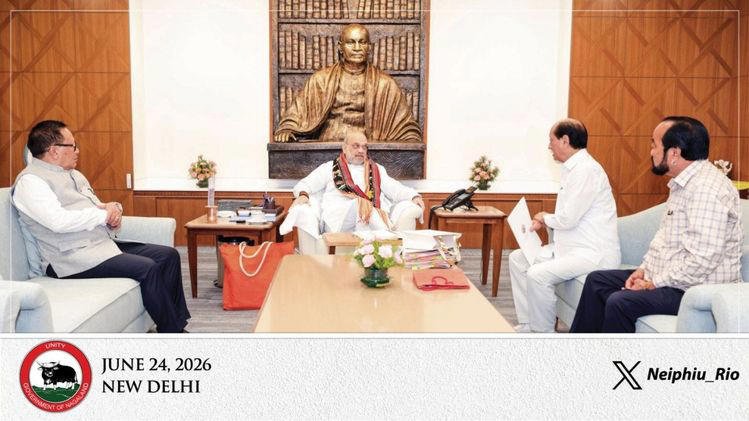
Nagaland Chief Minister Neiphiu Rio, accompanied by the state’s deputy chief ministers, met Union Home Minister Amit Shah in New Delhi to discuss a range of issues related to security, development, governance, and infrastructure. The high-level meeting underscored the importance of close coordination between the Centre and the state government in addressing challenges and accelerating development initiatives in Nagaland.
The discussions focused on strengthening peace and stability, improving infrastructure, enhancing economic opportunities, and ensuring the effective implementation of various development projects. The meeting also provided an opportunity for the state leadership to present key concerns and priorities before the Union Government.
Officials described the interaction as constructive and forward-looking, reflecting a shared commitment to promoting growth, security, and prosperity in Nagaland.
Focus on Security and Stability
Security issues formed a major part of the discussions between the Nagaland delegation and the Union Home Minister. Maintaining peace and stability remains a key priority for both the state and central governments, particularly in a region that has witnessed complex security challenges over the years.
The leaders reportedly reviewed the prevailing security situation and discussed measures aimed at strengthening law and order while promoting a peaceful environment conducive to development. They also examined ways to improve coordination among various agencies responsible for maintaining security in the state.
A stable security environment is widely regarded as essential for economic growth, infrastructure development, and social progress. Officials emphasized that continued efforts toward peace and stability remain central to the state’s long-term development strategy.
The meeting highlighted the importance of sustained cooperation in addressing security concerns and ensuring public safety.
Developmental Priorities Take Center Stage
Alongside security matters, development issues featured prominently in the discussions. The Nagaland leadership outlined several priorities related to infrastructure, connectivity, public services, and economic development.
Chief Minister Neiphiu Rio stressed the need for continued support from the Centre in implementing projects that can improve the quality of life for citizens and strengthen the state’s growth trajectory. The delegation highlighted the importance of timely completion of ongoing projects and the need for additional investments in key sectors.
Officials noted that Nagaland has been making progress in several developmental areas. However, challenges associated with geography, connectivity, and infrastructure continue to require focused attention.
The meeting provided an opportunity to review existing initiatives and explore new avenues for collaboration between the state and central governments.
Infrastructure Development Remains a Key Focus
Infrastructure development emerged as one of the major topics during the meeting. The Nagaland government has consistently emphasized the importance of improving roads, bridges, urban infrastructure, and public facilities to support economic growth and enhance connectivity.
Better infrastructure can improve access to markets, educational institutions, healthcare services, and employment opportunities. It also plays a crucial role in attracting investment and supporting business activities.
The state leadership reportedly discussed the progress of various infrastructure projects and sought continued support for initiatives aimed at modernizing transportation networks and strengthening public infrastructure.
Officials believe that infrastructure development will remain a critical driver of economic transformation and regional integration in the years ahead.
Strengthening Connectivity Across the State
Connectivity remains one of the most important development priorities for Nagaland. The state’s mountainous terrain often presents logistical challenges that can affect transportation and service delivery.
During the meeting, discussions reportedly focused on measures to improve road networks, transportation facilities, and connectivity with neighboring states and national economic corridors. Enhanced connectivity can significantly reduce travel time, improve trade, and facilitate access to essential services.
The state government views improved transportation infrastructure as essential for unlocking economic potential and promoting balanced regional development. Better connectivity can also strengthen tourism, agriculture, and industrial activities.
Officials emphasized that investments in connectivity generate long-term benefits for communities across the state.
Economic Growth and Investment Opportunities
The meeting also explored strategies for promoting economic growth and attracting investment. Nagaland has been working to create a more conducive environment for business development and entrepreneurship.
The state leadership highlighted opportunities in sectors such as agriculture, tourism, handicrafts, small-scale industries, and emerging enterprises. They discussed ways to leverage government programs and policy support to stimulate economic activity and create employment opportunities.
Union Home Minister Amit Shah reportedly acknowledged the importance of economic development in strengthening regional prosperity and improving livelihoods. Officials emphasized that economic growth and job creation remain crucial objectives for the state government.
The discussions reflected a shared interest in expanding opportunities for businesses and encouraging sustainable development.
Focus on Youth and Employment
Employment generation and youth empowerment also featured among the issues discussed during the meeting. Nagaland has a young population, making job creation a critical priority for policymakers.
The state leadership stressed the importance of skill development, vocational training, and entrepreneurship programs in creating opportunities for young people. Investments in education and workforce development can help prepare youth for emerging sectors and future employment markets.
Officials noted that empowering young people is essential for long-term social and economic progress. The government continues to promote initiatives aimed at improving employability and supporting innovation among the younger generation.
The meeting highlighted the need for coordinated efforts to address employment challenges and strengthen human capital development.
Enhancing Public Services and Welfare
The delegation also discussed issues related to healthcare, education, and public welfare. Improving access to quality public services remains a major objective of the state government’s development agenda.
Officials highlighted ongoing efforts to strengthen healthcare infrastructure, enhance educational facilities, and expand welfare programs. The state leadership emphasized the importance of continued support for initiatives that directly benefit citizens and improve living standards.
Public service delivery has become an increasingly important aspect of governance, particularly in remote and rural areas. The meeting provided an opportunity to review progress and identify areas requiring additional attention.
The leaders agreed that stronger public services contribute significantly to inclusive and sustainable development.
Centre-State Cooperation Remains Vital
A recurring theme throughout the discussions was the importance of strong cooperation between the Centre and the state government. Development and governance challenges often require coordinated action across multiple levels of administration.
Chief Minister Neiphiu Rio emphasized that effective collaboration with the Union Government is essential for implementing large-scale projects and achieving developmental goals. The meeting reflected a commitment to maintaining constructive engagement and strengthening partnerships.
Officials noted that Centre-state cooperation has played a significant role in advancing infrastructure, social welfare, and economic initiatives across the Northeast. Continued collaboration is expected to remain important for addressing future challenges and opportunities.
The discussions reinforced the value of coordinated policymaking and shared development objectives.
Looking Ahead
The meeting between Nagaland Chief Minister Neiphiu Rio, the deputy chief ministers, and Union Home Minister Amit Shah highlighted the state’s focus on security, development, and inclusive growth. By addressing issues ranging from infrastructure and connectivity to public welfare and economic opportunities, the leaders underscored their commitment to advancing Nagaland’s development agenda.
The discussions reflected a shared recognition that peace, stability, and development are closely interconnected. Strong security conditions can support investment and growth, while economic progress can contribute to long-term social stability.
As Nagaland continues its development journey, close cooperation between the state and central governments is expected to play a crucial role in achieving key objectives. The meeting has reinforced optimism regarding future collaboration and the implementation of initiatives aimed at improving the lives of citizens across the state.
With sustained focus on infrastructure, employment, public services, and security, Nagaland aims to build on its progress and create new opportunities for growth and prosperity in the years ahead.