

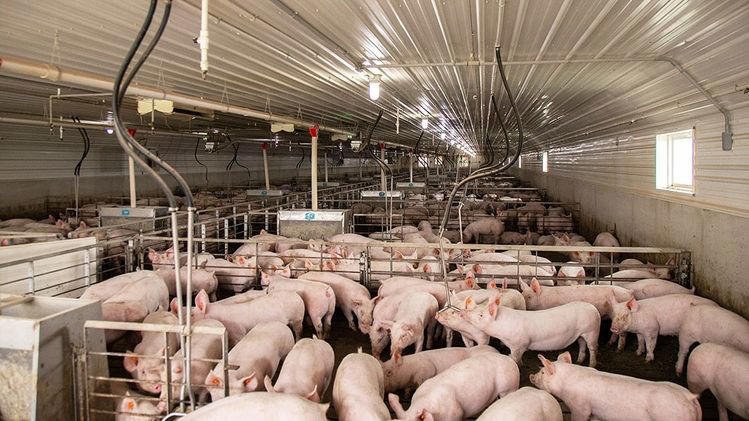
A legislator from Nagaland has called for urgent measures to boost local pork production, highlighting the growing demand for pork in the state and the need to reduce dependence on imports from outside regions. The appeal has sparked discussions on strengthening livestock development and supporting local farmers.
The Nagaland pork production boost proposal focuses on improving pig farming infrastructure, increasing productivity, and ensuring better market access for farmers. According to the MLA, the state possesses significant potential in piggery, yet it continues to rely heavily on supplies from neighboring states.
He emphasized that enhancing local production can not only meet consumer demand but also generate employment and improve rural incomes. Therefore, the initiative holds both economic and social importance for the state.
Read More: Arunachal Congress Forms Panels to Probe Mining, Highway Issues
Rising demand and supply gap in Nagaland
Pork remains one of the most preferred meat products in Nagaland. However, local production has not kept pace with rising demand. As a result, the state imports a substantial quantity of pork from other regions.
The Nagaland pork production boost call highlights this gap as a key concern. The MLA pointed out that reliance on external sources leads to higher prices and supply uncertainties. Consequently, consumers often face fluctuations in availability and cost.
Experts note that increasing local production can address these challenges. By strengthening the piggery sector, the state can ensure a steady supply of quality pork. Moreover, it can reduce transportation costs and improve affordability.
At the same time, farmers can benefit from better income opportunities. With proper support, pig farming can become a sustainable livelihood option for many households.
Focus on improving pig farming infrastructure
The Nagaland pork production boost initiative emphasizes the need to upgrade infrastructure for pig farming. This includes better housing facilities, access to quality feed, and veterinary services.
The MLA suggested that the government should invest in modern farming techniques. By adopting improved practices, farmers can increase productivity and maintain animal health. Therefore, training programmes and awareness campaigns will play a crucial role.
In addition, the establishment of breeding centres can help improve the quality of livestock. High-quality breeds can yield better results, contributing to increased production. Consequently, this step can enhance the overall efficiency of the sector.
Authorities may also consider providing financial assistance to farmers. Subsidies and loans can help them expand their operations and adopt modern methods. As a result, more people may take up pig farming.
Economic benefits and employment generation
Boosting local pork production can have significant economic benefits for Nagaland. The Nagaland pork production boost plan can create employment opportunities across the value chain, from farming to processing and marketing.
Rural communities, in particular, stand to gain from such initiatives. Pig farming requires relatively low investment compared to other livestock sectors. Therefore, it offers an accessible option for small-scale farmers.
Moreover, increased production can support related industries such as feed manufacturing and transportation. These activities contribute to overall economic growth. Consequently, the initiative can have a multiplier effect on the state’s economy.
The MLA also highlighted the potential for exports. With improved production and quality standards, Nagaland can explore markets beyond its borders. This step can further enhance income generation.
Government support and policy measures
The success of the Nagaland pork production boost initiative depends on effective government support. Policies aimed at promoting livestock development can provide a strong foundation for growth.
The MLA urged authorities to formulate targeted programmes for piggery development. These may include training, financial incentives, and infrastructure projects. Moreover, collaboration with experts and institutions can enhance the effectiveness of these measures.
In addition, the government can play a role in improving market access. Establishing organized markets and supply chains can help farmers sell their products at fair prices. Therefore, better connectivity and logistics are essential.
The initiative also calls for strengthening veterinary services. Ensuring animal health is crucial for maintaining productivity. Consequently, investment in healthcare facilities and professionals will be important.
Challenges facing the piggery sector
Despite its potential, the piggery sector in Nagaland faces several challenges. Limited access to quality feed and veterinary care remains a major concern. As a result, farmers often struggle to maintain consistent production levels.
Another challenge involves the lack of awareness about modern farming techniques. Many farmers rely on traditional methods, which may not yield optimal results. Therefore, training and education are necessary to improve outcomes.
Infrastructure constraints also affect the sector. Poor storage and transportation facilities can lead to losses. Consequently, addressing these issues is essential for the success of the Nagaland pork production boost plan.
Market fluctuations and price instability further complicate the situation. Farmers need support to navigate these challenges and ensure stable income.
Way forward for sustainable growth
To achieve the goals of the Nagaland pork production boost initiative, a comprehensive approach is required. Authorities must focus on capacity building, infrastructure development, and policy support.
Encouraging community participation can also enhance the effectiveness of programmes. When farmers work together, they can share resources and knowledge. Therefore, cooperative models may prove beneficial.
Technology can play a key role in improving productivity. Digital tools can provide information on best practices, market trends, and disease management. As a result, farmers can make informed decisions.
Furthermore, partnerships with private sector players can bring additional expertise and investment. These collaborations can accelerate growth and innovation in the sector.
Conclusion
The call by a legislator from Nagaland to boost local pork production highlights the importance of strengthening the piggery sector. The Nagaland pork production boost initiative aims to address demand-supply gaps, support farmers, and promote economic growth.
With proper planning and implementation, the state can reduce its dependence on imports and achieve self-sufficiency. Moreover, the initiative can create opportunities for employment and development.
Ultimately, the success of this effort will depend on collaboration between the government, farmers, and stakeholders. By working together, Nagaland can unlock the full potential of its livestock sector.
Read More: Sikkim CM Prem Singh Tamang greets civil servants, praises role