

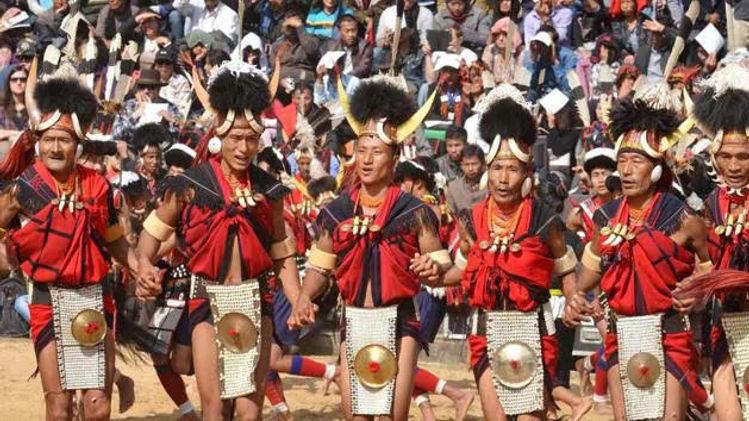
Nagaland’s proposed plan to develop Kisama Heritage Village through a public-private partnership (PPP) has raised concerns among tribal organisations. The venue hosts the state’s famous Hornbill Festival every December. The proposed arrangement has prompted questions about community participation, cultural ownership and the future management of the heritage site.
The state government is considering the PPP model to develop Kisama into a year-round tourism destination. At present, the village serves as the main venue for the annual cultural festival. It showcases the traditions, crafts, food and heritage of Nagaland’s diverse Naga tribes.
However, the proposed changes have brought the role of tribal organisations into focus. These groups are important stakeholders in the festival because their communities contribute cultural performances, traditional knowledge and local products.
The debate comes as Nagaland prepares for the 27th edition of the Hornbill Festival in December 2026. The state government is reviewing arrangements for the event while exploring ways to expand tourism beyond the festival period. <Cite refs={[“turn591637search0″,”turn591637search2”]}/>
Government Plans Public-Private Partnership Model
Chief Minister Neiphiu Rio recently confirmed that the government was moving forward with plans to develop Kisama Heritage Village under a PPP model. He said tender documents were being prepared.
The announcement followed a high-powered committee meeting at Kisama on October 13. Officials reviewed preparations for the upcoming festival and discussed the infrastructure required to accommodate visitors.
Tourism Minister Temjen Imna Along has also indicated that further consultations would take place. These discussions are expected to help the government assess the proposed arrangement and address issues related to the festival.
The government wants Kisama to attract visitors throughout the year rather than remain active mainly during the December celebrations. Officials believe this approach could expand tourism, generate employment and create new business opportunities.
A PPP arrangement generally involves cooperation between public authorities and private partners. Depending on the final terms, a private operator may help manage facilities, invest in infrastructure or provide tourism services.
However, the specific terms of the proposed Kisama arrangement will be important. Questions about management rights, revenue sharing, cultural programming and community involvement will need clear answers before the plan moves forward. <Cite refs={[“turn591637search0″,”turn591637search6″,”turn591637search7”]}/>
Why Kisama Heritage Village Matters
Kisama Heritage Village is located around 12 kilometres from Kohima. It was designed to represent traditional Naga village life, with structures and spaces reflecting the state’s cultural heritage.
The venue is central to the Hornbill Festival, which began in 2000. The annual event brings together Naga tribes to showcase their distinctive traditions, attire, music, dance, crafts and cuisine.
Over the years, the festival has become one of Nagaland’s most prominent tourism attractions. It draws visitors from across India and abroad. It also provides opportunities for local artisans, performers, food vendors and businesses.
For many communities, therefore, Kisama is more than a tourism facility. It is a space where cultural traditions are presented to wider audiences. Its management can influence how those traditions are represented and how communities participate in the festival.
This makes the proposed PPP model a sensitive issue. Any changes to the venue’s management could affect cultural programming, commercial activities and the relationship between the government and tribal stakeholders.
Community Participation Remains a Key Issue
Tribal organisations have long played an important role in the Hornbill Festival. Their participation helps preserve the event’s cultural character and ensures that visitors experience traditions from across Nagaland.
As the government explores a new management model, consultation with tribal bodies is likely to remain essential. Organisations may seek clarity on how decisions will be made and whether communities will retain a meaningful role in the venue’s future.
The Tourism Department has convened a coordination meeting with tribal hohos and organisations on October 22. The meeting is linked to preparations for the 2026 festival. The department has asked participating organisations to send representatives for discussions.
The consultation provides an opportunity to raise questions about the festival’s organisation and the proposed development of Kisama. It could also help officials understand the concerns of communities whose cultural contributions are central to the event. <Cite refs={[“turn409218search0″,”turn591637search4”]}/>
Government Seeks Year-Round Tourism Growth
The proposed development plan reflects Nagaland’s broader ambition to strengthen tourism. The government wants to create opportunities beyond the ten-day festival and encourage visitors to explore more of the state.
Officials have described the Hornbill Festival as an important platform for international engagement and economic activity. The event has expanded over time, with cultural programmes and related activities taking place at multiple locations.
A year-round tourism model could create more consistent demand for accommodation, transport, food services and local products. It could also encourage investment in visitor facilities and help generate employment.
However, sustainable tourism requires more than commercial expansion. Local communities need to benefit from tourism revenue, while cultural traditions must receive appropriate protection.
The government will also need to address infrastructure challenges. Road access, reliable power, water supply, sanitation, parking and public conveniences remain important for visitors and residents alike.
Chief Minister Rio has stressed the need for coordination among departments and communities to prepare for the 2026 festival. He has also assured officials that access to Kisama would be maintained despite damage to a section of National Highway 29 following a landslide in August. <Cite refs={[“turn591637search0″,”turn409218search3″,”turn409218search7”]}/>
Balancing Commercial Development With Cultural Heritage
The debate over Kisama highlights a wider challenge facing cultural tourism destinations. Governments often seek private investment to improve facilities and attract more visitors. At the same time, communities want to ensure that commercial interests do not overshadow cultural priorities.
A well-designed partnership could provide funding and professional management. It could also support better facilities and promote tourism throughout the year.
Nevertheless, clear safeguards would be important. These could include transparent contracts, community consultation, fair opportunities for local businesses and protection for traditional cultural spaces.
The government would also need to explain how decisions about performances, stalls, visitor activities and revenue would be made. Such details could help build confidence among stakeholders.
Ultimately, the success of the proposed model will depend on the balance between economic objectives and cultural responsibilities. Development that includes tribal communities could strengthen the festival’s long-term future. A process that leaves key stakeholders uncertain, however, could create further disagreements.
Hornbill Festival 2026 Faces Important Decisions
As Nagaland prepares for the upcoming Hornbill Festival, the future of Kisama Heritage Village has become an important policy issue. The government’s proposed PPP model aims to expand tourism and make the venue active throughout the year.
At the same time, concerns about cultural ownership and community participation underline the need for careful planning. Tribal organisations have an important stake in decisions affecting a venue built around their heritage.
The October 22 consultation offers an opportunity for stakeholders to discuss festival preparations and raise questions about the proposed development. The outcome of these discussions could help shape the next steps.
For Nagaland, the challenge is to attract investment without weakening the cultural purpose of its flagship festival. Transparent planning, meaningful consultation and clear protections for community interests will be essential.
The Hornbill Festival has become a major symbol of Naga identity and cultural diversity. Ensuring that its future development respects those values will be central to the success of any new management arrangement.