

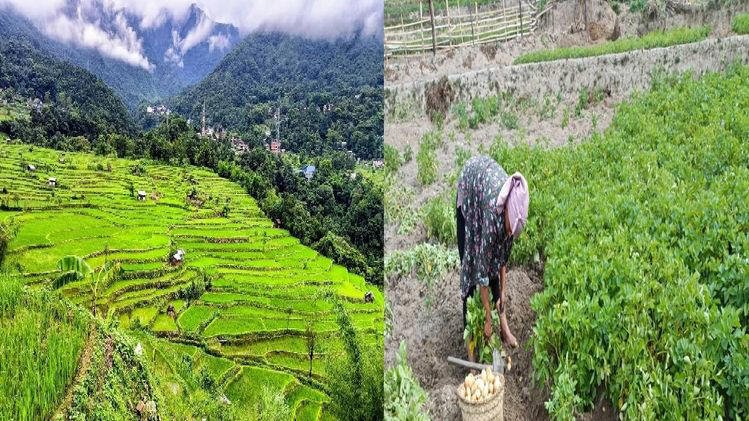
A recent study conducted by Nagaland University has shed light on the crucial role of indigenous knowledge in sustaining the traditional Angami terrace farming system, one of the most remarkable examples of sustainable agriculture in Northeast India. The research underscores how generations of accumulated wisdom, community-based resource management, and ecological understanding have enabled Angami farmers to maintain productive agricultural landscapes while preserving environmental balance.
The study comes at a time when policymakers, researchers, and agricultural experts are increasingly seeking sustainable farming models capable of addressing modern challenges such as climate change, soil degradation, water scarcity, and declining biodiversity. According to the researchers, the Angami terrace farming system offers valuable lessons for contemporary agriculture because it integrates environmental conservation with food production.
The findings highlight that indigenous farming knowledge is not merely a cultural legacy but also a practical resource that continues to support agricultural sustainability. Researchers argue that traditional practices developed over centuries remain relevant in the modern era and can contribute significantly to discussions on sustainable development.
The study has renewed interest in documenting and preserving indigenous agricultural systems that continue to thrive despite changing socio-economic conditions.
Angami Terrace Farming: A Unique Agricultural Heritage
The Angami community, primarily residing in Nagaland’s Kohima district and surrounding areas, is renowned for its terrace farming practices. Unlike shifting cultivation, which is common in many parts of the Northeast, Angami farmers developed permanent terraced fields that allow continuous cultivation while conserving soil and water resources.
The terraces are carefully constructed along hill slopes, creating level surfaces suitable for paddy cultivation. These agricultural landscapes represent generations of innovation and adaptation to the mountainous terrain of Nagaland.
Researchers noted that the system demonstrates an exceptional understanding of local geography, hydrology, and ecological processes. Farmers have successfully transformed steep slopes into productive agricultural fields without causing significant environmental degradation.
The study describes terrace farming as both an agricultural and cultural institution. It reflects the close relationship between the Angami people and their natural environment while serving as an important source of food security and community identity.
This traditional system continues to support livelihoods while preserving ecological balance across the region.
Indigenous Knowledge Guides Resource Management
A major finding of the study is the central role played by indigenous knowledge in managing land, water, and agricultural resources. Angami farmers rely on traditional techniques and locally developed practices that have evolved through generations of observation and experience.
Researchers found that farmers possess detailed knowledge about soil conditions, rainfall patterns, crop cycles, and water management. This understanding enables them to make informed decisions that support both productivity and sustainability.
The terrace farming system depends heavily on efficient resource management. Water is carefully channeled through networks designed to ensure adequate irrigation while minimizing wastage. Community cooperation plays an important role in maintaining these systems.
According to the study, indigenous knowledge allows farmers to adapt agricultural practices to local environmental conditions. Such adaptability contributes significantly to the resilience and long-term sustainability of the farming system.
The researchers emphasized that these traditional management approaches offer valuable lessons for sustainable agriculture worldwide.
Water Conservation Remains a Key Strength
One of the most impressive features of Angami terrace farming is its sophisticated water management system. The study highlights how indigenous communities have developed effective methods for conserving and distributing water in a mountainous environment.
Terraced fields are designed to capture and regulate water flow, ensuring that crops receive adequate moisture throughout the growing season. Farmers utilize natural water sources and carefully maintained channels to support irrigation.
Researchers observed that the system minimizes water loss while maximizing agricultural productivity. Efficient water management has allowed communities to cultivate rice successfully even in challenging terrain.
The study notes that such practices are increasingly relevant as many regions face growing concerns about water scarcity and climate variability. Traditional water conservation methods demonstrate how communities can use natural resources responsibly while maintaining agricultural output.
Experts believe that these techniques could inspire modern approaches to sustainable water management in agriculture.
Soil Conservation Supports Long-Term Productivity
The research also highlights the role of terrace farming in preventing soil erosion and maintaining soil fertility. Hill agriculture often faces challenges related to land degradation, but the Angami system addresses these issues through carefully engineered terraces and sustainable cultivation practices.
Terraces reduce runoff and help retain nutrient-rich soil that would otherwise be lost during heavy rainfall. This contributes to long-term productivity and environmental stability.
Researchers found that farmers employ various traditional methods to maintain soil health. Organic materials, crop residues, and natural nutrient cycles play important roles in sustaining fertility.
The study emphasizes that soil conservation remains one of the key reasons for the longevity of the terrace farming system. By protecting soil resources, communities ensure continued agricultural productivity for future generations.
Such practices align closely with modern principles of sustainable land management and regenerative agriculture.
Community Participation Strengthens Sustainability
Another important aspect identified in the study is the strong role of community participation in maintaining the terrace farming system. Indigenous knowledge is not held by individuals alone but is shared collectively within communities.
Farmers collaborate on water management, terrace maintenance, agricultural planning, and resource conservation. Community institutions help regulate access to resources and coordinate collective action.
Researchers noted that social cooperation contributes significantly to the sustainability of the system. Shared responsibilities strengthen accountability and ensure that essential infrastructure remains functional.
The study highlights how traditional governance mechanisms support environmental stewardship. Community-based management encourages long-term thinking and promotes responsible use of natural resources.
These social dimensions distinguish indigenous agricultural systems from many modern approaches that rely primarily on individual decision-making.
Biodiversity and Ecological Balance
The Angami terrace farming system also contributes to biodiversity conservation and ecological balance. Researchers observed that traditional farming landscapes often support a variety of plant and animal species.
The integration of agriculture with surrounding natural ecosystems helps maintain ecological diversity. Farmers possess extensive knowledge of local flora and fauna and understand their relationships with agricultural activities.
The study found that indigenous farming practices generally avoid excessive dependence on external inputs, thereby reducing environmental pressures. This contributes to healthier ecosystems and greater resilience.
Biodiversity plays an important role in supporting agricultural productivity by enhancing pollination, pest control, and ecosystem stability. Therefore, conservation and farming function as complementary activities within the traditional system.
Researchers believe this integrated approach offers valuable insights for sustainable agricultural planning.
Climate Resilience Through Traditional Knowledge
Climate change presents significant challenges for agricultural communities worldwide. The Nagaland University study highlights how indigenous knowledge can strengthen resilience in the face of environmental uncertainty.
Angami farmers have long adapted to changing weather patterns and environmental conditions. Their practices emphasize flexibility, resource conservation, and ecological balance.
Researchers found that traditional knowledge helps communities respond effectively to climatic variations. Diverse farming practices, efficient water management, and strong community institutions contribute to resilience.
The study suggests that indigenous agricultural systems may offer important lessons for adapting to future climate challenges. Traditional approaches often prioritize sustainability and risk management over short-term productivity gains.
As climate impacts intensify, such knowledge could become increasingly valuable for policymakers and agricultural planners.
Preserving Indigenous Knowledge for Future Generations
The researchers expressed concern about the gradual erosion of indigenous knowledge due to modernization, urbanization, and changing lifestyles. Younger generations may have fewer opportunities to learn traditional farming practices and resource management techniques.
The study emphasizes the importance of documenting and preserving indigenous knowledge before it disappears. Educational institutions, community organizations, and government agencies can play important roles in this process.
Researchers argue that preserving traditional knowledge is not only a cultural responsibility but also a practical necessity. Valuable insights into sustainability, conservation, and resource management could be lost if these systems are neglected.
The study encourages greater collaboration between scientific institutions and indigenous communities. Such partnerships can support knowledge preservation while promoting innovation and sustainable development.
A Model for Sustainable Agriculture
The Nagaland University study concludes that the Angami terrace farming system represents a powerful example of how indigenous knowledge can support sustainable agriculture. Through effective water management, soil conservation, community participation, and ecological stewardship, the system has remained productive and resilient for generations.
Researchers believe the lessons embedded in this traditional agricultural practice have relevance far beyond Nagaland. As countries search for sustainable solutions to food security and environmental challenges, indigenous systems offer valuable insights into balancing productivity with conservation.
The study calls for greater recognition of indigenous communities as custodians of important agricultural knowledge. Their experiences demonstrate that sustainability is not merely a modern concept but a principle deeply embedded in traditional ways of life.
By highlighting the success of Angami terrace farming, the research underscores the importance of preserving indigenous knowledge and integrating it into future agricultural and environmental strategies. Such efforts can contribute to more resilient, inclusive, and sustainable farming systems for generations to come.