

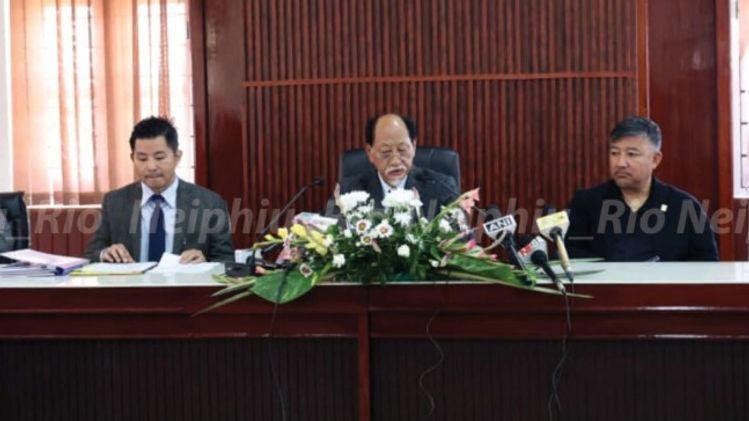
The Developed Nagaland 2047 vision has taken center stage after Chief Minister Neiphiu Rio unveiled an ambitious roadmap during the presentation of the state budget. The long-term plan outlines a strategic framework aimed at transforming Nagaland into a developed and self-reliant state by the year 2047.
The announcement aligns with India’s broader goal of achieving developed nation status by its 100th year of independence. However, Nagaland’s vision places specific emphasis on regional needs, economic growth, and sustainable development.
Importantly, the roadmap focuses on multiple sectors, including infrastructure, employment, education, and governance. By addressing these areas, the government aims to ensure inclusive growth and improved quality of life for its citizens.
Read More: Conrad Sangma Launches Shillong International Film Festival
Focus on economic growth and employment generation
A key pillar of the Developed Nagaland 2047 vision is economic growth. The government plans to strengthen the state’s economy by promoting industries, entrepreneurship, and investment.
Chief Minister Neiphiu Rio emphasized the need to create employment opportunities for the youth. With a growing population, job creation remains a priority. Therefore, the government is focusing on skill development and capacity building.
Additionally, the vision includes support for small and medium enterprises. By encouraging local businesses, the state aims to boost economic activity. This approach can also reduce dependence on external sources of income.
Moreover, sectors such as agriculture, tourism, and handicrafts are expected to play a significant role. These sectors have the potential to generate employment while preserving cultural heritage.
Infrastructure development as a growth driver
Infrastructure development forms the backbone of the Developed Nagaland 2047 vision. The government has identified connectivity as a key area of focus.
Investments in roads, transport, and digital infrastructure are expected to improve accessibility. Better connectivity can enhance trade, tourism, and overall economic growth.
Furthermore, urban development is also a priority. The government aims to improve living conditions in towns and cities. This includes better housing, sanitation, and public services.
Rural infrastructure will receive equal attention. By developing remote areas, the government seeks to ensure balanced growth across the state.
Strengthening education and healthcare systems
The Developed Nagaland 2047 vision also highlights the importance of social sectors. Education and healthcare are central to this strategy.
The government plans to improve the quality of education at all levels. This includes upgrading schools, colleges, and vocational training centers. By doing so, it aims to equip students with skills needed for the future.
Healthcare infrastructure will also see significant improvements. The vision includes upgrading hospitals and expanding medical services. Access to quality healthcare is essential for overall development.
Moreover, the government is focusing on digital solutions in these sectors. Technology can enhance service delivery and reach remote areas more effectively.
Governance reforms and digital transformation
Efficient governance is a crucial component of the Developed Nagaland 2047 vision. The government aims to strengthen administrative systems and improve transparency.
Chief Minister Neiphiu Rio has emphasized the role of digital transformation in governance. By adopting technology, the state can streamline processes and reduce inefficiencies.
Additionally, the vision includes measures to enhance public service delivery. Citizens should have easier access to government services. This can improve trust and participation in governance.
Furthermore, the government plans to promote accountability. Transparent systems can ensure better use of resources and more effective implementation of policies.
Sustainable development and environmental focus
Sustainability is another important aspect of the Developed Nagaland 2047 vision. The government recognizes the need to balance development with environmental conservation.
Nagaland’s rich natural resources and biodiversity require careful management. Therefore, the vision includes measures to protect forests and wildlife.
At the same time, the government is exploring renewable energy options. Sustainable energy sources can reduce environmental impact and support long-term growth.
Moreover, community participation is expected to play a key role. Local involvement can ensure that development initiatives are both effective and sustainable.
Challenges in achieving the 2047 vision
While the Developed Nagaland 2047 vision is ambitious, it also comes with challenges. Limited financial resources and infrastructure gaps remain key concerns.
Additionally, the state needs to improve its investment climate. Attracting private investment will be crucial for achieving growth targets.
Another challenge is ensuring effective implementation. Policies must translate into tangible results on the ground. This requires strong coordination among various departments.
However, the government remains optimistic. With proper planning and execution, these challenges can be addressed over time.
A roadmap for a developed future
The Developed Nagaland 2047 vision represents a comprehensive plan for the state’s future. It combines economic growth, social development, and governance reforms.
Under the leadership of Neiphiu Rio, the government has laid out a clear roadmap. The focus on inclusive and sustainable development reflects a forward-looking approach.
In conclusion, the vision aims to transform Nagaland into a developed and self-reliant state by 2047. While the journey may be challenging, the roadmap provides a strong foundation. If implemented effectively, it could significantly improve the lives of the people and position Nagaland as a key contributor to India’s growth story.
Read More: Nagaland budget 2026-27 shows Rs 337.04 crore deficit