

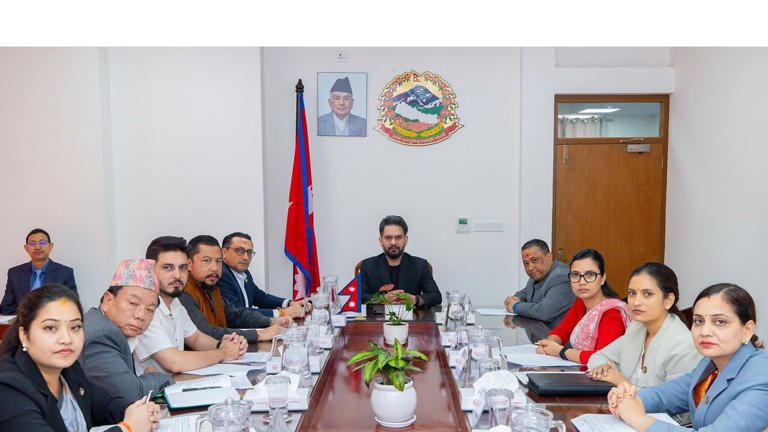
Nepal Prime Minister Balendra Shah chaired a cabinet meeting to review the devastation caused by recent floods and coordinate the government’s response, with rescue, relief and recovery efforts expected to be among the key priorities.
The meeting brought together members of the cabinet to assess the impact of the disaster in affected areas and discuss measures required to support communities facing widespread damage and disruption.
Flooding has affected several parts of Nepal, causing hardship for residents and damaging homes, infrastructure and livelihoods. The government is now focused on strengthening emergency response operations while ensuring that essential assistance reaches those affected.
Nepal PM Chairs Cabinet Meeting on Flood Crisis
Prime Minister Balendra Shah held the cabinet meeting as authorities continued to assess the scale of the flood devastation.
The discussions focused on the immediate humanitarian situation and the steps required to coordinate the response across affected regions.
Government agencies and local authorities are expected to play a key role in identifying the areas requiring urgent assistance and ensuring the delivery of food, shelter, medical support and other essential supplies.
The cabinet is also likely to examine the progress of rescue operations and the requirements for communities that have been displaced or cut off due to flooding.
Focus on Rescue and Relief Operations
Rescue and relief efforts remain a major priority as Nepal responds to the flood disaster.
Authorities, security personnel and emergency responders have been involved in efforts to reach affected communities and assist people facing immediate risks.
The government is expected to coordinate closely with provincial and local administrations to ensure that emergency resources are deployed where they are needed most.
Providing temporary shelter, clean drinking water, food and medical assistance will be crucial in the immediate aftermath of the floods.
The cabinet discussions are expected to help determine additional measures required to strengthen the ongoing response.
Flood Damage Assessment Underway
Authorities are continuing to assess the extent of damage caused by flooding across Nepal.
Homes, roads, bridges and other essential infrastructure may require urgent repair or reconstruction in areas that have been severely affected.
A detailed assessment will be important in determining the financial and logistical resources required for the recovery process.
The government is expected to work with local authorities to gather information about affected populations, infrastructure losses and immediate reconstruction requirements.
The findings could help guide the next phase of the government’s response once emergency rescue and relief operations begin to stabilise.
Government Focuses on Recovery and Rehabilitation
Along with immediate relief, the cabinet meeting is expected to address longer-term recovery and rehabilitation.
Communities affected by flooding may require continued assistance as they work to rebuild homes and restore livelihoods.
Infrastructure damaged during the disaster will also need to be repaired to restore connectivity and access to essential services.
The government could consider measures to support affected families and accelerate reconstruction in the hardest-hit areas.
A coordinated recovery strategy will be important to ensure that assistance reaches vulnerable communities and that rebuilding efforts are carried out effectively.
Coordination With Local Authorities
Effective coordination between the federal government, provincial administrations and local bodies will be essential to Nepal’s flood response.
Local authorities are often among the first to assess damage and identify communities requiring immediate help.
The central government is expected to use the information provided by local agencies to allocate resources and coordinate large-scale relief operations.
The cabinet meeting underlined the need for a unified response involving government agencies, emergency services and other stakeholders.
Nepal Faces Challenge of Disaster Recovery
Nepal’s geography makes parts of the country vulnerable to floods, landslides and other natural disasters, particularly during periods of intense rainfall.
The latest flooding has once again highlighted the importance of disaster preparedness, early warning systems and resilient infrastructure.
The government’s immediate challenge is to ensure effective rescue and relief while preparing for the longer process of recovery and reconstruction.
Prime Minister Balendra Shah’s cabinet meeting reflects the government’s focus on coordinating a response to the unfolding crisis.
As authorities continue rescue operations and damage assessments, further decisions are expected regarding relief measures, rehabilitation and support for affected communities. The effectiveness of the response will depend on coordinated action and the timely delivery of assistance to those affected by the devastating floods.