

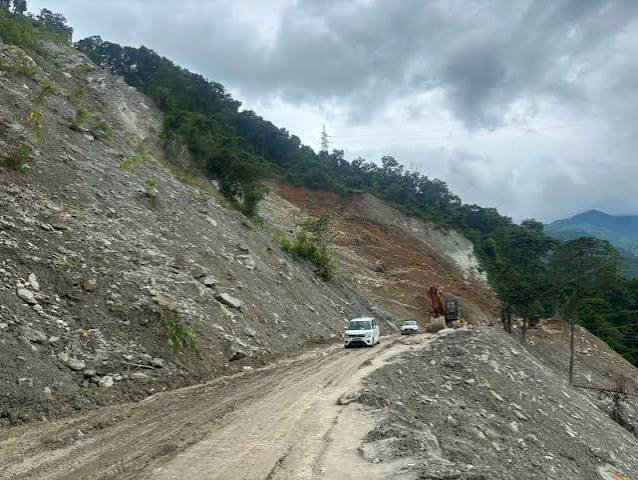
The NH-10 Rehabilitation (SK) effort has intensified after the Sikkim Chief Secretary ordered round-the-clock deployment to restore the landslide-hit NH-10 link. The directive aims to accelerate rehabilitation work on the strategically important highway and improve connectivity affected by landslide-related disruption.
The NH-10 Rehabilitation (SK) response focuses on restoring a section of National Highway 10 affected by landslides. The Sikkim Chief Secretary has ordered 24/7 deployment to speed up work on the affected link.
NH-10 serves as an important road connection for Sikkim and neighboring areas. Moreover, disruptions on the route can affect the movement of residents, commercial vehicles, essential supplies, and other road users.
The round-the-clock deployment seeks to maintain continuous progress on rehabilitation activities.
However, the available information does not specify the exact location of the damaged section, the extent of the landslide, or the projected completion date.
Therefore, further updates from road authorities will be needed to establish the precise restoration timeline.
Marathi Test for Mumbai Auto-Taxi Drivers: What Changes From August 18
NH-10 Rehabilitation (SK) Targets Landslide-Damaged Connectivity
The NH-10 Rehabilitation (SK) operation responds to damage caused by landslides along the highway link.
Landslides can obstruct roads and damage road surfaces, retaining structures, drainage systems, and surrounding slopes. Furthermore, clearing debris alone may not fully restore a highway when the underlying terrain remains unstable.
The Chief Secretary’s 24/7 deployment order signals a push to maintain continuous rehabilitation activity.
Such an approach can allow engineering teams to use available working hours more efficiently and potentially accelerate the restoration process.
However, the information provided does not explain the engineering techniques being used or identify the agencies and contractors responsible for the work.
Consequently, specific claims about construction methods or progress should await official technical updates.
NH-10 Rehabilitation (SK) Focuses on Faster Restoration
The NH-10 Rehabilitation (SK) effort places emphasis on speed because highway disruptions can affect movement across the region.
Continuous deployment can help teams carry out debris clearance, road repairs, slope stabilization, drainage work, or other necessary activities without limiting operations to daytime hours.
Moreover, faster rehabilitation can reduce the duration of disruption for communities and businesses that rely on the highway.
However, the available information does not confirm which specific activities crews are currently performing.
It also does not indicate whether authorities have established temporary traffic arrangements or alternative routes for affected road users.
Therefore, travelers should rely on current official road advisories rather than assume that the route has fully reopened.
NH-10 Rehabilitation (SK) Addresses Landslide-Related Risks
The NH-10 Rehabilitation (SK) effort must address not only visible road damage but also the conditions that contributed to the landslide.
Mountain highways face risks from intense rainfall, unstable slopes, drainage problems, and changing ground conditions. Moreover, repairing a road without addressing slope stability can leave infrastructure vulnerable to additional damage.
Engineering teams may therefore need to assess surrounding terrain before completing permanent rehabilitation.
However, the information provided does not confirm whether the current work includes permanent slope stabilization or only immediate restoration.
Similarly, no technical assessment of the affected slope has been provided.
Consequently, the long-term resilience of the repaired section cannot yet be determined.
Further engineering assessments will help clarify whether additional protective measures are necessary.
NH-10 Rehabilitation (SK) Important for Regional Movement
The NH-10 Rehabilitation (SK) carries significance because NH-10 supports connectivity in the Sikkim region.
The highway serves as an important transportation corridor, linking communities and supporting the movement of goods and passengers. Additionally, reliable road connectivity becomes particularly important during periods when weather-related disruptions affect other routes.
A prolonged closure or restriction can create logistical challenges for residents and businesses.
Therefore, the Chief Secretary’s order for 24/7 deployment reflects the importance of restoring the affected link as efficiently as possible.
However, the available information does not provide estimates of the number of vehicles affected or the economic cost associated with the disruption.
Such figures would be necessary to quantify the broader impact.
NH-10 Rehabilitation (SK) Requires Continued Monitoring
The NH-10 Rehabilitation (SK) effort will require continued monitoring even after crews restore the damaged section.
Moreover, roads in landslide-prone terrain can require regular inspection, particularly during periods of heavy rainfall. Authorities may need to monitor slopes, drainage systems, retaining structures, and road surfaces to identify emerging problems.
Continuous assessment can help officials respond quickly if new ground movement affects the highway.
However, the available information does not specify whether authorities have introduced additional long-term monitoring measures alongside the rehabilitation work.
Therefore, the future maintenance strategy remains unclear.
The current priority remains restoring the landslide-hit link through round-the-clock deployment.
Conclusion
The NH-10 Rehabilitation (SK) effort has received a significant administrative push after the Sikkim Chief Secretary ordered 24/7 deployment to accelerate work on the landslide-hit highway link. The directive reflects the importance of restoring road connectivity and reducing the disruption caused by the landslide.
Moreover, continuous deployment can help engineering teams maintain progress on necessary rehabilitation work while addressing the challenges associated with unstable mountain terrain. However, the available information does not specify the exact damage, restoration methods, or completion timeline.
Overall, the NH-10 Rehabilitation (SK) effort highlights the importance of rapid and sustained infrastructure response after landslide damage. Further official updates will clarify the progress of repairs, traffic conditions, and any long-term measures introduced to improve the resilience of the affected NH-10 section.
FAQs
1. What is the NH-10 Rehabilitation (SK) effort?
The NH-10 Rehabilitation (SK) effort involves restoring a landslide-affected section of National Highway 10 in the Sikkim region.
2. What order did the Sikkim Chief Secretary issue?
The Chief Secretary ordered 24/7 deployment to accelerate rehabilitation work on the affected NH-10 link.
3. Why is NH-10 important?
NH-10 provides an important road connection for Sikkim and supports the movement of residents, commercial traffic, goods, and essential supplies.
4. Has the restoration completion date been announced?
The available information does not provide a confirmed completion date.
5. Will rehabilitation address future landslide risks?
The available information does not confirm the specific long-term measures planned. Engineering teams may need to assess slope stability and drainage alongside road restoration, particularly in landslide-prone terrain.