

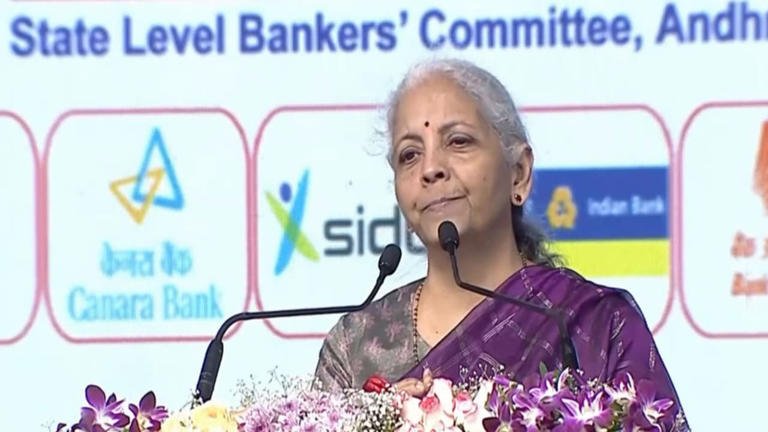
Union Finance Minister Nirmala Sitharaman has sanctioned loans worth Rs 3,200 crore in Andhra Pradesh’s Palnadu district, marking a significant push towards strengthening economic development, financial inclusion, and livelihood generation in the region. The sanctioned loans are expected to support a wide range of beneficiaries, including farmers, entrepreneurs, self-help groups (SHGs), micro, small and medium enterprises (MSMEs), and individuals seeking financial assistance for business and livelihood activities.
The announcement underscores the Centre’s commitment to expanding institutional credit access and promoting inclusive economic growth through financial empowerment. Officials believe the large-scale credit support will stimulate investment, create employment opportunities, strengthen rural enterprises, and contribute to the district’s overall economic development.
The initiative forms part of the government’s broader strategy to enhance credit accessibility while supporting productive sectors of the economy.
Rs 3,200 Crore Loan Assistance Approved
During her visit to Palnadu, Finance Minister Nirmala Sitharaman announced the sanction of loans amounting to Rs 3,200 crore under various government-supported banking and financial inclusion initiatives.
Officials said the financial assistance will be channelled through banks and financial institutions to eligible beneficiaries across multiple sectors. The objective is to ensure that credit reaches individuals and enterprises capable of contributing to economic growth and employment generation.
The sanctioned loans are expected to support productive investments while improving access to institutional finance in both rural and urban areas of the district.
Boost for Farmers and Rural Economy
Agriculture remains one of the primary beneficiaries of the loan package.
Farmers are expected to receive improved access to institutional credit for agricultural operations, farm mechanisation, irrigation, allied activities, and modern farming practices. Easy availability of finance enables farmers to invest in better inputs, technology, and productivity-enhancing measures.
Officials said expanding agricultural credit remains essential for improving rural incomes and strengthening food production.
The initiative is expected to contribute to sustainable agricultural growth across Palnadu.
Support for MSMEs and Entrepreneurs
A significant portion of the sanctioned loans will benefit micro, small and medium enterprises (MSMEs), startups, and local entrepreneurs.
Access to affordable credit enables businesses to expand operations, purchase equipment, improve production capacity, and create employment opportunities. Officials believe strengthening MSMEs is crucial because the sector contributes significantly to economic activity and job creation.
The government has consistently prioritised credit support for small businesses as part of its broader strategy to promote entrepreneurship and local economic development.
The financial assistance is expected to encourage new business ventures while supporting existing enterprises.
Empowering Self-Help Groups
The sanctioned loan package also aims to strengthen Self-Help Groups (SHGs), particularly women-led groups engaged in income-generating activities.
Institutional credit allows SHGs to expand small businesses, improve household incomes, and promote financial independence among women. Officials said supporting women’s entrepreneurship remains an important component of inclusive economic development.
Enhanced access to finance is expected to strengthen rural livelihoods while encouraging greater participation of women in economic activities.
The initiative aligns with the government’s focus on women’s empowerment through financial inclusion.
Promoting Financial Inclusion
One of the major objectives of the loan sanction is to expand financial inclusion by ensuring easier access to formal banking services.
Institutional credit reduces dependence on informal lending sources while providing borrowers with transparent financing options and structured repayment systems.
Officials stated that financial inclusion remains critical for promoting equitable economic growth and improving living standards across both urban and rural communities.
The initiative is expected to strengthen the relationship between financial institutions and local beneficiaries.
Generating Employment Opportunities
The large-scale credit support is expected to generate employment across multiple sectors.
Investments financed through the sanctioned loans are likely to create direct and indirect jobs in agriculture, manufacturing, services, retail, and small-scale industries. Construction activities, business expansion, and rural enterprises are also expected to contribute to employment generation.
Officials noted that access to finance often acts as a catalyst for entrepreneurship, investment, and long-term economic growth.
The employment impact of the loan package is expected to extend beyond individual beneficiaries.
Strengthening Local Economy
The sanctioned loans are expected to stimulate economic activity throughout Palnadu district.
Increased investment in businesses, agriculture, and rural enterprises will generate demand for goods, services, transportation, logistics, and supporting industries. The resulting multiplier effect is expected to strengthen local markets and improve overall economic resilience.
Officials believe that expanding access to credit plays a vital role in accelerating regional development while improving household incomes.
The initiative also supports balanced economic growth across different sectors.
Government’s Commitment to Inclusive Growth
Finance Minister Nirmala Sitharaman reiterated the government’s commitment to promoting inclusive and sustainable economic development through expanded financial access.
Officials emphasised that strengthening institutional credit systems remains essential for empowering farmers, entrepreneurs, women, youth, and small businesses.
The government continues to implement policies aimed at increasing financial accessibility while encouraging productive investments that generate long-term economic benefits.
The Palnadu loan package reflects this broader commitment to inclusive development and financial empowerment.
Banking Sector’s Role in Development
Banks and financial institutions will play a key role in implementing the sanctioned loan programme.
Officials said timely processing of loan applications, efficient credit delivery, and continuous support to borrowers will be essential for ensuring successful implementation.
The banking sector remains a critical partner in achieving national development goals by facilitating investments across agriculture, industry, services, and rural development.
Effective coordination between banks and government agencies is expected to maximise the impact of the financial assistance.
A Significant Boost for Palnadu’s Economy
The sanction of Rs 3,200 crore in loans represents a major financial boost for Andhra Pradesh’s Palnadu district.
By expanding access to institutional credit, supporting farmers, empowering entrepreneurs, strengthening Self-Help Groups, and promoting financial inclusion, the initiative aims to accelerate economic growth while creating new livelihood opportunities. The large-scale financial assistance also reflects the government’s continued emphasis on inclusive development through targeted investments and accessible banking services.
As the sanctioned loans are disbursed and projects begin to take shape, Palnadu is expected to witness increased business activity, stronger rural development, greater employment generation, and improved economic resilience, contributing to the district’s long-term growth and prosperity.